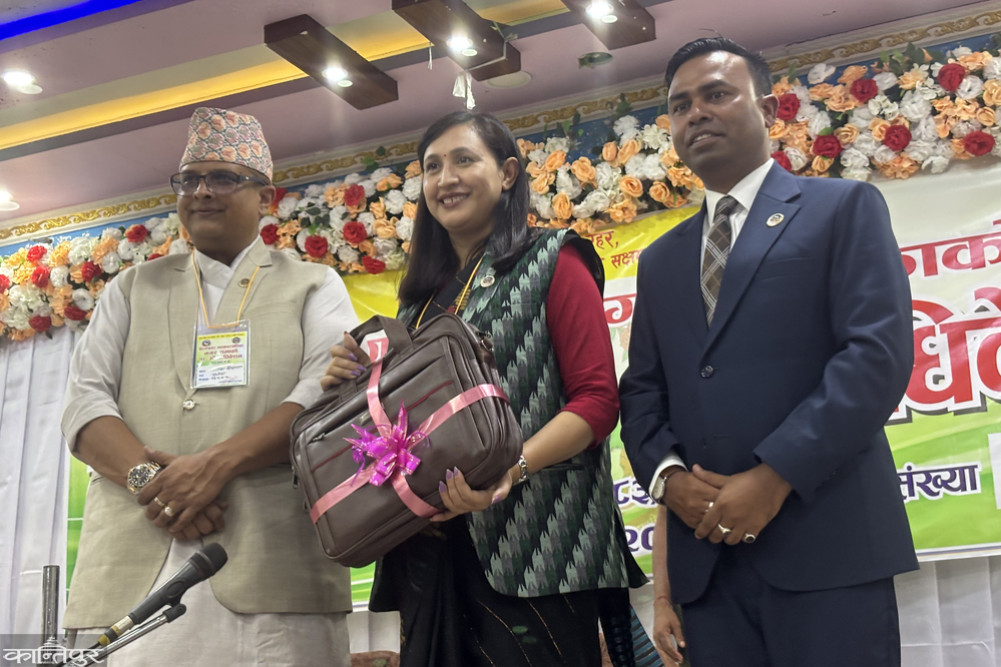
The Biratnagar Metropolitan City budget has emphasized smart boards in every classroom of community schools, free ambulances, energy production, and expansion of digital services.
We use Google Cloud Translation Services. Google requires we provide the following disclaimer relating to use of this service:
This service may contain translations powered by Google. Google disclaims all warranties related to the translations, expressed or implied, including any warranties of accuracy, reliability, and any implied warranties of merchantability, fitness for a particular purpose, and noninfringement.
Biratnagar Metropolitan City has brought a budget of Rs 3.5647 billion for the fiscal year 2083/084. In the budget presented by Deputy Mayor Shilpa Nirala Karki with the main slogan 'Our all-desire: Educated, clean, beautiful, safe and capable Biratnagar', infrastructure development has been given high priority.
According to the proposed budget, the metropolis's largest investment will be in the infrastructure sector. Rs 1.603932 billion has been allocated under this heading. Rs 762.878 billion has been allocated for office operations and administrative expenses.
Similarly, Rs 2650.59 billion has been allocated for social development, Rs 326.37 billion for economic development, Rs 293.10 billion for good governance and institutional development, and Rs 259.60 billion for forest, environment and disaster management.
The metropolis has set a target of collecting Rs 1.72 billion 28 million from the federal government's financial transfer, Rs 142 million 74 million from the provincial government, and Rs 1.27 billion 20 million 8 thousand from internal revenue for the upcoming fiscal year's budget. It is estimated that Rs 925.618 million will be received from revenue sharing, Rs 140 million from bank balances, and Rs 11.6 million from grants from various organizations.
A strategy has been adopted to expand the tax scope without increasing tax rates in the policies and programs. Arrangements have been made to provide a 25 percent discount on business registration and renewal fees to women entrepreneurs and a 100 percent discount to businesses run by people with disabilities.
The 'mega school' concept will be taken forward in education. It is stated that a technology-friendly teaching system will be encouraged by running the 'one class, one smart board' program in community schools.
In the health sector, the services of the municipal hospital will be strengthened, and free ambulance services will be provided to pregnant women, senior citizens, and people with disabilities. The metropolis has also stated that it will continue the free blood service program in collaboration with the Nepal Red Cross Society.
A plan has been put forward for infrastructure, including the construction of the Singhiya Khola corridor and the use of paving blocks on internal roads to recharge groundwater. In addition, a 'Project Bank' will be established for the effective implementation of the plans.
A plan has been put forward for the production of energy from waste towards the environment and good governance. The goal has also been set to build a 'technology-friendly metropolis' by expanding the digital system to make service delivery more effective. Mayor Nagesh Koirala said that the budget has been brought as an effort by the metropolis to address the needs of citizens as much as possible within limited resources and means.