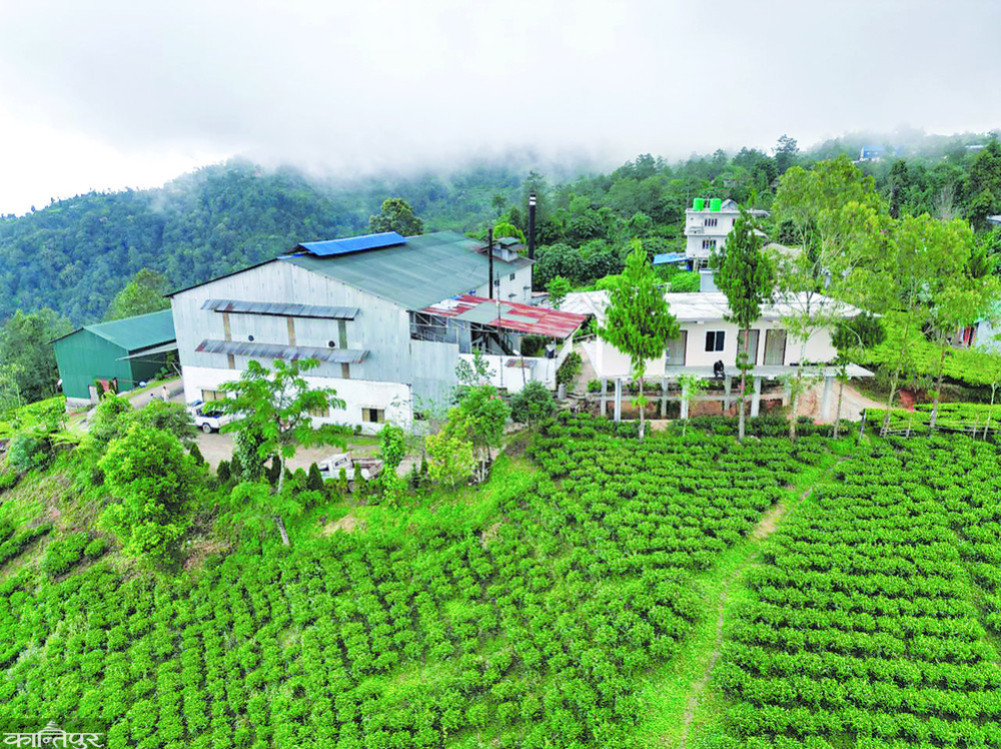
Thousands of farmers, workers, and entrepreneurs have been directly affected by the closure of tea factories and plantations in Ilam and Jhapa due to Indian blockades.
We use Google Cloud Translation Services. Google requires we provide the following disclaimer relating to use of this service:
This service may contain translations powered by Google. Google disclaims all warranties related to the translations, expressed or implied, including any warranties of accuracy, reliability, and any implied warranties of merchantability, fitness for a particular purpose, and noninfringement.
The tea industries and plantations of Jhapa have been shut since Thursday after the Indian side created new obstacles to the export of Nepali tea.
53 tea industries in Ilam had been closed since Asad 1, and now the industries and plantations of Jhapa have also been closed, and the tea industry in eastern Nepal is in serious crisis.
According to a press release issued by the Nepal Tea Producers Association, the industry has become impossible to operate after the ban on quality testing of Nepali prepared tea at the Indian border post. According to the association, Nepali tea exports have been affected due to the new Standard Operating Procedure (SOP) recently implemented by the Indian Tea Board. The industrialists are in trouble after the testing process, which has been made more complicated by stopping tea that has been exported for years, is being stopped at the border.
The association claims that Nepali tea is of high quality and has been accepted in the international market, including India. However, due to the new arrangement, the industry has been facing a cash flow crisis due to the delay in the preparation of tea, difficulty in storing the product, and farmers and workers have been directly affected.

Aditya Parajuli, President of the Nepal Tea Producers Association, has urged the government, political parties, diplomatic agencies, journalists and stakeholders to take immediate action. The association has stated that industries and plantations in Jhapa will be closed from today, saying that it is not possible to operate the industry until the problem is resolved.
Meanwhile, the Federation of Nepalese Chambers of Commerce and Industry (FNCCI) Koshi Province has also drawn serious attention to the obstacles created by the Indian side. In a statement issued by the Federation's President Rajendra Raut, it was stated that tea is Nepal's main export commodity, and it has been making a significant contribution to job creation, foreign exchange earnings, tourism promotion, environmental balance and the local economy.
According to the federation, 27.4 million kg of tea is produced annually in an area of about 10,000 hectares in Nepal, while 25.6 million kg of tea is exported annually to India alone. More than 60,000 people are directly employed in the tea industry.
The Indian blockade has led to an increase in stocks in industries, problems in cash flow, and thousands of farmers, workers, and entrepreneurs being directly affected, according to the federation. Industries have been forced to close indefinitely for the past few days, and it has been warned that this will negatively affect the overall regional economy.
Ilam's Suryodaya Tea Product Association on Thursday submitted a memorandum to Chief District Officer Laxman Dhakal, drawing the government's attention. It is stated that the disruption in tea exports after the Indian blockade has put the entire tea industry in crisis.
Association President Dilli Shrestha said that the closed tea industry will not reopen until the blockade is lifted. He said, "Why should we open the industry when there is no export?"