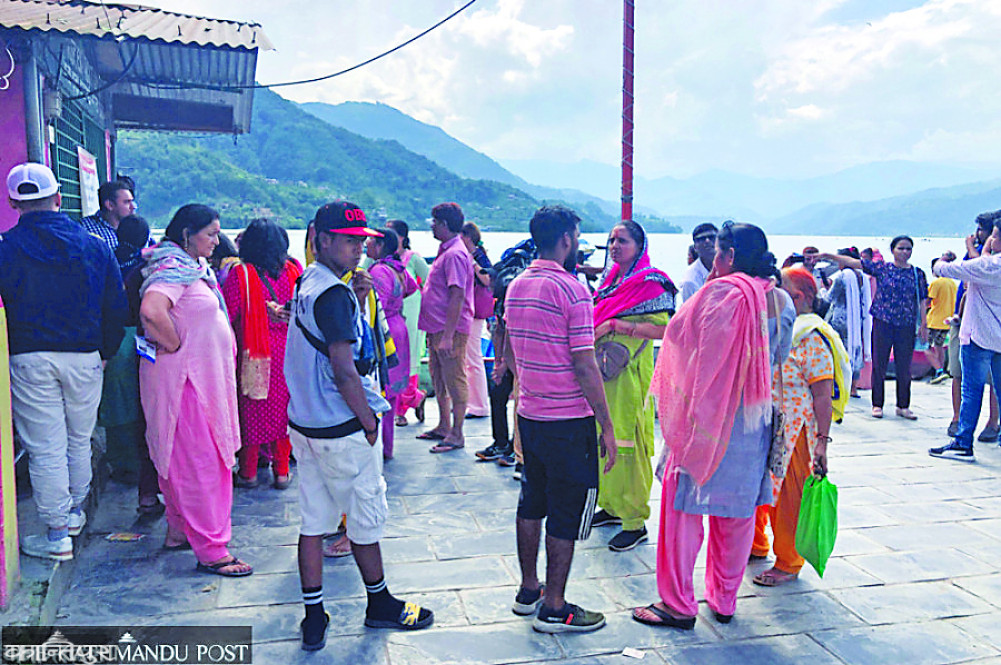
The number of Indian pilgrims arriving by road has been significant in recent months, with increased pressure on religious and hilly destinations including Pokhara, Muktinath, Supadeurali, Swargadwari, and Hile in Dhankuta.
We use Google Cloud Translation Services. Google requires we provide the following disclaimer relating to use of this service:
This service may contain translations powered by Google. Google disclaims all warranties related to the translations, expressed or implied, including any warranties of accuracy, reliability, and any implied warranties of merchantability, fitness for a particular purpose, and noninfringement.
For the past few weeks, videos and photos of Indian tourists have been going viral on social media. Some are seen cooking on the roadside, while others are pilgrims resting on the way to Muktinath.
These photos have sparked debates on two topics: ‘Are such tourists entering Nepal benefiting the economy?’ Another debate, created from an Indian perspective, says, ‘Does Nepal not have sufficient infrastructure, restaurants and dharamshalas for pilgrims visiting Nepal?’
While the debate on these two topics is going on, the Ministry of Tourism on Sunday issued a notice for Indian tourists entering Nepal’s pilgrimage sites by road. The notice contains a list of ‘what to do and what not to do’ by tourists while visiting Nepal.
The notice was made public by Tourism Minister Khadak Raj Poudel through his social media. Talking to Kantipur in the evening, he emphasized that this issue should be viewed differently. The scene Nepal is currently seeing is not just a crowd of Indian tourists, it is a changing form of Nepal-India religious tourism.
‘Even if only 1 percent of India’s total population comes to Nepal, at least 10 million religious tourists can come to Nepal annually,’ says Minister Poudel, ‘that can be a huge opportunity for Nepal’s tourism market.’
The number of Indian pilgrims, especially those coming by road, has increased significantly in recent months. Their pressure is increasing in religious and hilly destinations including Pokhara, Muktinath, Supadeurali, Swargadwari, and Hille in Dhankuta. According to the Ministry of Tourism, most tourists come for religious pilgrimages.
A few days ago, about 30,000 Indian tourists arrived in Muktinath in a single day. The ministry has data that more than 10,000 Indian pilgrims arrived in Swargadwari in a single day. But the necessary infrastructure to serve such a large number of pilgrims in a systematic way is not yet ready, said Minister Poudel.
‘There is a lack of places to stay and eat for such a large number of tourists,’ said Minister Poudel, ‘that is why we have now prioritized the construction of dharamshalas and the increase in vegetarian restaurants. There are plans to start construction of dharamshalas at various religious destinations from the next fiscal year.’
The food style of Indian pilgrims is at the center of the ongoing debate in Nepal about their diet. Most Indian tourists, especially those visiting Muktinath, Swargadwari or other Hindu and Buddhist pilgrimage sites, are mostly vegetarian. But the number of vegetarian restaurants in Nepal is limited. There is also no systematic listing of the hotels and restaurants that do exist. As a result, vegetarian tourists choose to cook their own food. Minister Poudel says that it is not appropriate to ignore this reality and criticize only on social media.
‘Just as our parents look for pure food when they go to pilgrimage sites in India, Indian pilgrims also look for the same when they come to Nepal,’ says Minister Poudel. ‘If vegetarian restaurants and dharamshalas were sufficient, they would not have to cook on the way.’
Keeping this issue in mind, the Ministry of Tourism has planned to list vegetarian hotels and restaurants from Bhairahawa via Pokhara to Muktinath from the next fiscal year. Preparations are also underway to provide details of such hotels and dharamshalas to Indian tourists entering Nepal through the border checkpoint. There is another prevailing perception in Nepal about Indian pilgrims, ‘they don’t spend.’
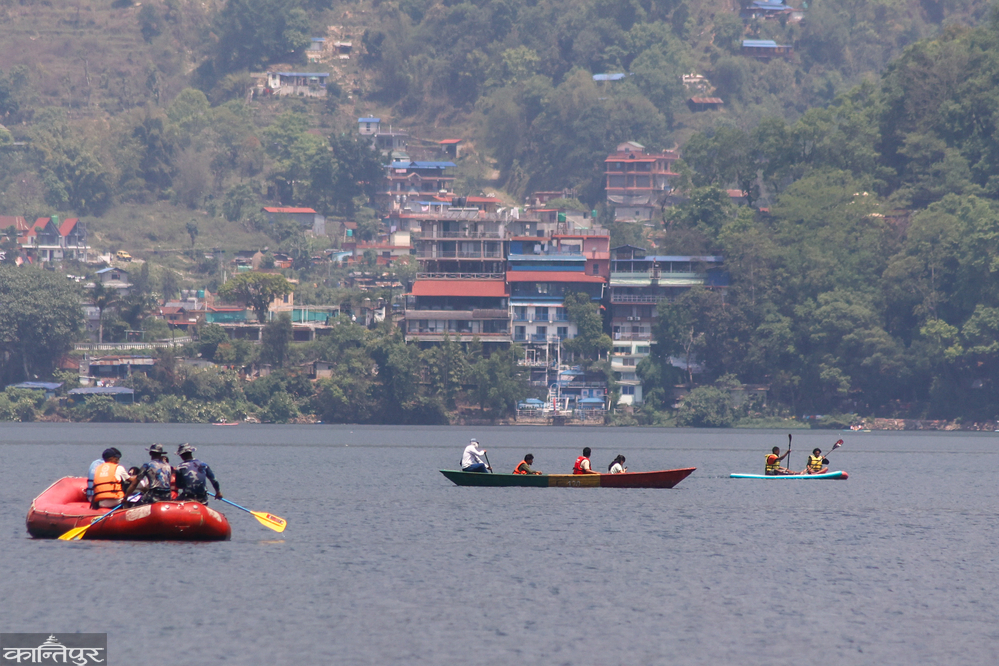 But the Ministry of Tourism and the Nepal Tourism Board do not agree with this perception. According to Minister Poudel, even if they do not stay in hotels, pilgrims increase economic activity in Nepal. They participate in shopping for gifts and souvenirs, food, etc. They purchase food and daily necessities. They use transport and the vehicles they carry pay toll fees for using the road.
‘The state has invested billions of rupees in road construction,’ said Minister Poudel, ‘the toll is collected from the vehicles using that road. Tourists shop, buy goods, and the local economy becomes dynamic. Therefore, it is not correct to say that they don’t spend.’
Subash Chandra Joshi, the outgoing executive director of the Pashupati Area Development Fund, has commented that religious and spiritual tourism should not be evaluated solely on the basis of direct expenditure incurred by tourists. Although religious tourists seem to spend less than other tourists, their economic, social and cultural contribution is long-term and multifaceted, he says.
According to Joshi, even if tourists who come on religious journeys spend limited amounts on hotels, transportation or entertainment, they are keeping the local economy moving at various levels. Another important aspect of religious tourism is ‘informal publicity’, says Joshi. ‘Religious tourists tell their travel experiences to their families, relatives and communities. Nowadays, the trend of sharing photos, videos and experiences through social media has increased,’ he said, ‘This can have a greater impact than any formal advertisement. One satisfied pilgrim can inspire dozens of new tourists to come to Nepal in the future.’
In recent years, religious tourism has also been encouraged by the government in India. Joshi said that various state governments in India are running programs to allow their senior citizens to participate in religious pilgrimages with grants or concessions. States including Uttar Pradesh, Madhya Pradesh, Rajasthan, Gujarat, Haryana have been running tour programs to various pilgrimage sites.
‘In India, millions of senior citizens are currently embarking on religious pilgrimages on the initiative of the state government,’ Joshi said, ‘If Nepal’s Pashupatinath, Muktinath, Janakpur, Lumbini, areas connected to the Mansarovar Marg and other religious destinations can be linked to such programs, Nepal can benefit greatly.’
Another argument of Tourism Minister Poudel is even more interesting. According to him, pilgrims who come on religious pilgrimages not only spend money themselves, they also attract future high-spending tourists to Nepal. ‘They post their travel experiences on Facebook, YouTube and other social media,’ says Minister Poudel, ‘that inspires other Indian tourists to come to Nepal. In this way, high-spending tourists are gradually attracted.’
India is currently one of the world’s largest outbound tourism markets. With the increase in income of the Indian middle class and the expansion of the road network, religious tourism is also growing rapidly. After a video of some Indian tourists cooking in a public place went viral on social media, the ministry has made public a code of conduct for tourists on Sunday on the topic of ‘do’s and don’ts’.
It was decided to prepare information materials in Nepali, Hindi and English about 15-20 days ago. Minister Poudel, who has been given the responsibility of the Department of Tourism, said.
The posters cover the issues of entry into Nepal, road safety, conduct to be followed at religious sites, cleanliness, trekking, mountaineering, local culture, environmental protection and emergency contact.
Since the ministry does not have its own district structure, the posters will be distributed targeting Indian religious tourists entering Nepal through the Bhairahawa border in the first phase in coordination with the Nepal Police and local administration. The increasing number of Indian pilgrims has become a new reality for Nepal’s tourism sector. The question now is not whether they should come or not, but how to manage them, government officials have been saying in public forums.
On the one hand, Nepal has set an ambitious goal of doubling tourist arrivals. On the other hand, even the basic needs like accommodation, dharamshala, toilets, vegetarian restaurants and information management have not been met when thousands of pilgrims arrive at destinations like Muktinath and Swargadwari on a single day.
Former CEO of the Tourism Board and Rashtriya Swayamsevak Sangh (RSS) MP Dhananjay Regmi says that the state has also ignored the arrival of Indian tourists. ‘The different treatment of Indian tourists on currency or other issues by the police and customs at the border should be corrected,’ says MP Regmi. ‘If the arrival of Indian pilgrims is facilitated and more pilgrimage sites are promoted here, Nepal’s tourism market will have an opportunity to become more dynamic. Indian tourists can make a big contribution to Nepal’s economy.’