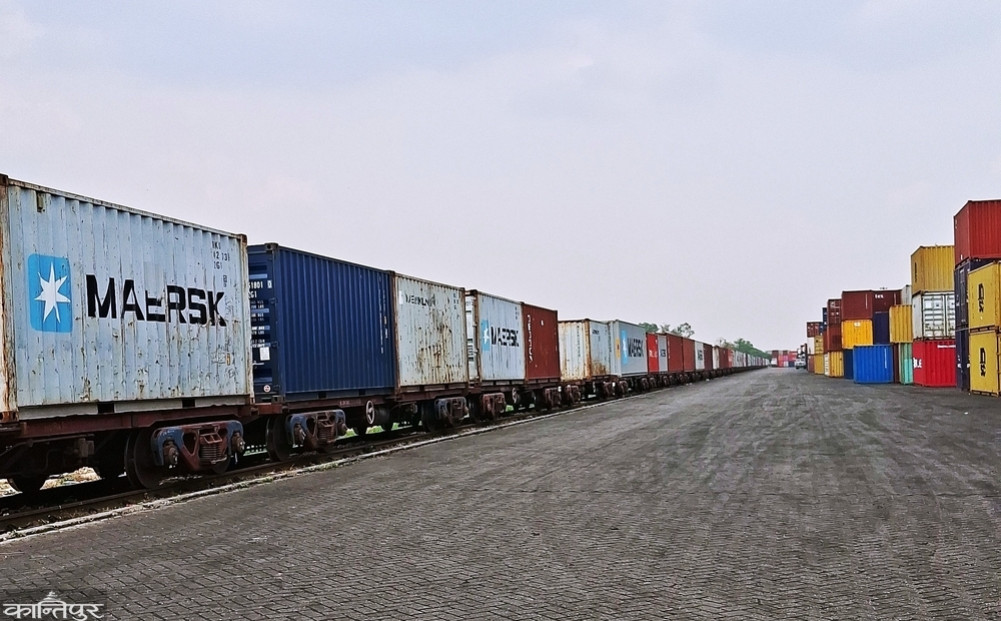
According to the latest data from Birgunj Customs, there has been a decrease in the import of paddy and maize, while there has been a significant increase in the import of rice, wheat, and sorghum.
We use Google Cloud Translation Services. Google requires we provide the following disclaimer relating to use of this service:
This service may contain translations powered by Google. Google disclaims all warranties related to the translations, expressed or implied, including any warranties of accuracy, reliability, and any implied warranties of merchantability, fitness for a particular purpose, and noninfringement.
The import of rice and maize from Birgunj, the country's main trading post, has decreased till Baisakh of the current fiscal year 2082/83. The import of rice, wheat and sorghum has increased.
According to the data of the Birgunj Customs Office, there has been a significant change in the structure of food imports compared to the same period of the last fiscal year. Till Baisakh of the current fiscal year, 272.2 million kg of rice worth Rs 10.94 billion has been imported from this post.
During the same period of the last fiscal year, 292.5 million kg of rice worth Rs 11.36 billion had been imported. The import is estimated to have decreased due to some improvements in rice production and management of domestic market demand.
Similarly, the import of maize used for animal husbandry and feed industry has also decreased. Till Baisakh of the current fiscal year, 111.4 million kg of maize worth Rs 5.31 billion has been imported.
In the same period of the previous fiscal year, 161.3 million kg of maize worth Rs 9.49 billion was imported. Businessmen estimate that the decrease in maize imports has led to an increase in domestic production and the use of alternative feeds.
Although the import of paddy and maize has decreased, the import of rice, wheat and sorghum has increased. According to customs data, 29.5 million kg of rice worth about Rs 2.85 billion has been imported till Baisakh of the current fiscal year.
In the same period of the previous fiscal year, 20 million kg of rice worth Rs 1.98 billion was imported. The increase in rice imports may be due to consumer demand, the need of the hotel and food industry, and the increasing use of processed food in the market.
The customs office has also stated that there has been a significant increase in the import of wheat and sorghum. With the increase in the production of flour, biscuits, noodles and other food industries, the demand for wheat and sorghum has increased, so the import has also increased.
Among the food grains imported through the Birgunj border, rice, wheat and kanika have shown a high growth rate this year.
Till April of the current fiscal year, 6.5 million 19 thousand kg of wheat worth 280 million rupees has been imported through this border. In the same period of the last fiscal year, 3.5 million 19 thousand kg of wheat worth 170 million rupees had been imported. Similarly, till April of the current fiscal year, 8 million kg of kanika worth 40 million rupees had been imported through this border. In the same period of the last fiscal year, 714 thousand kg of kanika worth 30 million rupees had been imported.
Hari Gautam, President of the Birgunj Chamber of Commerce and Industry, says that the change in the pattern of food grain imports indicates consumption habits, industry needs and the state of domestic production. "Although the decrease in rice and corn imports is positive, the increase in processed food imports continues to pose a challenge to food self-sufficiency," he said. "There is no alternative to reducing the import of all types of food to make the country self-sufficient in food production."