The financial situation of the common consumer has further deteriorated in recent months as the prices of rice, oil, fuel, and packaging materials have continued to rise.
We use Google Cloud Translation Services. Google requires we provide the following disclaimer relating to use of this service:
This service may contain translations powered by Google. Google disclaims all warranties related to the translations, expressed or implied, including any warranties of accuracy, reliability, and any implied warranties of merchantability, fitness for a particular purpose, and noninfringement.
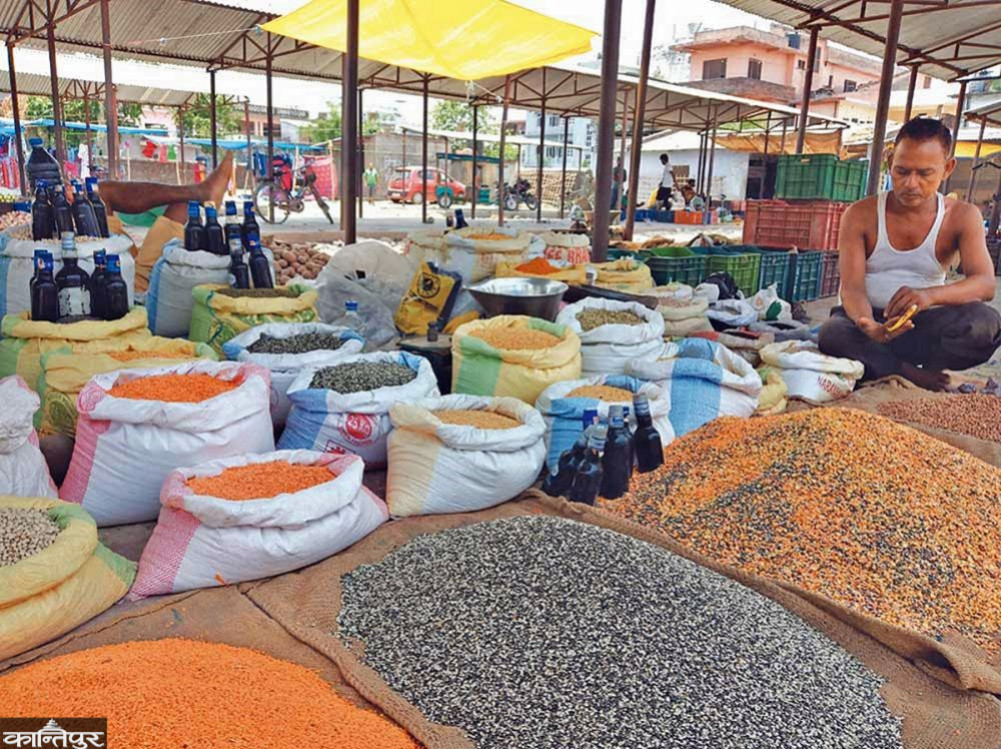
Radha Sanjel of Kirtipur used to buy a 25-kg bag of Pearl brand cumin rice for Rs 2,000 a month ago. Now the price of the rice has increased by Rs 250 per bag to Rs 2,250. Not only the price of rice, but also the price of mustard and sunflower oil has increased.
The price of a liter of sunflower oil has now reached around Rs 300, while mustard oil is being sold for over Rs 400 per liter, an increase of Rs 20 to 30. “Everything has become expensive,” said Sanjel, who works as an office assistant in a private hospital.
Sanjel and her husband earn Rs 65,000 a month for their family of four. “Almost all our money goes on consumption, it has become difficult to meet household expenses, school fees, transport fare and health care,” she said. She has two school-going children.
Many consumers like Sanjel are struggling as the prices of daily necessities, especially rice and cooking oil, continue to rise. Economists and traders say that there are many reasons behind the price hike, including the ongoing conflict in West Asia. Import-dependent Nepal is highly sensitive to disruptions in global markets, which have the biggest impact on low-income households.
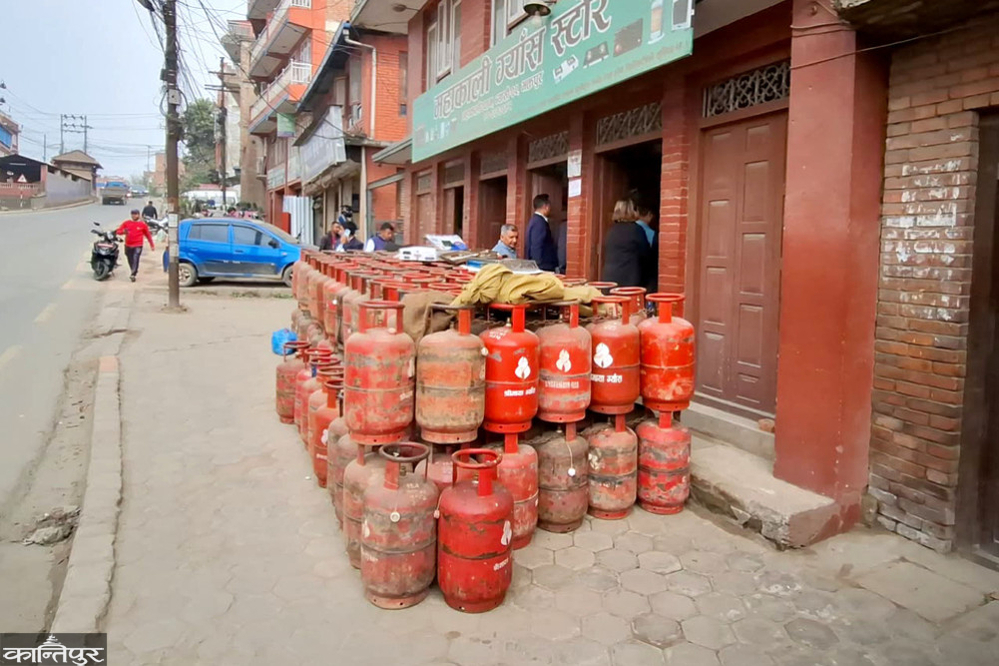
In the last three months, diesel prices have increased by 60 percent and petrol prices by 28 percent. LPG cylinder prices have increased by 11.5 percent. Public transport fares have increased by about 20 percent due to the fuel price hike, while freight transport costs have increased by 17 percent.
The reason for the rise in consumer prices is not only the increase in fuel prices. The strengthening of the US dollar against the Nepali rupee has made imported goods more expensive. According to Nepal Rastra Bank data, consumer inflation has increased by 4.47 percent as of mid-April, the highest in 13 months.
This index includes both food and non-food items, with non-food items having a higher weight in the inflation basket. Food and beverage prices are also rising rapidly. In the first nine months of the current fiscal year, i.e. until mid-April, the annual price index for ghee and oil has increased by 12.87 percent, fruits by 11.67 percent, and vegetables by 9.18 percent.
The price of rice has increased by Rs 5 to 10 per kilogram due to high transportation costs, says Pavitra Vajracharya, president of the Nepal Retailers Federation. He says the rising cost of plastic packaging materials has also increased the price of food items.
As the conflict in West Asia drags on, the rise in global crude oil prices has increased the cost of major polymers such as polythene and polypropylene. Nepal imports packaging materials such as petroleum-based plastic bags, bubble wrap, foam tarpaulin, and industrial plastics from third countries.
Importers say the price of plastic has increased by 40 to 50 percent. The additional cost has ultimately been passed on to the consumer. ‘To pack rice in Nepal, plastic raw materials are imported from third countries and printed here,’ said Vibor Agrawal, executive director of Radhakrishna Rice Mill.
‘Not only has the packaging cost increased, the price of rice imported from India has also increased by Rs 100 per quintal or Rs 1 per kilo, all these factors have contributed to the increase in the price of various types of rice,’ he said.
Nepal has been importing rice from India to meet the maximum demand for rice, including long grain. Rice is imported from India and milled in domestic rice mills. Despite high demand among urban consumers, domestic production of ‘fine’ rice is still limited. According to the Customs Department, 449,602 tonnes of rice worth Rs 16.74 billion have been imported from India in the 10 months of the current fiscal year. During the same period, 219,261 tonnes of rice worth Rs 17.32 billion have been imported.
The price of cumin milled rice has increased by Rs 50 to Rs 75 per 25 kg bag in a week, Agrawal said. The price of long grain rice has also increased from Rs 3,100 to Rs 3,400 per 20 kg bag after the conflict in West Asia intensified. The price of sunflower oil has increased from Rs 265 to Rs 300 per liter and mustard oil from Rs 350-375 to Rs 460 per liter, Vajracharya said.
Household incomes have stagnated due to weak economic growth. Nepal's average economic growth rate in the last decade has been only about 4 percent. As a result, remittances have become increasingly important for many households to meet basic consumption expenses. According to the National Statistics Office, remittance income is estimated to reach 33.02 percent of Nepal's gross domestic product (GDP) in the current fiscal year, which is a significant increase compared to 27.80 percent last year. This has exposed the country's increasing dependence on foreign income.
The United Nations Development Programme (UNDP)'s initial assessment report, 'Military Escalation in the Middle East: Human Development Impacts Across Asia and the Pacific', published in mid-April, warns that Nepal will suffer the most in terms of human development as the conflict continues. The report notes that as the economies of the Gulf countries weaken and remittance inflows decline, households' purchasing power will decrease, further weakening Nepal's food security.
'We are in a period of slow economic growth and steadily rising inflation rates,' said economist Chandramani Adhikari, 'this affects the overall economy. Accordingly, it affects government revenue and household income.'
Adhikari says that the increase in diesel prices has increased the cost of agricultural production and transportation costs, affecting farmers and reducing their income. 'The Nepali rupee has been continuously weakening against the US dollar exchange rate. As a result, the cost of the overall economy has increased, while the purchasing power of consumers has weakened,' the official said, 'Individual income has not increased. More than 60 percent of household income is spent on daily necessities.' The prices of eggs, vegetables, fruits, and rice have increased by double digits, while educational fees have increased by 6 to 7 percent.
Despite the increasing pressure on consumers due to price increases, the government has failed to provide relief, says Premlal Maharjan, president of the National Consumer Forum. 'External factors have definitely led to price increases, but the current government also seems to be showing little interest in intervening in the market and helping consumers in difficulty,' he said, 'The common man is suffering. Low income and rising expenses have become a matter of serious concern for everyone.'