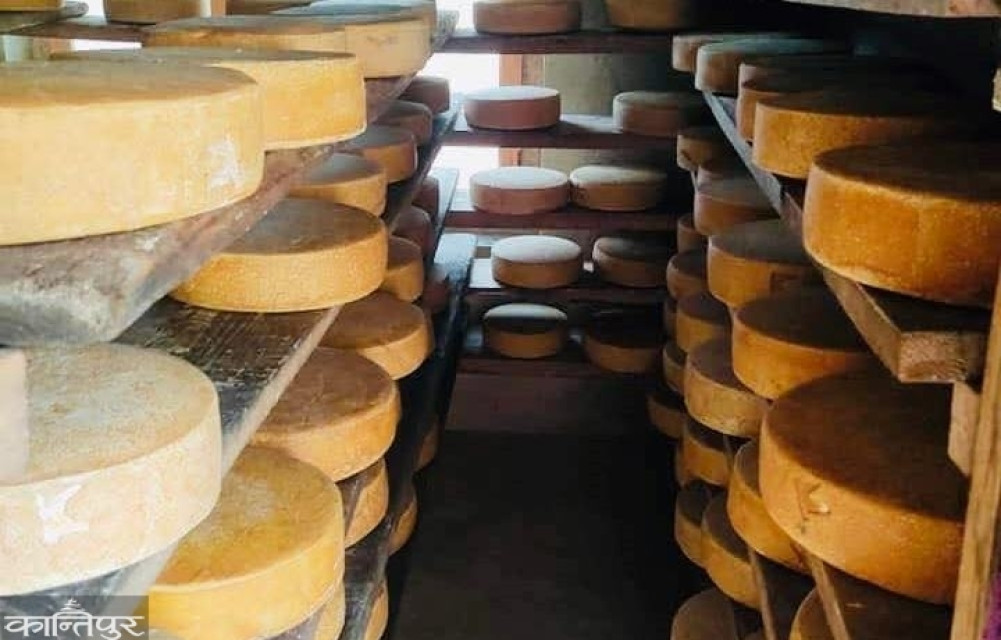
Around 2050, 18,000 kg of cheese and 6,000 kg of ghee were produced from jiri alone, but currently, barely 400 kg of cheese is produced during the season.
We use Google Cloud Translation Services. Google requires we provide the following disclaimer relating to use of this service:
This service may contain translations powered by Google. Google disclaims all warranties related to the translations, expressed or implied, including any warranties of accuracy, reliability, and any implied warranties of merchantability, fitness for a particular purpose, and noninfringement.
The production of yak cheese, the first dairy product to be commercially produced in Nepal, has been in crisis recently. At a time when milk was not readily available, the Food and Agriculture Organization of the United Nations (FAO) sent Swiss dairy expert Werner Schulthes to Nepal to help develop the cheese industry. He started producing yak cheese in 2009.
In 2009, he opened a factory in Langtang, Rasuwa, with private investment, to produce cheese from the milk of the Himalayan yak (Pothi yak). At that time, tourists visiting Langtang used to buy yak cheese. They used to bring it to Asan in Kathmandu and sell it. Six years after the factory opened in Langtang, in 2015, he opened another yak cheese factory in Thodung, Solukhumbu. In 2017, he also opened another factory in Patle, Solukhumbu.
In 2027 BS, the Dairy Development Corporation (DDC) opened a yak cheese factory in Gosainkunda for commercial production. A year later, the DDC opened a yak cheese factory in Cherdung, Jiri with the help of the Swiss government. Keshar Jirel, who became a manager at the time, remembers learning how to make cheese from Jiri's factory.
In 2031, the Swiss government trained 12 people from all over the country to make yak cheese, including Jirel. He said that he produced yak cheese as an employee of the DDC in the cheese factory in Langtang, Gosainkunda. Jirel, who has worked in a cheese factory in the Himalayan region for 28 years, informed that yak cheese was the first food item to receive an international quality mark.
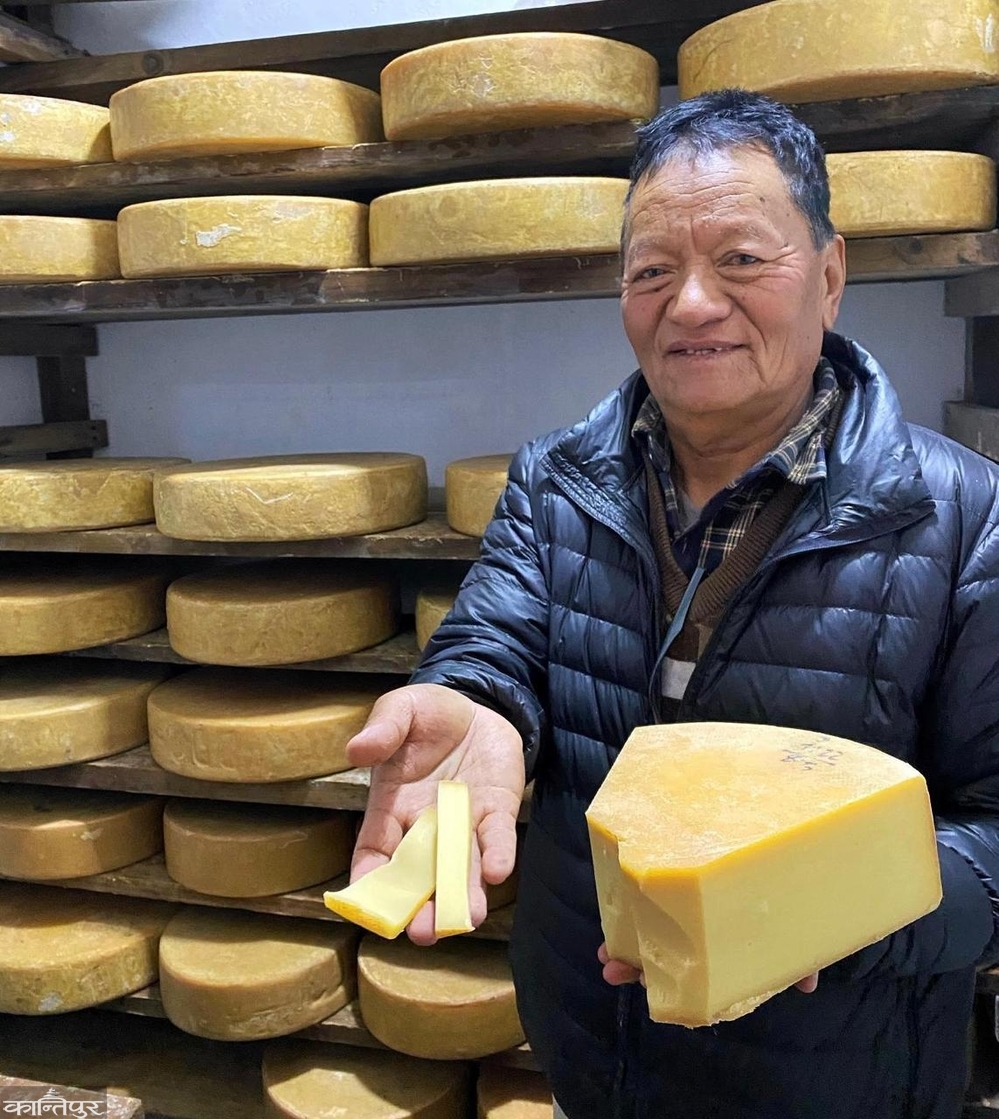
In 2009, Warner, who came with Tony Hagen, introduced milk from the Himalayan region as yak cheese internationally, he said. Jirel, who spent 28 years as an employee, had also opened a yak cheese factory in Nepal when he was born. ‘When I met Warner in 2044, he used to say that he opened the first cheese factory by giving coins to the porter and traveling to Langtang to buy milk,’ Jirel said. ‘In those days, coins worked, and you wouldn’t have to suffer the pain of that time in Jiri’s factory anymore.’
He said that in 2033, when the then King Birendra visited France, he brought yak cheese as a gift. He said that around 2040, the Bhutan and Chinese governments sent people to learn how to make yak cheese. ‘Yak cheese became even more famous after the king tasted it at a banquet there,’ said Jirel, ‘We also trained those who came from China and Bhutan.’ He said that in 2056, he studied making cheese from goat and cow milk in Switzerland and the Philippines for 4/4 months and also worked in some factories.
Yak cheese, which has a history of 75 years and originated in Langtang, was once produced in large quantities by DDC. Jirel said that around 2050, 18,000 kg of cheese and 6,000 kg of ghee were produced from Jiril alone. ‘At that time, the highest amount of yak cheese was produced in Jiri, other factories also produced 5 to 10 thousand kg,’ he said, ‘We used to produce and send it to the institute, and it was exported abroad from here.’
He said that the production of cheese was decreasing as the yak and yak breeders in the Himalayan region gradually started to be displaced. When he retired from service in 2056, the Cherdung Yak Cheese Factory produced 6 thousand kg of cheese. ‘Now, yak and yak breeders have stopped breeding in the Himalayan region, and cheese factories are closing down as the government neglects the Himalayan farmers,’ he said, ‘The yak cheese that was introduced to the world is now difficult to find, it is sad that yak cheese with a proud history is disappearing.’
There are two cheese factories owned by DDC in Jiri in Dolakha and Chankhu in Gaurishankar Rural Municipality-6. Currently, these factories barely produce 400 kg of cheese per season. Even though a yak cheese factory has been set up in Kalinchowk by the private sector, it is facing a shortage of milk. Jirel says that the main reason for the decline in yak cheese production is the decline in yak farming in the Himalayan region. He says that if farmers in the Himalayan region are not encouraged to raise yak goats, such industries will be in further crisis.