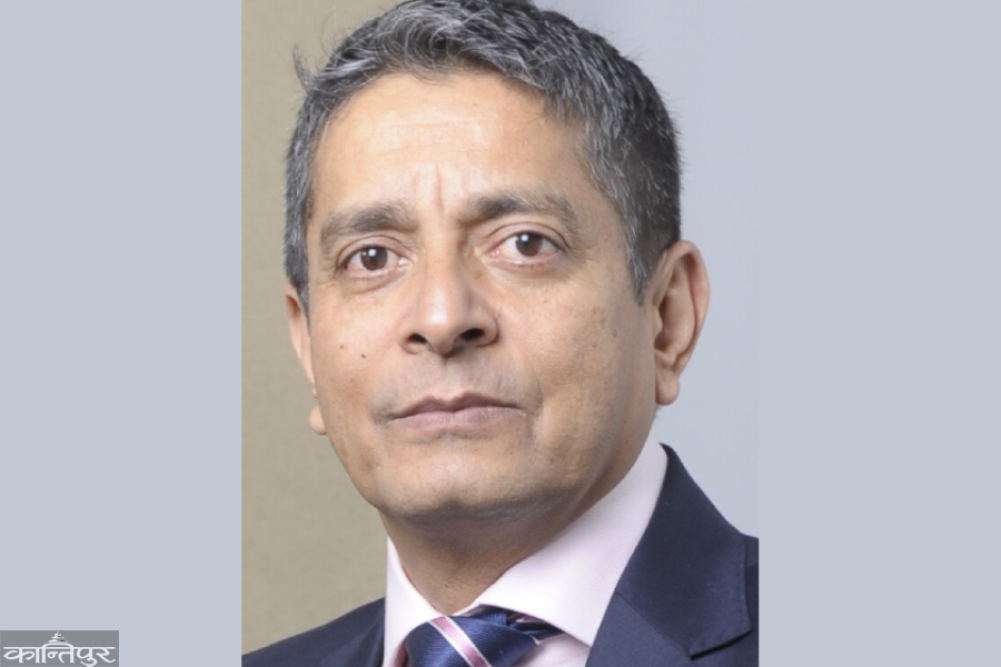
Commenting on the overall business environment being damaged by the trend of criminally arresting leaders in the private sector/banking sector, which is the backbone of the economy.
We use Google Cloud Translation Services. Google requires we provide the following disclaimer relating to use of this service:
This service may contain translations powered by Google. Google disclaims all warranties related to the translations, expressed or implied, including any warranties of accuracy, reliability, and any implied warranties of merchantability, fitness for a particular purpose, and noninfringement.
The banking sector is in a state of panic after the arrest of Nepal Investment Mega Bank (NIMB) CEO Jyoti Prakash Pandey. Banks have commented that the bank's CEO has to remain under police control even when the bank disburses loans and recovers the loans by selling the collateral as per the law. The fact that various organizations in the banking and financial sector, the central association, the Federation of Nepalese Chambers of Commerce and Industry, etc. have intensified meetings and discussions since Monday morning also confirms how panic the banking sector is in.
The Bankers Association, the umbrella organization of commercial banks, held a meeting on Monday morning and expressed its objection to the police taking CEO Pandey into custody. Immediately after this, the Nepal Bankers Association, Development Bankers Association Nepal, Nepal Financial Institutions Association and Microfinance Bankers Association issued a joint statement saying that they have drawn attention to the incident of police arresting NIMB CEO Pandey. The joint statement issued by Nepal Police and Central Investigation Bureau states that their attention was drawn to the arrest of CEO Pandey on Wednesday.
‘It is well known that banks and financial institutions have been collecting deposits from the general public and disbursing loans in a manner that supports the country’s economic growth, employment creation and entrepreneurship development by collecting deposits from the general public under the Banks and Financial Institutions Act, 2073 BS and the policies/guidelines issued by Nepal Rastra Bank,’ the statement states. ‘Section (57) of the Banks and Financial Institutions Act has given special powers to banks and financial institutions to recover loans in cases where loans have not been recovered. Therefore, the auction of collateral is within the primary process of the bank and falls within the main responsibility of the Chief Executive Officer.’
The arrest of the Chief Executive Officer may damage the reputation of the bank and jeopardize the stability of the bank, as it collects deposits from the general public and recovers loans from institutions like banks that operate in public trust.’ The bankers’ associations claim that the arrest of the Chief Executive Officer may damage the bank’s reputation and threaten the stability of the bank.
Keeping in mind the reputation of the bank and the dignity of the position of CEO, the bank associations have appealed to the bank to release CEO Pandey from detention as soon as possible and move forward with the investigation process, keeping in mind the principle of ‘hear and see’, considering the reputation of the bank and the dignity of the position of CEO. Prachanda Bahadur Shrestha, President of the Confederation of Banks and Financial Institutions, also said that it was not right to arrest the CEO on the basis of selling securities. In an interaction organized by the Confederation on Monday, President Shrestha claimed that the morale of all bank and financial institution employees has dropped when the CEO was taken into custody while selling securities according to the law.
The federation issued a statement on Thursday and said that its attention has been drawn to the incident of arresting industrialists, construction entrepreneurs and bankers from various sectors. The federation’s statement states that in the last few days, the government has drawn its serious attention to the incident of arresting industrialists, construction entrepreneurs and bankers from various sectors in the name of investigating various financial cases.
The Federation says that the trend of arresting high-ranking individuals in the private sector/banking sector, which is the backbone of the economy, in the style of criminal offenses has created fear in the overall business environment and sent a negative message to investors and the business world.
‘The arrest of the bank’s executive officer for collecting deposits from the general public and recovering bank loans based on public trust may affect the reputation of the banking sector,’ the statement said. ‘It is also expected to affect the decision-making capacity of the banking sector regarding credit flow and reduce investment, which will have a negative impact on the overall economic system of the country.’
The government has urged the Federation to conduct such investigations secretly and to investigate and prosecute cases that create civil liability against industrialists and businessmen accordingly.
The Federation has urged the government to be serious about the entire private sector, reminding us of the right to live with dignity and the principle of not being guilty until proven guilty as enshrined in the Constitution.