The sharp increase in fuel prices after the West Asian War has made the daily lives of the middle class, who rely on two-wheelers and public transport, more expensive, but the leap towards EVs is still not easy.
We use Google Cloud Translation Services. Google requires we provide the following disclaimer relating to use of this service:
This service may contain translations powered by Google. Google disclaims all warranties related to the translations, expressed or implied, including any warranties of accuracy, reliability, and any implied warranties of merchantability, fitness for a particular purpose, and noninfringement.
Due to the increase in prices after the West Asian war, Anil Neupane of Dolakha has increased his fuel expenses by about 35 percent. He says that it costs five liters of petrol a week to commute from Shankhamul in Kathmandu to the driving center where he works in Radheradhe in Bhaktapur. ‘Earlier, 7-800 rupees a week was enough, but now it costs up to 1,000-1,100 rupees,’ he says, ‘Even the little money that can be saved is spent on petrol.’ He says that he now has to spend up to 4,500 rupees a month on petrol.
The increase in fuel prices has affected the livelihood of Nepalis, from cooking to transportation, as their expenses have increased significantly. Since the US and Israel started the war with Iran, the cost of all types of fuel used in Nepal has increased drastically. The price of petrol, which was available at 157 rupees per liter, has reached 217 rupees, while the price of diesel has increased from 142 to 225 rupees. Although there is no problem in supply such that there is no need to queue at the pumps, prices have continued to increase.
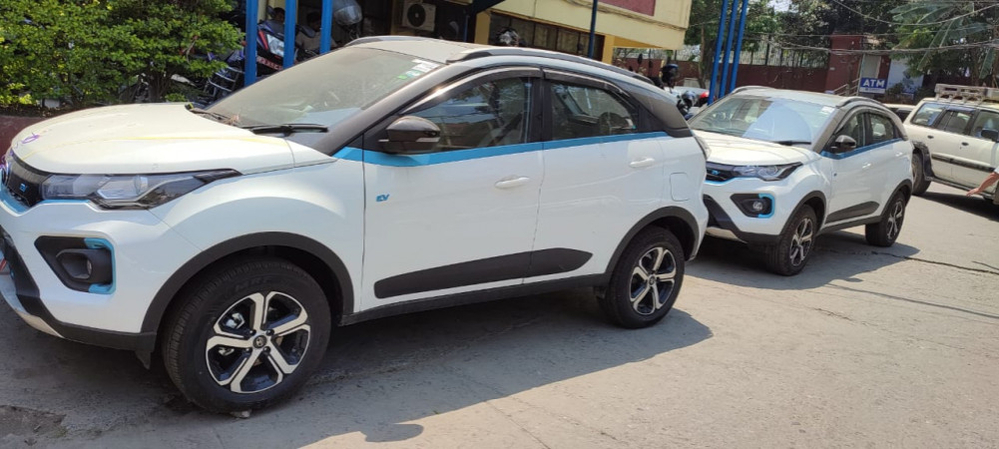
According to the Customs Department, last year, electric vehicles accounted for 71 percent of imported four-wheelers and diesel-petrol vehicles for 29 percent, while electric bikes accounted for only about 6 percent of two-wheelers. This seems to have hit the middle class, which relies on two-wheelers and uses public transport services the hardest. Public transport fares also fluctuate according to the fluctuations in fuel prices. The government has recently increased passenger vehicle fares by an average of 16.71 percent.
After the government increased the price of petrol to Rs 187 per liter for the second time, Akhil Krantikari Central Secretary Pratibha Poudel left her scooter at home and started taking public buses. ‘But the fares of public vehicles have also increased, and on top of that, the student discount on public buses is not easily available, citing the increase in fuel prices,’ she said. ‘Students and low-income daily wage earners have been affected the most.’
When the price of petrol reached Rs 219 per liter, various trolls have emerged on social media. So much so that, ‘Punte beer has become cheaper than petrol: now think for yourself, should you go for a walk or a jog?’ has been seen writing.
 While the price of petrol is increasing, the ride-sharing business has also been affected. Drivers have even staged a protest against the ride-sharing company. They protested with slogans like ‘Petrol is expensive, fare is cheap’ and ‘Stop exploiting riders’. Radha Khatiwada of Tarakeshwar, who uses a ride-sharing platform daily to reach her office on time after the office starts at 9 am, has also been affected by the increase in petrol prices. She said that the monthly cost of ride-sharing used to be Rs 11,000, but now it costs up to Rs 15,500. 'I have to reach the office by 9 am, it is difficult to reach on time by taking a public bus,' she said, 'I use ride-sharing to get there on time.'
To prevent fuel shortages in the country and reduce consumption, the government has declared Saturdays and Sundays as holidays. According to the Nepal Oil Corporation, only diesel is used in public transport, school buses, and large vehicles in Nepal. Two-wheelers to small vehicles have been operating on petrol. It is not that there is no alternative to petroleum vehicles in the country. From electric scooters to bikes are available in the market. There is also sufficient clean energy produced in the country for that.
However, sellers say that the 'range anxiety' of the time consumers can drive on a single charge has not attracted them to two-wheeled electric vehicles. Even though everyone pays attention to electric vehicles before buying a vehicle, they hesitate to buy electric vehicles due to ‘range anxiety,’ says Umid Shrestha, director of Kuju Nepal, the official dealer of the Yadia brand. ‘There is range anxiety in two-wheelers. Most customers who come to understand express their concerns with questions like, ‘What if the range is not given, what if I get stuck on the road, what if I don’t pull a double load, what if it breaks down on the road?’ He says, ‘Where is the workshop again? Which product is better? Does it go off-road or not?’ They also seem to be skeptical.’
Sellers say that sales of some brands of electric bikes have also started increasing recently. In the country, electric scooters and bikes of various brands including Yadia, Niu, Super Soco, Ather, Bajaj’s Chetak, Gogoro, Segway, TVS’s iQube are available. Although there are 70 to 80 brands of vehicles in Nepal, some brands have even been discontinued, sellers say.
Segway Brand Manager Dhirendra Kushwaha says that the demand for electric vehicles increases during the energy crisis in the country. ‘More people are choosing electric vehicles as an option than a priority,’ he said. ‘I have a four-wheeled petroleum vehicle at home, so instead of buying another one, I think I should buy an electric one.’ He said that the demand for electric vehicles in the market increased during the blockade, but it has decreased slightly since then and has increased again now. He said that since they have been selling the same model of vehicle since 2023, the market has grown by 20 to 30 percent.
Even though the price of petrol has increased, sellers say that there has been no impact on the sale of two-wheeled vehicles powered by it. ‘Sales are going as expected,’ says Bishnu Agarwal, managing director of MAW Group, Yamaha’s authorized dealer. ‘There is no significant impact of the increase in petrol prices or the energy crisis, Yamaha’s sales rate is the same as usual.’
Nepal is in the news globally for having the second-fastest rate of electric vehicle adoption in the world. Data from global energy think tank Amber shows that more than 70 percent of new car sales will be electric by 2025. Norway is in first place with a 97 percent EV share. Nepal has surpassed countries like Denmark, Sweden and Iceland. Nepal is far ahead of major markets like the UK, Germany and the United States in the percentage of EV vehicles. However, sales of two-wheelers are still low in Nepal.

