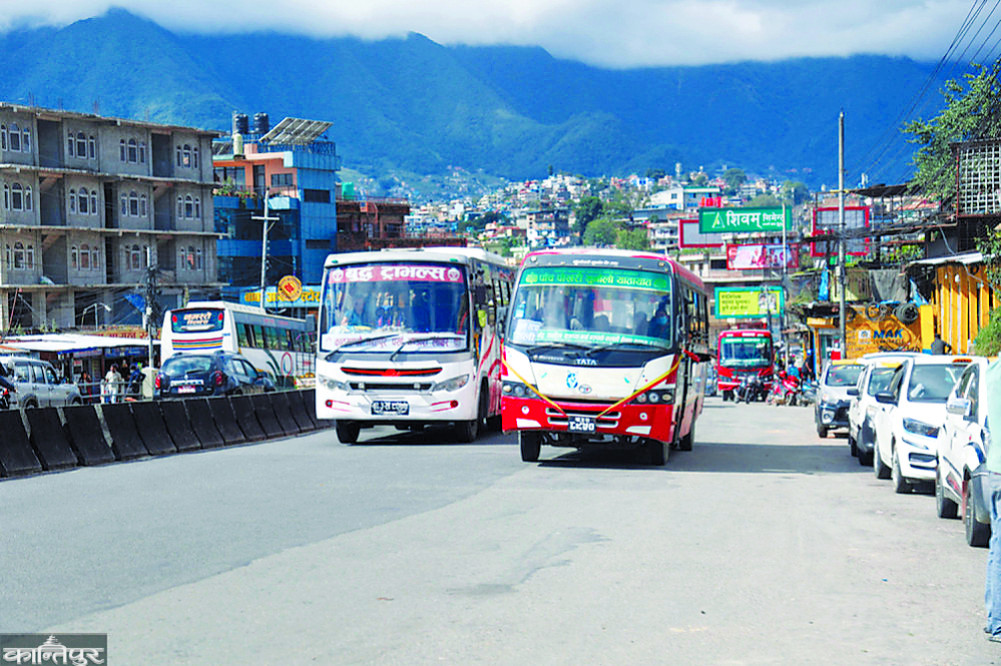
The three-day general convention will elect a new central working committee for the next three years.
We use Google Cloud Translation Services. Google requires we provide the following disclaimer relating to use of this service:
This service may contain translations powered by Google. Google disclaims all warranties related to the translations, expressed or implied, including any warranties of accuracy, reliability, and any implied warranties of merchantability, fitness for a particular purpose, and noninfringement.
The seventh national convention of the Nepal Transport Entrepreneurs National Federation, the umbrella organization of transport entrepreneurs, is starting in Pokhara on Sunday. The three-day convention, which will begin with the inauguration on Sunday, will elect a new central working committee for the next three years.
The federation has stated that more than 1,500 voters will participate in this convention, which will have representation from 387 organizations across the country. A total of around 3,500 to 4,000 participants, including observers, are expected to gather. The number of participants in this year's convention has almost doubled compared to the sixth convention held in Godavari four years ago, said Bijay Bahadur Swar, central president of the federation. 'At that time, there were about 700 representatives.' There are now more than 1,500 voters,' he said, 'The occupancy of hotels in Pokhara has also confirmed this pressure.'
....................................
Main priorities of the three contenders
Sitaula: Online-cashless-GPS system, classified vehicle management, insurance policy reform
KC: Professional dignity, scientific fares, dialogue with the state on accident reduction
Chhetri: Unification of the broken transport federations, oil subsidy, interest rate reduction in public transport
....................................
The main agenda of the general convention is to amend old laws to secure investments worth more than Rs 1.3 trillion and make the public transport sector technology-friendly, says Swar. 'There is more than Rs 1.3 trillion investment in the transport sector, which is purely Nepali investment, especially from the middle and lower middle classes,' he said, 'Of the approximately four lakh vehicles across the country, 65 percent are self-employed entrepreneurs.' Directly, 1.5 million workers and about 4 million people are dependent on this business.'
Swar concluded that old laws are the biggest obstacle in the transport sector. 'We have urged the government to move forward with the work, even if it is through an ordinance, to change the old and obstructive laws 'on a fast track,' said Swar. The chairman said that a committee has been formed in the Prime Minister's Office to discuss the amendment of acts, rules and laws, and talks are also ongoing with the Minister of Physical Infrastructure and Transport.
Regarding the work and plans of the upcoming working committee, Chairman Swar said that the report prepared after 13 months of hard work by the Public Transport Reform Suggestion Commission formed when Narayan Kaji Shrestha was the minister should be considered as a guiding document. The report has reached the cabinet, although it was delayed due to the change of government. The report includes points on accident reduction, urban transport management, investment protection for long and medium-distance vehicles, including workers in the social security fund, and making the transport sector completely technology-friendly.
According to the program of the general convention, the report of the general secretary and treasurer will be presented in the closed session on Monday and the election process will begin on Tuesday. There is an arrangement to elect a 78-member central working committee including representatives of various class organizations and nominate some more members later. 40 electronic voting machines will be used for voting.
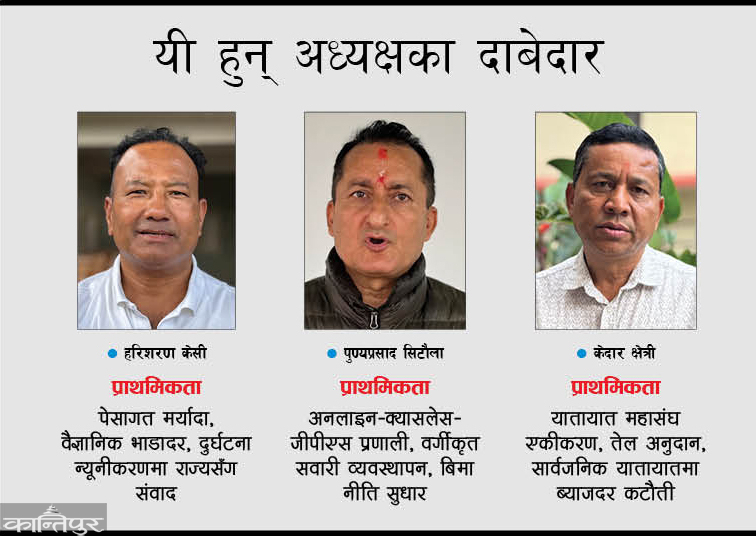
Punya Prasad Sitaula (Saroj), Harisharan KC (HUS) and Kedar Chhetri are currently in the discussion as contenders for the post of central president in the general convention. Sitaula, who is the first-ranked senior vice president in the current central working committee, has made his journey from co-treasurer to treasurer, general secretary and senior vice president in the federation.
With more than 35 years of experience in the transportation sector, Sitaula has presented technology-friendly transportation, online tickets, cashless transactions and GPS systems as his main agenda. ‘We will have to radically change the transport sector of Nepal in a technology-friendly manner through the digital system,’ he said, ‘Online, cashless and GPS systems are our agenda.’ He emphasizes that large vehicles should be classified as large on major roads, small vehicles on minor roads and vehicles suitable for hills and valleys should be classified. He has also prioritized the issue of unclear insurance policies.
Harisharan KC, who has served as secretary, deputy secretary general, vice president and senior vice president for two terms, starting from a central member, is claiming the highest position in this general convention. Having extensive experience in the transport sector and having also fulfilled the responsibility of acting president of the federation, he has urged voters to vote based on the interests of their profession, not party or personal relationships. ‘I will vote for a candidate who will protect my profession, not a friend or a party,’ he said, ‘I will not let the heads of transport entrepreneurs bow, I will keep my head high.’ He said that he would raise his voice in favor of a scientific and stable fare policy instead of the practice of changing fares with the fluctuation of oil prices.
Kedar Chhetri, chairman of Nepal Araniko Yatayat Sewa Private Limited, is an experienced businessman who has been the vice-chairman and senior vice-chairman of the Federation twice. Despite being a presidential candidate in the fifth general convention, Chhetri, who lost to Dinesh Bhandari, is ready to take the central leadership again this time.
‘Nepal’s public transport is in a very bad condition, and even the workers, businessmen and passengers involved in it have not been able to breathe a sigh of satisfaction,’ said Chhetri. He presented the example of building a bus park with private investment from businessmen under his leadership due to the lack of bus parks going out of Kathmandu. His policy is to pressure the government to reduce fuel subsidies and investment interest rates in transport rather than increasing fares.
Emphasizing that a unanimous working committee should be elected rather than voting, Chhetri said, ‘No one should lose, let Nepal’s public transport entrepreneurs win.’ Apart from this, Sanukaji Shrestha’s name is also in the news as a presidential candidate. However, he has said that his organization will move forward based on the decision of Nepal Democratic Transport Entrepreneurs.
Gandaki and Koshi provinces of the federation have already elected their leadership through conventions. Mahesh Thapa (Ganesh) and Koshi coordinator Saroj Shrestha have been unanimously elected as Gandaki coordinators. The remaining 5 provincial committees will be elected through the Pokhara general convention, says outgoing Gandaki coordinator Kedar Poudel.
Chairman Swar said that there is also an objective behind choosing Pokhara as the venue for the general convention to support local tourism. Pokhara's cable car has arranged a 25 percent discount and 'pick up and drop' facility for participating entrepreneurs. He has made it clear that he is in favor of generational change. 'The organization should not always be occupied by one person, new friends should be upgraded,' he said, 'I am thinking of moving forward by transferring leadership.'
Law amendment to secure investment of 1.3 trillion is the main agenda: Chairman Swar [Interview]
The seventh national general convention of the National Federation of Nepal Transport Entrepreneurs is starting in Pokhara from Sunday. The general convention will elect a new working committee for the next three years. In this context, an edited excerpt of a conversation with the central president of the federation, Vijay Bahadur Swar, on the preparations for the general convention, agenda and challenges in the transport sector:
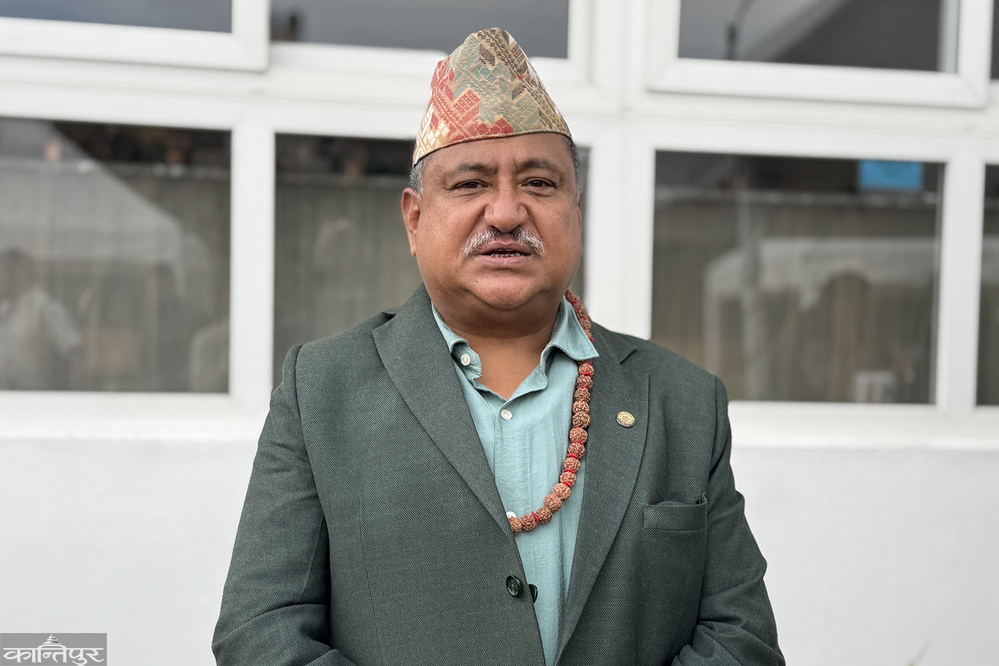 Central president of the National Federation of Nepal Transport Entrepreneurs, Vijay Bahadur Swar. Photo: Deepak Pariyar/Kantipur
The seventh national convention of the National Federation of Nepal Transport Entrepreneurs is starting in Pokhara, what is the status of the preparations and the presence of representatives so far?
There is unprecedented enthusiasm among businessmen across the country for this convention. Its importance is also great since the transport sector is the mainstay of all infrastructure. The number of participants this time has almost doubled compared to the previous (sixth) Godavari convention four years ago. At that time, there were about 700 representatives. Now, more than 1,500 are voters. Around 3,500 to 4,000 people are expected to gather, including observers and other friends. The 'occupancy' of hotels in Pokhara has also confirmed this pressure.
Is there any special reason for choosing Pokhara as the convention venue?
Pokhara, a tourist city in Gandaki Province, is beautiful in itself. The natural environment here will also provide a 'refreshment' to business friends. It will also greatly help local tourism. We have collaborated with hotel associations and other tourism organizations. The cable car here has also arranged a 25 percent discount for business people and 'pick up and drop'. Overall, this has become more like a celebration than just a general convention.
As soon as the general convention is called, the election excitement also increases, what is your opinion on the leadership?
Yes, this time the election excitement has been seen more than in the past. Statutoryly, I still had one term left, but I personally am in favor of generational change. The organization should not always be occupied by one person. I believe that new friends should be 'upgraded' and the leadership should be made dynamic. I am thinking of moving forward by transferring the leadership and we will complete it amicably.
What is the share and impact of the transport sector in Nepal's economy?
There is more than 1.3 trillion rupees invested in this sector, which is purely Nepali investment. Especially the middle and lower middle class has invested in it. There are about 400,000 vehicles across the country, of which 65 percent are self-employed. 1.5 million workers and about 4 million people are directly dependent on this business. Therefore, its impact on the GDP and the country's economic growth is huge.
What kind of talks are being held with the government to solve the problems of the transport sector?
We are in continuous talks with the government. A committee is being formed in the Prime Minister's Office to discuss the amendment of acts, rules and laws. Our team is also in dialogue with the Minister of Physical Infrastructure and Transport. Our main concern is how to make public transport citizen-friendly, technology-friendly and modern. We have urged the government to move forward with the work, even if it is through an ordinance, to change the old and obstructive acts from the 'fast track'.
What do you see as the main tasks that the upcoming working committee should prioritize?
We have clear guidance. In the past, when Narayan Kaji Shrestha was the minister, a Public Transport Reform Suggestion Commission was formed, which took 13 months to prepare a detailed report. The report includes points such as accident reduction and safety measures, proper management of urban transport, investment protection for long and medium-distance vehicles, ensuring the future of workers by including them in the social security fund, and making the transport sector completely technology-friendly. This is a document for us. Despite some delays due to the change of government, it has reached the cabinet. The upcoming working committee will now have to work based on this guidance to ensure that the citizens, the government, and the investment of businessmen are safe. The biggest obstacle for us is the old laws, changing them is the first priority.