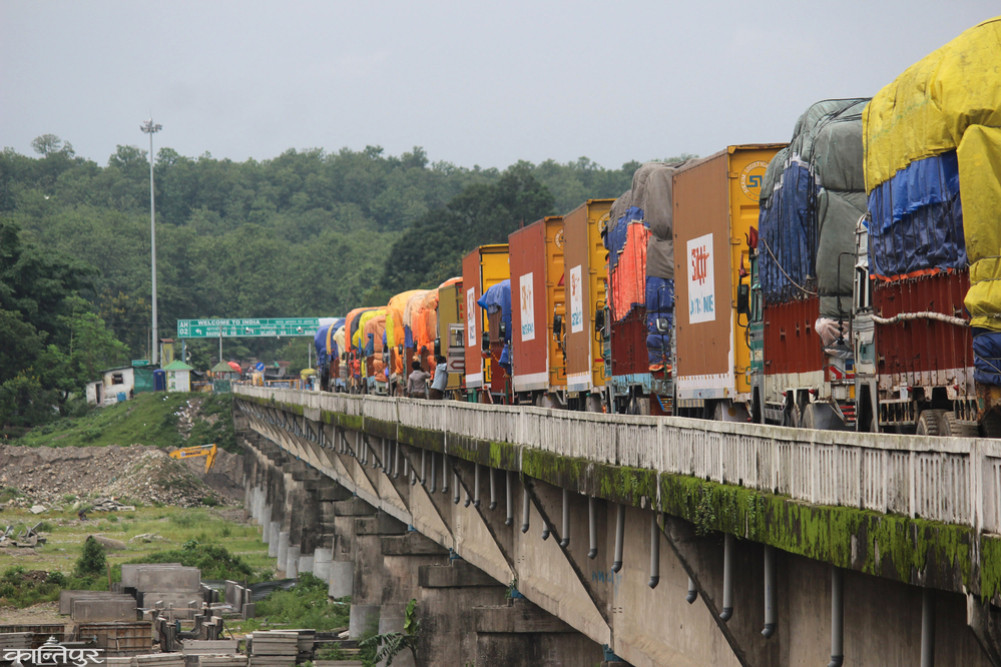
Nepali tea is stopped at the border and taken to Kolkata for testing. It can take at least two weeks for the report to come from there. Waiting for the report can spoil the tea for up to 15 days. The cost increases.
We use Google Cloud Translation Services. Google requires we provide the following disclaimer relating to use of this service:
This service may contain translations powered by Google. Google disclaims all warranties related to the translations, expressed or implied, including any warranties of accuracy, reliability, and any implied warranties of merchantability, fitness for a particular purpose, and noninfringement.
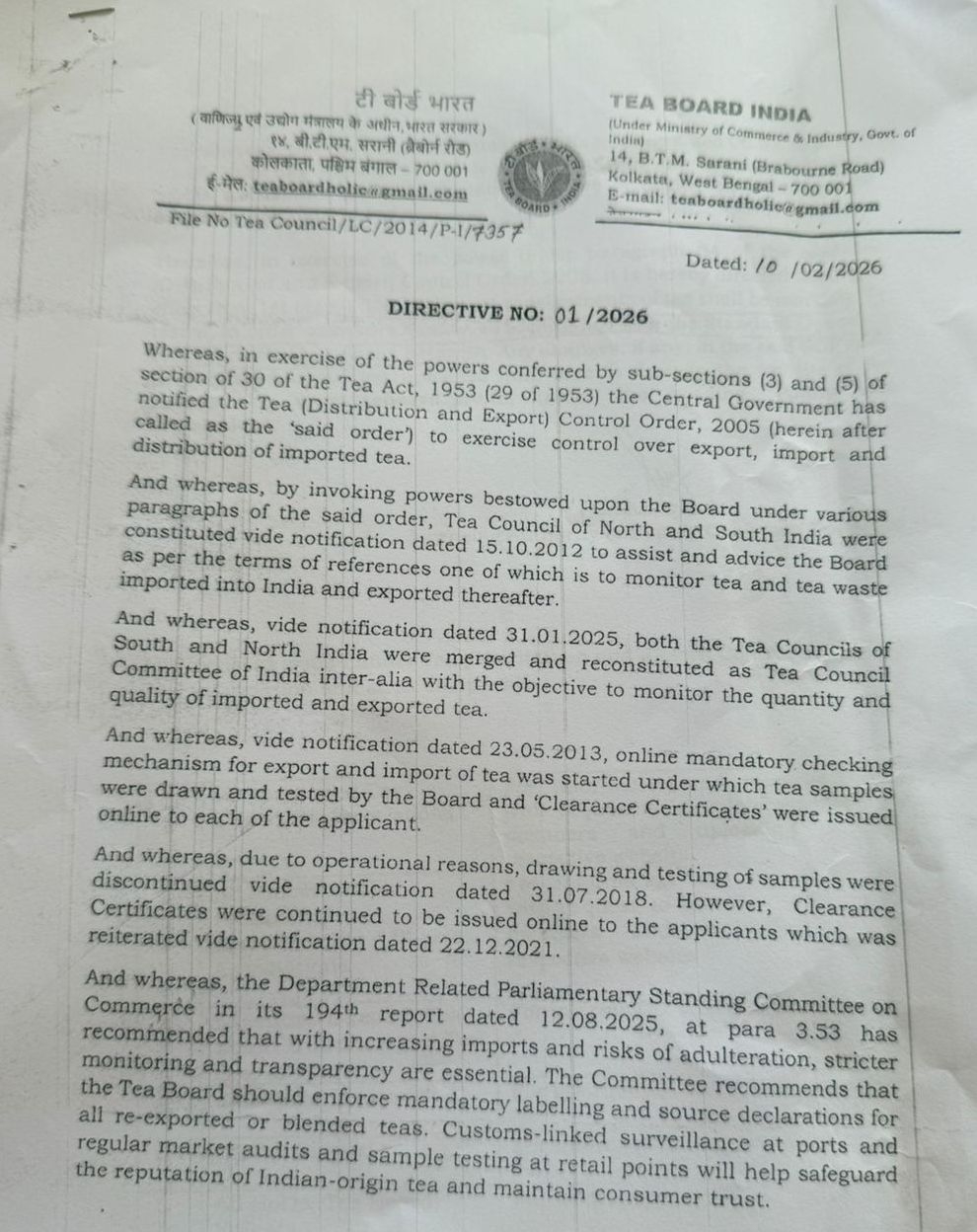
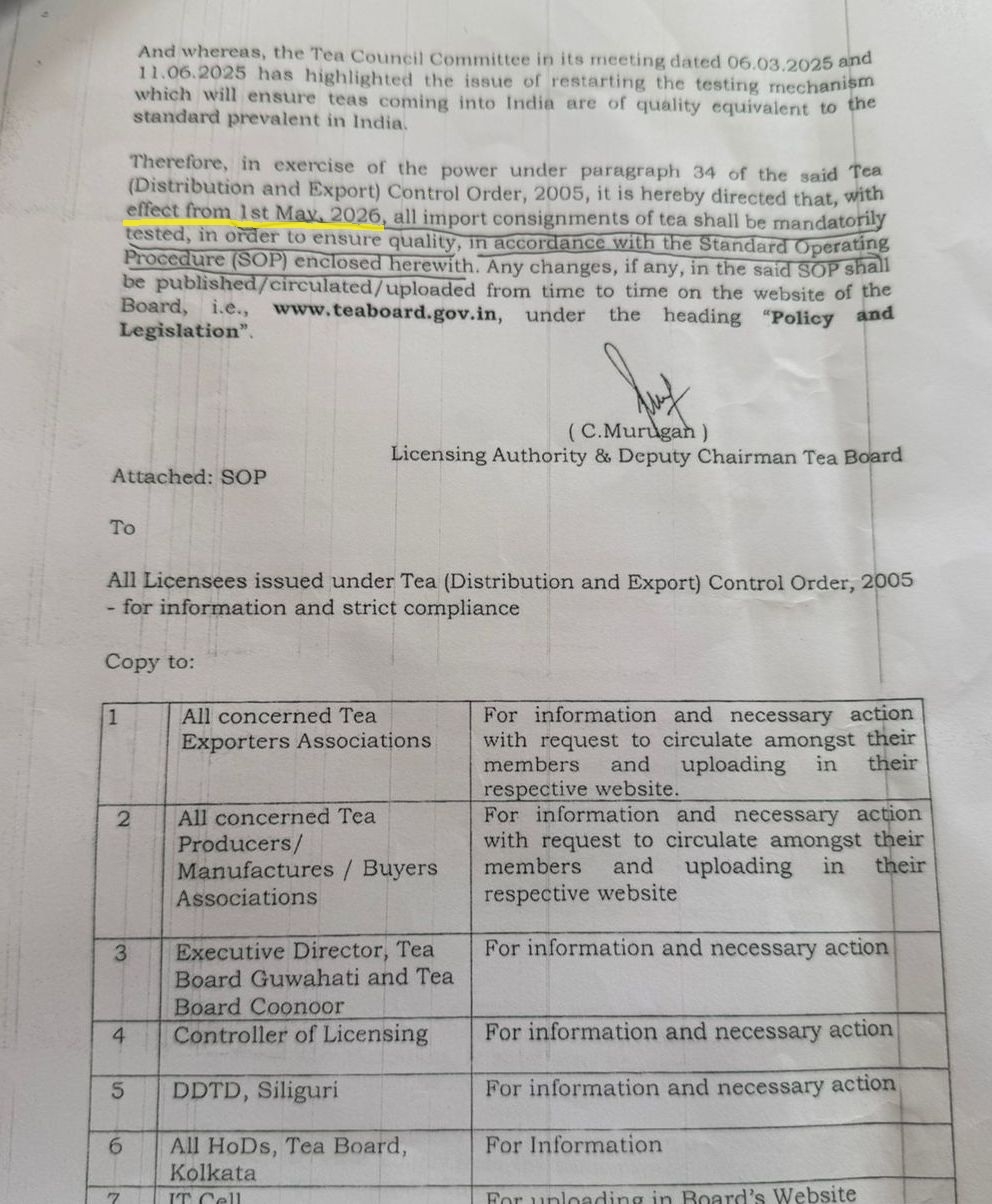
India is set to tighten its grip on Nepali tea again in the name of quality control. Effective from Friday, May 1, the Tea Board of India will conduct mandatory laboratory testing of every container of tea exported from Nepal to India under the name of ‘Standard Operating Procedure’.
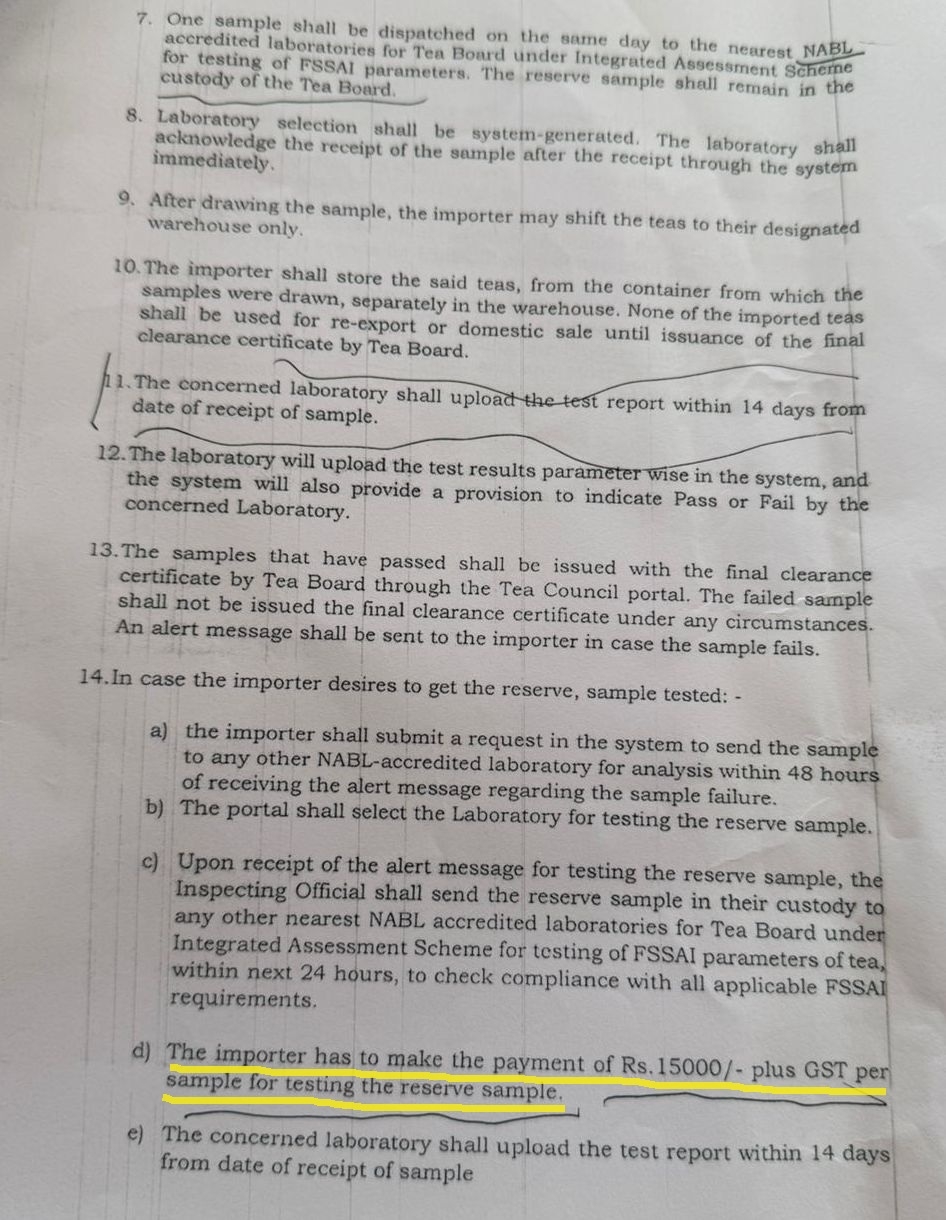
Within 24 hours, the board officials will collect two sets of samples of 500 grams each from any of the five containers. The final ‘clearance’ will be given only after the sample testing.
The ‘Tea (Distribution and Export) Control Order, 2005’ was issued in exercise of the powers vested in it under clauses (3) and (5) of Section 30 of the Tea Act, 1953 (Act No. 29 of 1953). Which has made provisions to control the export, import and distribution of tea.
Farmers and industrialists have accused the government of trying to impose an ‘undeclared blockade’ on Nepali tea by implementing the new system on tea imports.
Effective from Friday, every container of tea exported from Nepal to India will no longer be allowed to enter India without mandatory laboratory testing. This will make the export process complicated, expensive and slow, according to businessmen. ‘It seems like India’s intention to impose an undeclared blockade on Nepali tea,’ says Uday Chapagain, advisor to the Export Federation and tea entrepreneur. ‘India’s inner intention to stop Nepali tea seems to be .’
According to Chapagain, Nepali tea is stopped at the border area and taken to Kolkata for sample testing . It can take at least two weeks for the report to come from Kolkata . Waiting for the report for 15 days can spoil the tea due to sun and water . The cost increases .
‘There is no doubt that the report will be positive even after 15 days,’ says Chapagain, ‘It is not clear whether the report will be accepted or not based on the report.’
There is no adequate parking infrastructure in the Kakadbhitta, the main trade point in eastern Nepal, and the Panitanki area of India. This seems to be a problem even for waiting for samples of Nepali tea to be tested.
According to the new arrangement, a fee of Rs 11,120 will be charged per sample. If the sample fails, an additional Rs 15,000 will have to be spent for re-testing. ‘After this provision is implemented, tea cannot go from Nepal to India,’ says Aditya Parajuli, president of the Nepal Tea Producers Association. ‘If the vehicle is stopped until the report comes, it means that the export has been stopped.’
According to the new arrangement, a fee of Rs 11,120 will be charged per sample. If the sample fails, an additional Rs 15,000 will have to be spent for re-testing. If the customs or the Food Safety and Standards Authority of India (FSSAI) have already taken a sample, then no sample will be taken again. This will increase the cost of export drastically, says entrepreneur Chapagain.
Businessmen say that Nepali tea will find it difficult to remain competitive in the Indian market due to cost increases and delays. 'We are already forced to sell cheaply, now additional costs will increase losses,' says another tea entrepreneur, Suresh Mittal.
This crisis will not be limited to the industrialists. It will directly affect farmers. Currently, farmers get Rs 25-35 per kg of green tea leaves. They say that if exports are disrupted, the price will fall further.
Tea farmer Ramesh Dahal of Bahundangi, Jhapa, says, 'India's new policy seems to put Nepali tea in further crisis.' Dahal says that the new policy has further disappointed farmers when production had decreased by 25-30 percent last year due to the outbreak of the leafhopper insect.
The practice of open trade and easy access between Nepal and India has been going on for a long time. However, the new provision has raised questions about that practice.
India's new tea import policy is like an 'undeclared blockade' for the Nepali tea sector, exporters say. 'If a solution is not found soon through diplomatic initiatives, this industry, which depends on thousands of farmers and workers, is sure to be in serious trouble,' says Sachin Niraula, a tea entrepreneur from Bahundangi. 'Now it remains to be seen how quickly and effectively the new government will take steps to protect its tea.'