The packet must contain the details as prescribed by the Food Hygiene and Quality Act, 2081. The label must clearly state the name and type of vegetable (fresh, dried or dehydrated) used to make Gundruk.
We use Google Cloud Translation Services. Google requires we provide the following disclaimer relating to use of this service:
This service may contain translations powered by Google. Google disclaims all warranties related to the translations, expressed or implied, including any warranties of accuracy, reliability, and any implied warranties of merchantability, fitness for a particular purpose, and noninfringement.
From now on, the gundruk purchased by consumers will be safer and of higher quality. The government has implemented clear standards for the quality of gundruk produced and distributed for human consumption.
The Ministry of Agriculture and Livestock Development has set the standards for gundruk from the definition to its processing and packaging, using the authority of Section 3 of the Food Hygiene and Quality Act, 2081.
Section 3 of the Quality Act, 2081 states that the government will determine the hygiene and quality of food by publishing a notification in the Nepal Gazette from time to time. It is also mentioned in Sub-section 2 of Section 3 that it is the duty of everyone concerned to maintain the hygiene and quality determined.
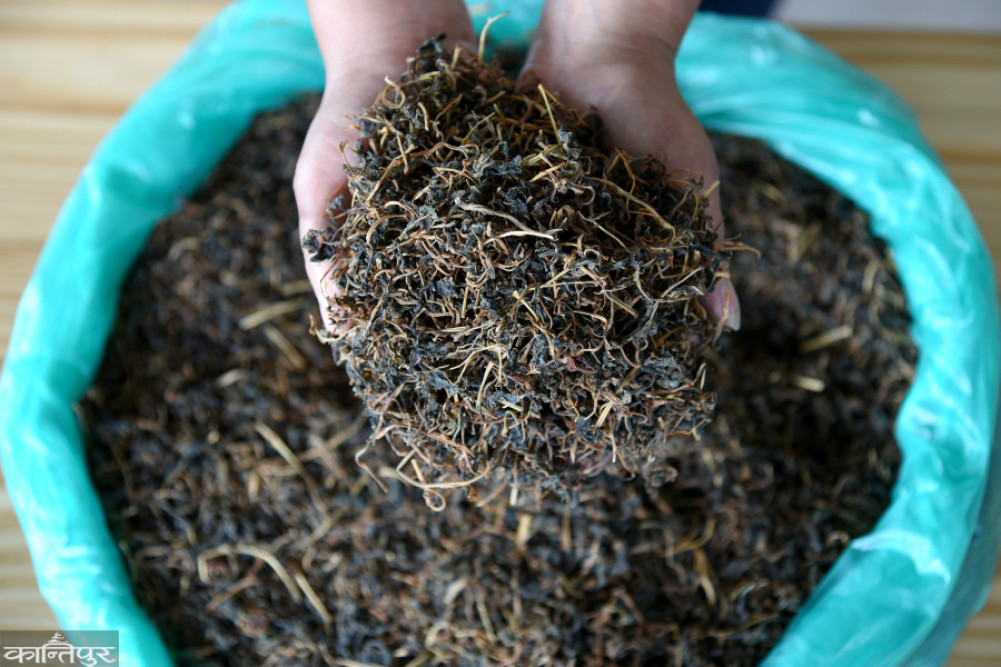
Gundruk is a food product prepared by mixing vegetables such as radish, mustard, radish leaves or duku without adding salt, naturally or through lactic acid fermentation.
It is completely prohibited to use iron, aluminum, copper or brass vessels for the fermentation process. 'Gundruk should not have mold or insects. Also, hair, chaff, bran, straw, pieces of cloth, parts of insects or mice (organic foreign matter) and pieces of stones, soil, glass, plastic or metal (inorganic foreign matter) should not be found,' states the notification regarding the quality standards of gundruk issued in the gazette.
It is also mentioned that any type of inedible color, fragrance or preservatives can be added to gundruk. The standards have been set that the moisture content of dry gundruk should not exceed 12 percent, total ash should not exceed 17 percent and acid-insoluble ash should not exceed 1 percent. The standard states that the 'E-coli' bacteria, which is considered harmful to health, should be zero per gram.
The amount of pesticide residues and heavy metals in gundruk should be as prescribed by the Ministry of Agriculture and Livestock Development. Now, it has been made mandatory to use clean and dry food-grade materials while packing gundruk. The packet must contain the details as prescribed by the Food Hygiene and Quality Act, 2081. The name and type of vegetables used to make gundruk (fresh, dried or dehydrated) should be clearly mentioned on the label.
The government has stated that the hygiene standards set by the ministry should be followed in production, storage and transportation. It is said that this will help in ensuring the quality of gundruk, which is popular in Nepali cuisine.