Nepal requires about 900,000 metric tons of bananas annually, but only about 700,000 metric tons are produced. Bananas are currently cultivated in an area of 15,700 hectares.
We use Google Cloud Translation Services. Google requires we provide the following disclaimer relating to use of this service:
This service may contain translations powered by Google. Google disclaims all warranties related to the translations, expressed or implied, including any warranties of accuracy, reliability, and any implied warranties of merchantability, fitness for a particular purpose, and noninfringement.
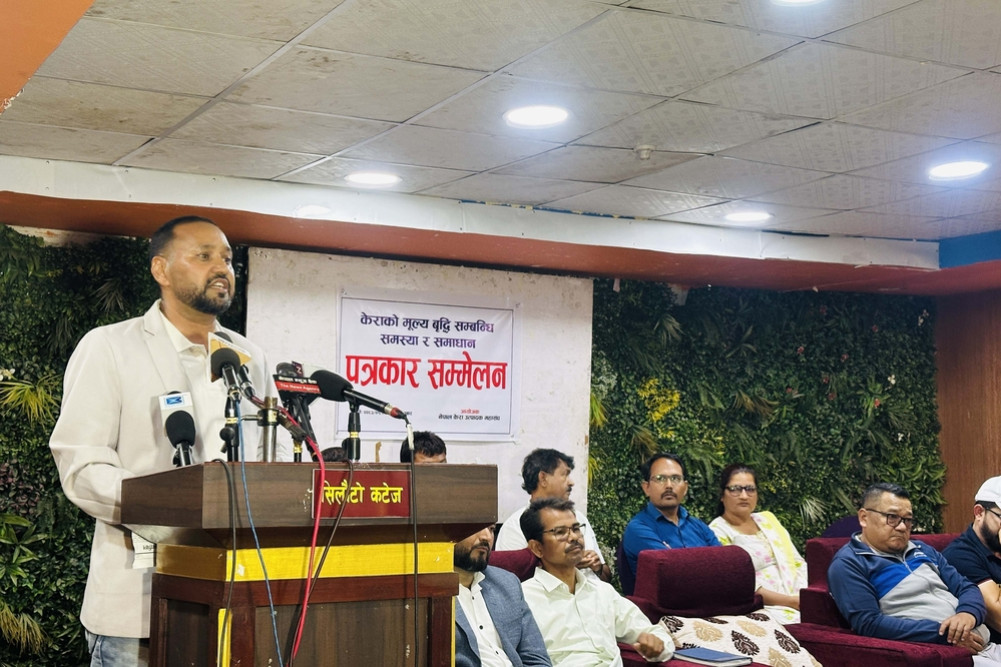
The Nepal Banana Producers Federation Ad Hoc Committee has accused middlemen of artificially increasing the price of Nepali bananas with the aim of importing bananas from India. At a press conference held in Kathmandu on Tuesday, Federation President Bishnu Hari Pant said that due to the intervention of middlemen, prices are increasing unnaturally in the market even though prices in farmers' fields have not increased.
According to him, farmers are selling local variety (Malbhog) bananas for Rs 70 to 85 per bushel and hybrid varieties (William, G-Nine) for Rs 50 to 60 per bushel. But he alleges that middlemen have created an artificial shortage and increased the consumer price to Rs 350 to 400.
'There is a strong possibility that Nepal can become self-sufficient in bananas.' However, some middlemen have manipulated the market with the aim of importing bananas from India and increased the price of Nepali bananas,' Pant said. 'We also demand the government to control the price increase and fix the minimum support price of bananas.'
Jhapa farmer Pooja Khanal also said that both consumers and farmers have been affected by the unnatural prices. ‘We farmers have not received fair prices.’ However, consumers have had to pay dearly,’ she said, ‘The government should immediately monitor the market and control prices.’ It is necessary to identify why this price has increased.’
Kalimati Fruit and Vegetable Market Development Committee Information Officer Binay Shrestha says that the imbalance in supply and demand has affected the prices. ‘Even though the government has banned Indian bananas, the prices have increased because domestic production alone is not enough,’ he said, ‘However, further research is needed on the role of middlemen and the supply chain.’
The government has been stopping licenses for banana imports from India since October 6 due to the risk of the ‘TR-4’ virus in Panama. The federation has demanded to make market monitoring effective, fix minimum support prices, make the agricultural insurance system simple and effective, arrange quality tissue-culture plants, and ensure easy supply of chemical fertilizers. The federation also held discussions with the ministers concerned on this issue.
Chairman Pant informed that he received positive feedback in discussions with the secretaries including Agriculture and Livestock Development Minister Geeta Chaudhary and Industry, Commerce and Supplies Minister Gauri Kumari.
Although Nepal requires about 900,000 metric tons of bananas annually, only about 700,000 metric tons are produced. Bananas are currently being cultivated in an area of 15,700 hectares. The federation claims that farmers have expanded their cultivation area after imports from India were stopped.