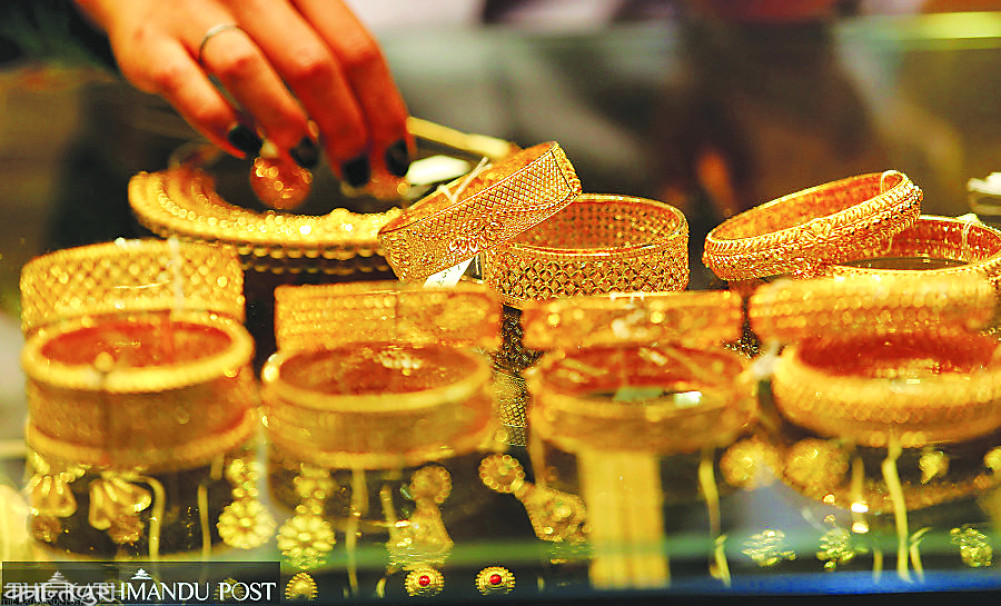
Government officials say that the latest directive is targeted at those who buy and sell precious metals in cash, as the details of those who pay through checks, QR, mobile banking or other banking mediums (devices) are kept in the bank account.
We use Google Cloud Translation Services. Google requires we provide the following disclaimer relating to use of this service:
This service may contain translations powered by Google. Google disclaims all warranties related to the translations, expressed or implied, including any warranties of accuracy, reliability, and any implied warranties of merchantability, fitness for a particular purpose, and noninfringement.
The transaction of precious metals, including gold and silver, has been tightened. The Department of Internal Revenue has issued a directive for institutions dealing in precious metals to implement the provisions of the Money Laundering Prevention Regulations. The directive issued by the department states that ‘when carrying out an emergency transaction of more than one lakh rupees or the equivalent of that amount in a day or repeatedly, or when carrying out any other act specified by the department,’
In the directive issued by the Department of Internal Revenue to the entrepreneurs (indicating institutions) dealing in precious metals or commodities regarding the prevention of money laundering and financial investment in terrorist activities, it has been provided that the details of the customers who carry out the aforementioned transactions must be identified and recorded. An official of the Department of Internal Revenue said that the directive, by emergency transaction, is intended to identify customers who buy and sell gold and silver on a whim and buy precious metals, including gold and silver, in cash, if not regularly.
‘This directive is aimed at customers who are not regular traders but occasional traders and who do such transactions in cash,’ the official said, ‘In the case of those who pay through checks, QR, mobile banking or other banking medium (device), their entire identity (details) is in the bank account. Therefore, the latest directive is more targeted at those who purchase precious metals in cash.’
The department has already directed gold and silver and other precious metals traders to update and record the identity and details of customers. According to which, traders who trade precious metals and commodities must also keep the details of those customers when they transact more than one million rupees in a day. The department has instructed that if there is any doubt about the information previously obtained for the identification of the customer, the details of such traders should be collected and sent to the concerned agency as required. ‘If there is a high-risk customer or a high-ranking person or a family member or related person of such a person, the necessary documents, data or information should be obtained from them from reliable sources for every transaction.
Similarly, the department has already instructed businessmen dealing in precious metals or commodities, including gold, silver, not to conduct commercial transactions from personal accounts. According to which, there is a provision that the index institution (businessmen dealing in precious metals or commodities, including gold and silver) should conduct their transactions only from the account held in a bank and financial institution in the name of the business institution.
‘The index institution is not allowed to use a personal account or the account held in a bank and financial institution of its employees, family members or any other person,’ the directive states, ‘When an index institution sells precious metals or commodities worth Rs 1 million or more at a time, the payment must be made from the account held in a bank and financial institution of the customer or his family.’
If there is any limit on payments made through electronic means, the department has requested Nepal Rastra Bank to make an additional provision mentioning the reference of the index institution that buys and sells precious metals or commodities. If the aforementioned directive is not followed, action will be taken as per the law and a fine of up to Rs 10 million may be imposed in the directive.
Similarly, the department has also said that businesses dealing in precious metals including gold and silver should submit the prescribed details regularly to the Financial Intelligence Unit (FIU). According to which, if a customer makes a transaction of Rs 1 million or more in a single day or repeatedly, the details of such transactions must be provided by the unit within 15 days of the date of the transaction through the ‘GoAML’ system of the Financial Intelligence Unit or by the unit. However, there is no need to submit transaction details for purchases made from banks and financial institutions.
In the case of suspicious transactions, the department has also said that businesses should prepare a suspicious transaction report through the ‘GoAML’ system or in the format prescribed by the unit and immediately submit it to the Financial Intelligence Unit. "Information and information on suspicious transaction attempts and suspicious activities should be submitted to the Financial Intelligence Unit immediately through the 'GoAML' system of the Financial Intelligence Unit or in the format specified by the unit," the directive states. "In the event that the investigating agency requests details or information of any person or organization in the course of the investigation, or if new facts or information that appear suspicious are received, such information may be provided to the Financial Intelligence Unit as additional information."
Similarly, the indicator organization should prepare and implement indicators to identify suspicious transactions and activities, and the department has also asked to update such indicators from time to time.