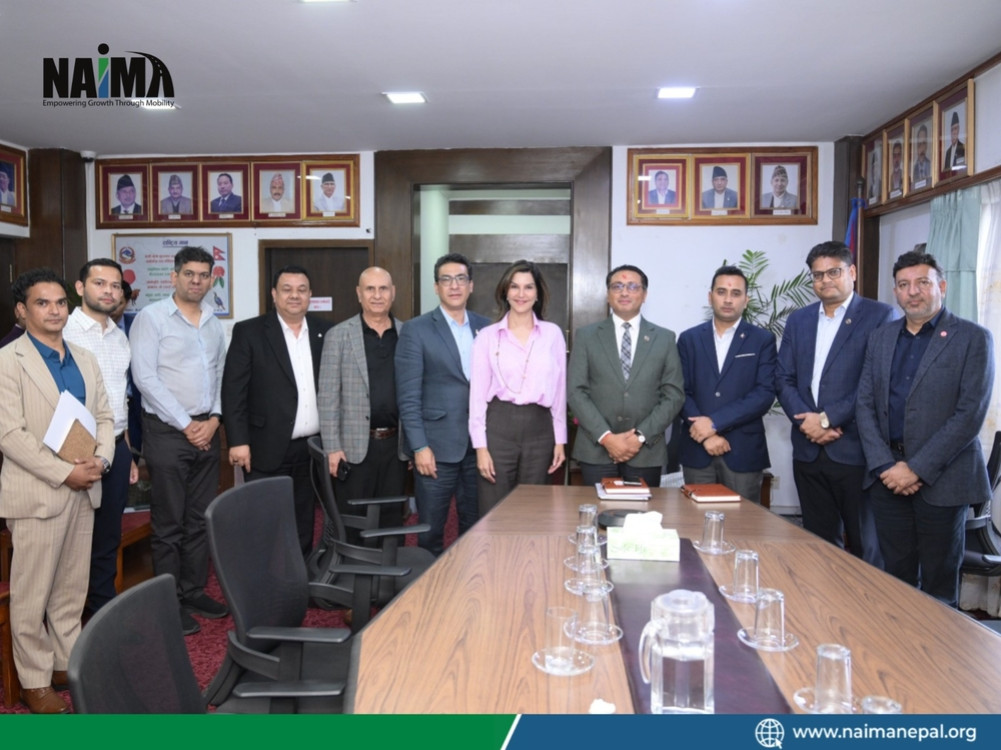
Meeting Finance Minister Wagle, Naima stressed the need for a policy environment that is stable, predictable, and based on consultation with stakeholders, and emphasized that the automobile sector should be recognized as a necessity and not a luxury.
We use Google Cloud Translation Services. Google requires we provide the following disclaimer relating to use of this service:
This service may contain translations powered by Google. Google disclaims all warranties related to the translations, expressed or implied, including any warranties of accuracy, reliability, and any implied warranties of merchantability, fitness for a particular purpose, and noninfringement.
The Nepal Automobile Importers and Manufacturers Association (NAIMA) has suggested that the state recognize four-wheeled vehicles as essential rather than luxury. A delegation led by NAIMA President Ritu Singh Baidya met Swarnim Wagle and presented suggestions on detailed policy and systemic reforms related to the automobile sector.
During the meeting, NAIMA emphasized the need for a stable, predictable and stakeholder-based policy environment and emphasized that the automobile sector should be recognized as a necessity rather than a luxury.
It is also suggested to reduce the overall tax burden, make the tax structure simple and balanced, and establish a hire purchase system with up to 80 percent credit and 20 percent down payment for vehicle purchase to facilitate financial access.
Similarly, the tendency of NAIMA to raise objections based on different interpretations at the audit level even after customs clearance is completed is creating business uncertainty. ‘A clear, uniform and transparent system is necessary. Facilitation of customs procedures, development of testing infrastructure, review of the Transport Act, integration of digital systems, road safety and pollution control, promotion of the assembly industry under ‘Make in Nepal’ and long-term policy stability should be ensured,’ said a statement from NAIMA.
The need to ensure a clear, stable and incentive-oriented policy system for electric vehicles has been pointed out. Similarly, emphasis has been placed on ensuring a balanced and fair policy system according to their technological features by properly classifying hybrid vehicles.
In the meeting, Finance Minister Wagle said that the private sector is the main pillar of Nepal’s economy and that the government is positive about creating a private sector-friendly environment and that work is being done to make the overall tax system more balanced and practical. He also expressed his commitment to incorporate those suggestions in the upcoming policies, programs and budget as much as possible.
NAIMA also met with Minister for Physical Infrastructure and Transport Sunil Lamsal and discussed current issues in the mobility and automobile sector. During the meeting, he informed that the government is taking positive initiatives to make a policy arrangement to reinvest a certain percentage of the tax revenue paid by importers and manufacturers in the development of the relevant sector.
He assured that the implementable suggestions presented by NAIMA will be implemented without delay.
NAIMA is an organization that represents automobile importers and manufacturers in Nepal, which has been playing an active role in the fields of policy reform, industry promotion and sustainable mobility.