It is estimated that the two-day public holiday will save about 10 percent, or 775,000 liters, of total fuel consumption.
We use Google Cloud Translation Services. Google requires we provide the following disclaimer relating to use of this service:
This service may contain translations powered by Google. Google disclaims all warranties related to the translations, expressed or implied, including any warranties of accuracy, reliability, and any implied warranties of merchantability, fitness for a particular purpose, and noninfringement.
The government has decided to give two days off a week, Saturday and Sunday, to government offices and educational institutions. The cabinet meeting on Sunday decided to give two days off due to the difficult situation arising in the supply of petroleum products.
Minister for Education, Science and Technology, Youth and Sports Sasmit Pokharel, who is also the government spokesperson, informed that this decision has been made to be implemented from Monday. The government has said that office hours will be from 9 am to 5 pm from Monday, except for educational institutions. To reduce fuel consumption, Nepal Oil Corporation has also suggested the government to operate an odd-even system in government and private vehicles, except for public and essential service vehicles.
The supply chain of petroleum products has been affected due to the ongoing tensions in West Asia. The increase in the price of crude oil in the international market has also been felt in Nepal. Currently, the price of petrol in Nepal has reached Rs 202 per liter and the price of diesel and kerosene has reached Rs 182 per liter.
Corporation spokesperson Manoj Thakur says that consumers should support the decision to give two days off a week. ‘We didn’t go for a holiday because we got a holiday. We have to reduce fuel consumption anyway,’ said spokesperson Thakur. Even if the government decides to give an additional holiday on Sunday, it will not contribute much to the consumption of petroleum products, says Chandika Bhatta, executive director of the corporation. ‘However, the decision to give a holiday to reduce fuel consumption should be viewed positively,’ he said, ‘The government has cars, jeeps and other small vehicles. This decision will reduce the consumption of petrol even if it is in a small amount.’
He informed that it is estimated that fuel consumption will decrease by about 10 percent after the additional holiday on Sunday. According to the corporation, the country consumes 2.5 million liters of petrol, 5 million liters of diesel and 45 thousand tons of cooking gas daily. It is estimated that 10 percent of the total consumption of petrol and diesel, or 750 thousand liters of fuel, will be saved.
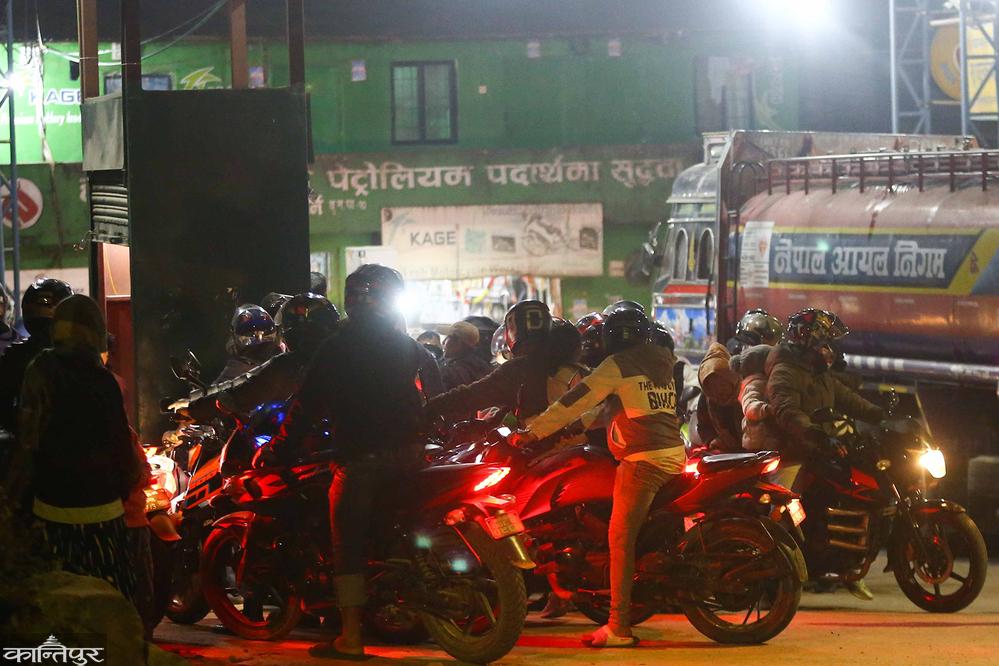 According to the corporation, at the current price, diesel consumption is worth 903.75 million rupees per day, while petrol consumption is worth 501.87 million rupees per day. Thus, fuel consumption is 1.4 billion 56 million rupees per day. ‘To reduce fuel consumption in large quantities or save money, the odd-even system should be implemented in vehicles,’ said Bhatta. Currently, the increase in the price of petroleum products has increased the corporation’s losses. He said that the corporation is losing more on diesel than on petrol. At the current price, there is a loss of Rs 120 per liter on diesel, Rs 34 on petrol and Rs 416 on cooking gas.
Diesel is consumed in Nepal in transportation, public buses, construction sectors, etc. Petrol is consumed in two-wheelers, cars, jeeps, vans, etc. Petrol is consumed in most government vehicles. Since the 2082 academic session is the last, the government has decided to start the new academic session only after Baisakh 15. Some private schools had prepared to start the 2083 academic session from the first week of Baisakh.
The government had earlier decided to give two public holidays twice in a week. Earlier, on Baisakh 14, 2079, the government had decided to give two holidays in a week. It was announced in the gazette on 26 Baisakh 2079 that it would be implemented from 1 Jestha. The government had extended the public holiday after the economy was facing increased risks due to declining foreign exchange reserves and increasing balance of payments deficit.
The government had announced that it would completely ban 10 different items and give two public holidays to increase foreign exchange reserves by reducing the import of petroleum products. However, the decision was implemented for only a month. After protests were raised that two days off a week were impractical, it was decided not to implement it from 1 Ashar.
Before that, during the tenure of the then Prime Minister Krishna Prasad Bhattarai, the practice of two days off a week was started from 2056, but it was implemented for only two years. At that time, the holiday was given on the grounds that it would increase employee productivity, ease traffic management in the morning, and reduce office operating expenses and fuel consumption.
Former Chief Secretary Bimal Koirala says that the government decision will be successful only if it is implemented effectively. ‘The government should not just say that it has given a holiday, it should also specify per capita fuel consumption. If 40 liters of petrol are consumed, arrangements should be made to provide only 30 liters,' he said. Koirala claimed that there would be no reduction in the service provided to the service recipients even if Sunday is a public holiday. 'We will provide 40 hours of service even if Sunday is not a holiday,' he said. 'Now that the office hours have been changed, even if we provide 5-day service, it will be 40 hours. The service received by the service recipients will not be affected at all.'
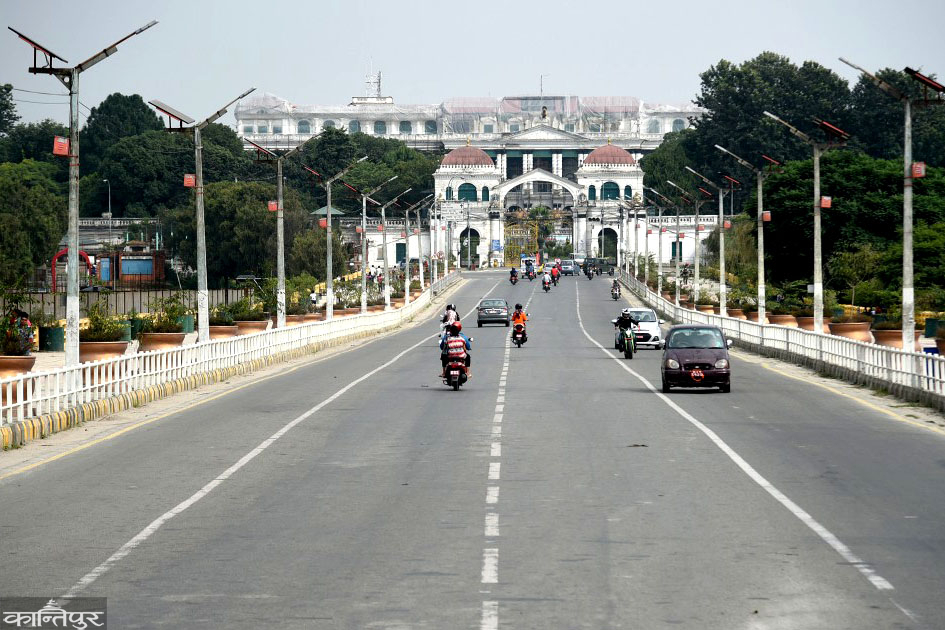 Koirala says that giving Sunday a public holiday will reduce fuel and electricity consumption and its impact will also affect the running expenses of government bodies. 'If fuel consumption decreases, government expenses will also decrease,' he said.
The Corporation has also recommended that only 200 liters of fuel be sold at a time for long-distance vehicles and a maximum of 50 liters for short-distance vehicles, and that petrol pumps should sell only 5 liters of fuel at a time for motorcycles and only 20 liters of fuel for small vehicles including cars and jeeps. The Corporation has stated that vehicles used for public transport and transportation should be operated at full capacity.
Economist Gunakar Bhatt says that the decision to make Sunday a public holiday should be taken positively as it is a necessity of the moment, amid the global energy crisis. ‘This decision is good to reduce fuel consumption in the current situation, other countries are also giving public holidays,’ he said, ‘In the future, this will also boost domestic tourism.’

