Falgunanda Rural Municipality has awarded 58 farmers who grew more than 50 bushels of rice with collective honors, cash, and certificates.
We use Google Cloud Translation Services. Google requires we provide the following disclaimer relating to use of this service:
This service may contain translations powered by Google. Google disclaims all warranties related to the translations, expressed or implied, including any warranties of accuracy, reliability, and any implied warranties of merchantability, fitness for a particular purpose, and noninfringement.
Dipsan Chemjong, 29, of Falgunanda Rural Municipality-7, grew 229 muri 5 pathi of rice this year. He went to Qatar for employment immediately after becoming a citizen and returned home after working there for 8 years. He also set a record in the village by growing 229 muri in the first year of farming.
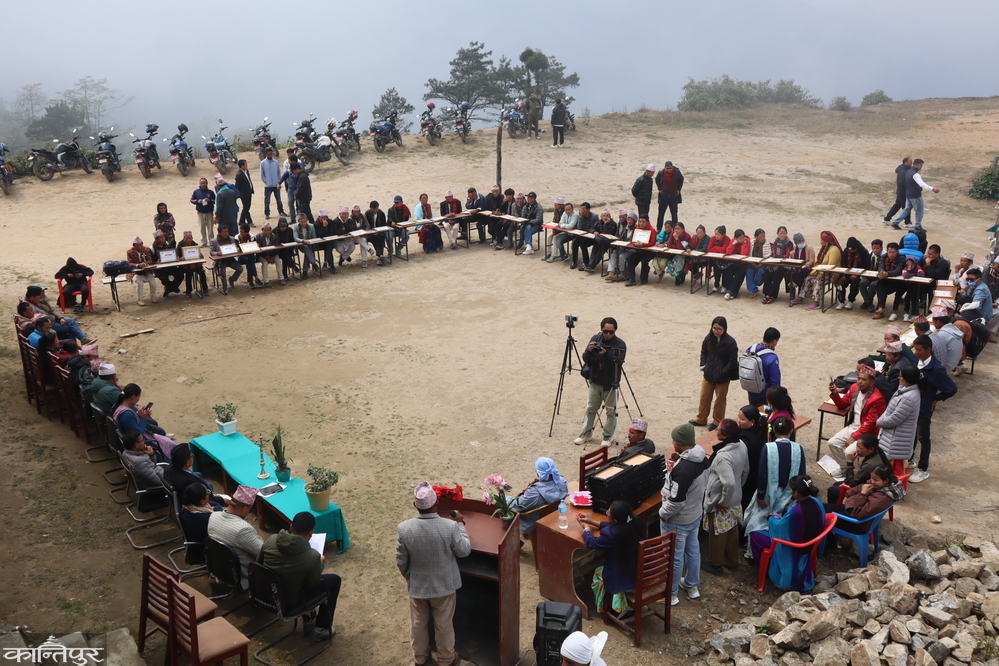
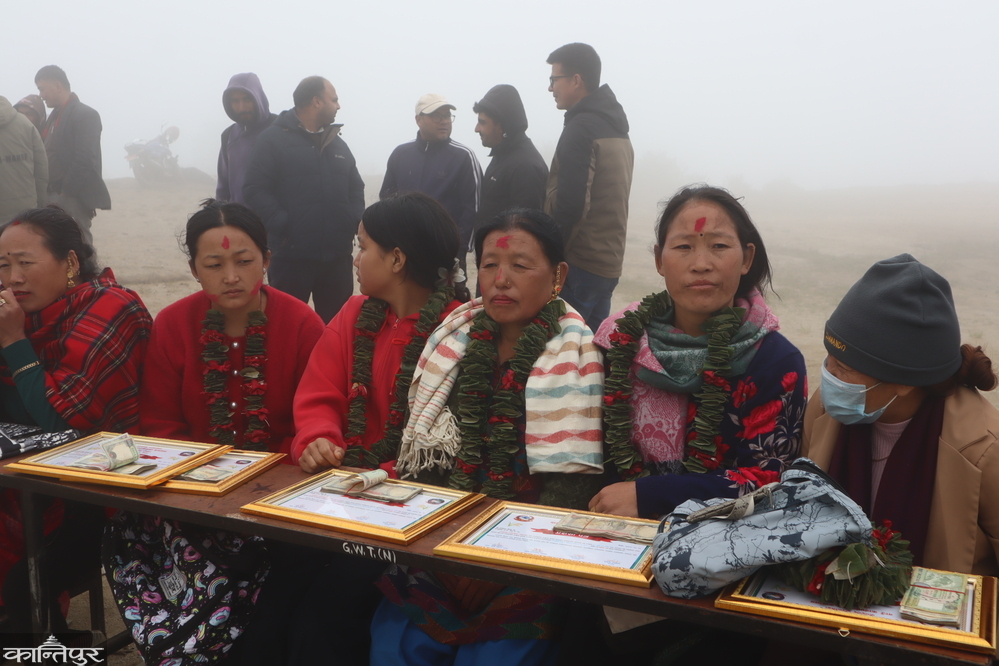
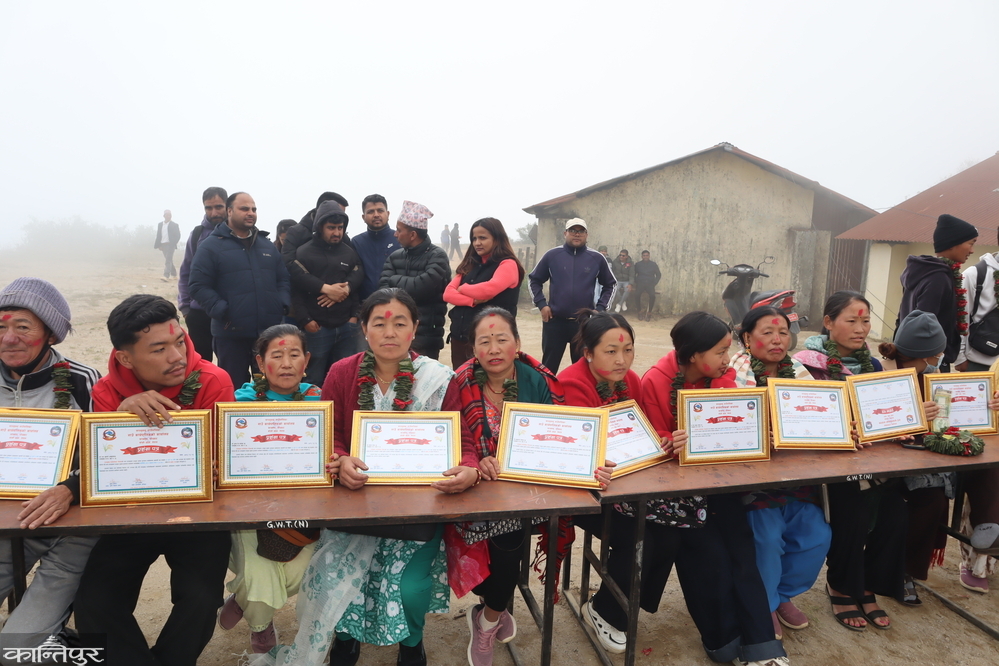
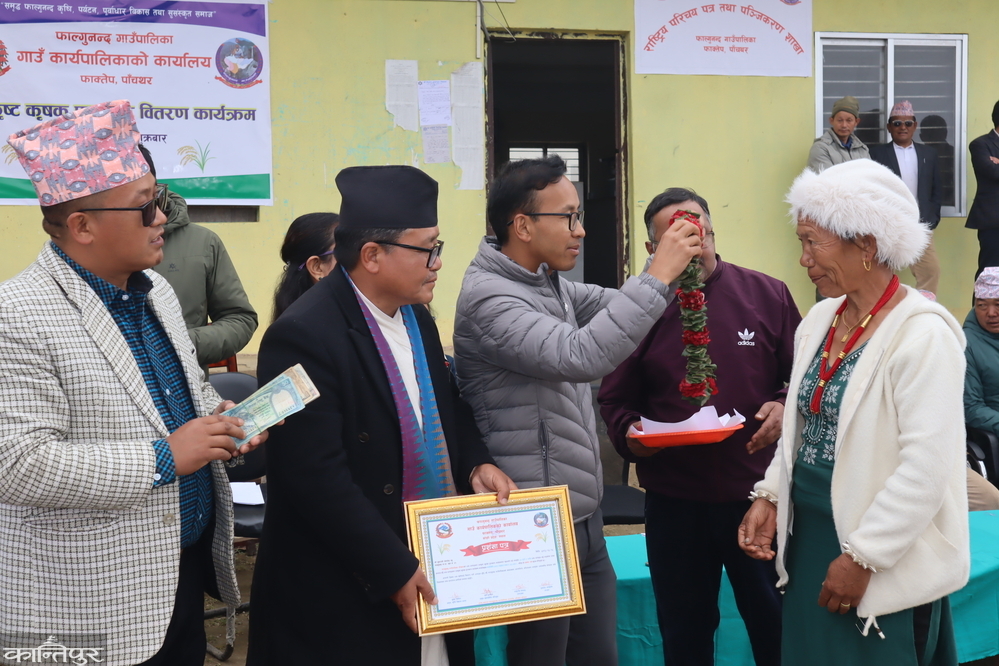
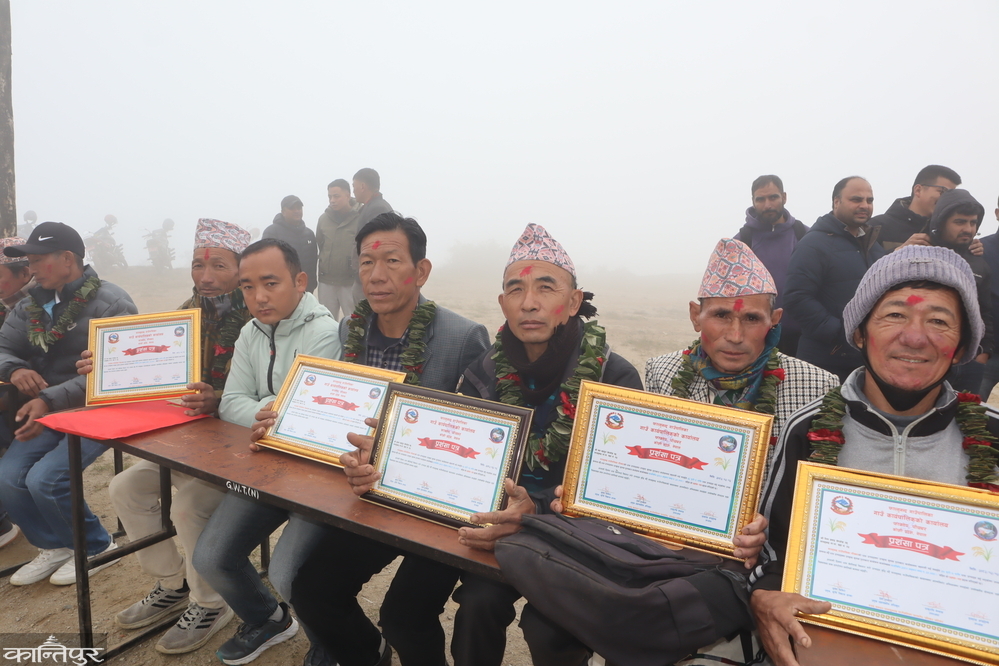
Chemjong, including 58 farmers who succeeded in becoming the municipality's best farmer, was honored by the rural municipality on Saturday by organizing a public ceremony and giving them garlands of gurans, certificates of appreciation and cash prizes.
He looked very happy when he was awarded as the best farmer. 'It seems like a lot of money can be earned abroad, but you have to take a lot of risks to earn money there. After returning home, I was planning to do something in my village. The excellent farmer incentive program put forward by the municipality gave me the courage to return to agriculture,' he said.
Chemjong's farm is only 10 ropanis. This year, he had taken an additional 35 ropanis of farm in addition to his 10 ropani and planted a 90-pathi bed. He said that 90 pathi rice seeds have produced so much rice.
'If you work hard, you can earn well while staying with your family. I advise the young people who are diverting their minds abroad to do something here,' he said.
After the award, Makar Bahadur Tamang of Falgunanda-1 came second this year by growing 158 muri 8 pathi of rice. Last year, he grew 174 muri of rice and the year before that, 2080 BS, and was continuously awarded as the best farmer with honors.
Tamang, who has been receiving awards continuously for three years, also returned to Nepal after working in Saudi Arabia.
He said that after living abroad for about three years, he could not bear the hardships there and started planting rice in his own village, thinking that he should do something.
Tamang has only a small field in his name that can grow 2 pathi of seeds. He also cultivated this much rice by cultivating in adhiya and kut.
‘This year, I could not come first because the fields that grow more than 50 muri of rice were washed away by the flood, but I ended up coming second,’ he said.
Similarly, Nar Bahadur Chemjong of Falgunanda-7, who grew 132 muri 16 pathi of rice, came third.
‘Before the rural municipality gave the award, rice could barely be grown up to 40 muris. After the award was announced, I took land from Adhiya and Kutma and started farming. Earlier, no one knew me, but now I am known as a farmer who grows a lot of rice all over the country,’ Makar Bahadur shared his experience.
Phalgunanda Rural Municipality of Panchthar has been giving cash awards to encourage farmers who grow more than 50 muris of rice. The rural municipality has started such a program since 2080 BS.
The rural municipality has made a policy and gives a cash award of Rs 30,000 to those who grow more than 50 muris of rice and Rs 50,000 to those who grow more than 100 muris.
This year, three people, Dipsan, Makar Bahadur and Nar Bahadur, have received a cash award of Rs 50,000 for growing more than 100 muris of rice, while the remaining 55 people have been awarded for growing 50 to 100 muris of rice.
Chairman Brijhang Angdembe says that the awards were given to encourage farmers after the youth left and fertile fields became barren.
‘This policy has been taken to increase agricultural production as well as to make barren land fertile,’ said Angdembe.
After the municipality started encouraging farmers, there has been a significant increase in rice production along with rice farmers.
According to the municipality’s data, in 2080 BS, the number of farmers growing more than 50 muri rice was only 29. In 2081 BS, it increased to 42, and this year 58 people received the Kisalen Award.
According to him, in the first year the awards were announced, the awarded farmers grew 1,730 muri rice here, but in 2081, the production increased to 2,678 muri. Similarly, this year, the number of farmers receiving awards increased from 42 to 58, and 3,684 muri rice has been grown.
Angdembe says that the rice produced by farmers outside the scope of the award is not accounted for.
The rural municipality issues a public notice to farmers to submit claims for the award after the rice harvesting season begins. After the farmers submit their applications, public representatives and employees visit the farmers' fields to verify whether the rice has grown as claimed.
After all the farmers' rice is accounted for, the rural municipality organizes a public program and collectively honors and awards the farmers.
In previous years, the awards were distributed as soon as the rice accounting was completed, but this year, the awards were distributed with some delay due to the elections, said Vice President Thakur Singh Nemwang.

