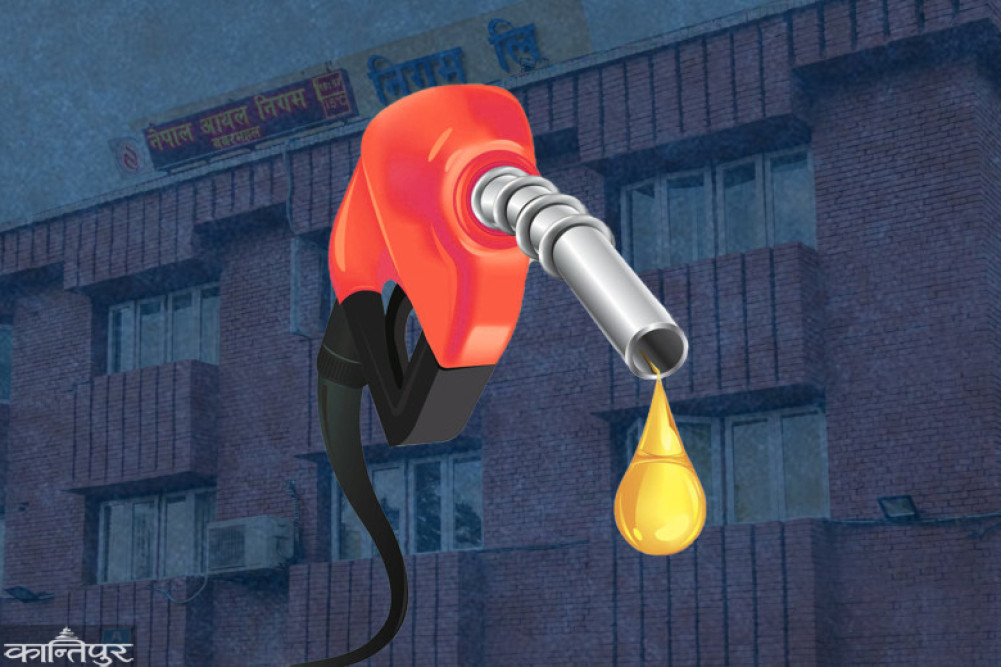
Industries will have to produce only from specified raw materials and the ethanol produced will have to be sold only to Nepal Oil Corporation.
We use Google Cloud Translation Services. Google requires we provide the following disclaimer relating to use of this service:
This service may contain translations powered by Google. Google disclaims all warranties related to the translations, expressed or implied, including any warranties of accuracy, reliability, and any implied warranties of merchantability, fitness for a particular purpose, and noninfringement.
The government has implemented a new policy to blend ethanol in petrol. The ‘Order on Blending Ethanol in Petrol, 2082’ issued by the Council of Ministers was published in the Gazette on Friday.
Through this order, the government aims to promote industries based on indigenous raw materials, create employment, increase the use of agricultural and biological resources, and reduce dependence on imports in the energy sector. According to the order, Nepal Oil Corporation will have to blend ethanol up to a maximum of 10 percent per liter of petrol as per availability. The order also provides for the Council of Ministers to increase or decrease this ratio as per the need.

The raw materials that can be used for ethanol production include molasses, Napier grass, agricultural and forest waste, straw, corn stalks, wheat bran, cassava, rotten grains, yeast, and other necessary chemicals. To prevent misuse of food grains, provisions have also been made that grains used as food grains cannot be used in ethanol production.
Industries will have to produce only from the raw materials specified in accordance with the prevailing law and the ethanol produced will have to be sold and distributed only to Nepal Oil Corporation.
The order states that industries must adopt environmentally friendly measures in the production process, maintain quality standards, and have their own laboratories responsible for quality testing. The corporation will also purchase only after testing the quality of each tanker.
The price of ethanol will be determined by the government before the start of each fiscal year on the recommendation of the recommendation committee. In the absence of a price determination, the previous year's price will remain the same. The determined price will be implemented from 1st of July every year.
Nepal Oil Corporation will have to enter into an agreement with the industry for the purchase of ethanol and the industry will have to provide ethanol in the required quantity, at the specified place and time daily. If the industry violates the agreement, compensation can be demanded according to the prevailing law.
The responsibility of transporting ethanol has been given to the industry. The order states that high safety standards should be adopted while transporting ethanol, which is highly flammable and absorbs water. The ministry will prepare and implement standards for safe storage, mixing and transportation.
The government has formed a committee to determine ethanol prices and recommend facilities for the industry. The coordinator of the committee will be the secretary of the Ministry of Industry, Commerce and Supplies, while representatives from the Department of Finance, Agriculture, Quality and Metrology, Nepal Academy of Science and Technology and Nepal Oil Corporation will be members.
According to the order, the committee will make recommendations on raw material cost, tax exemption, facilities, national priority industry recognition, tax exemption on equipment import, concessions on fertilizer/seed/electricity tariffs for farmers and agricultural cooperatives, among other issues.