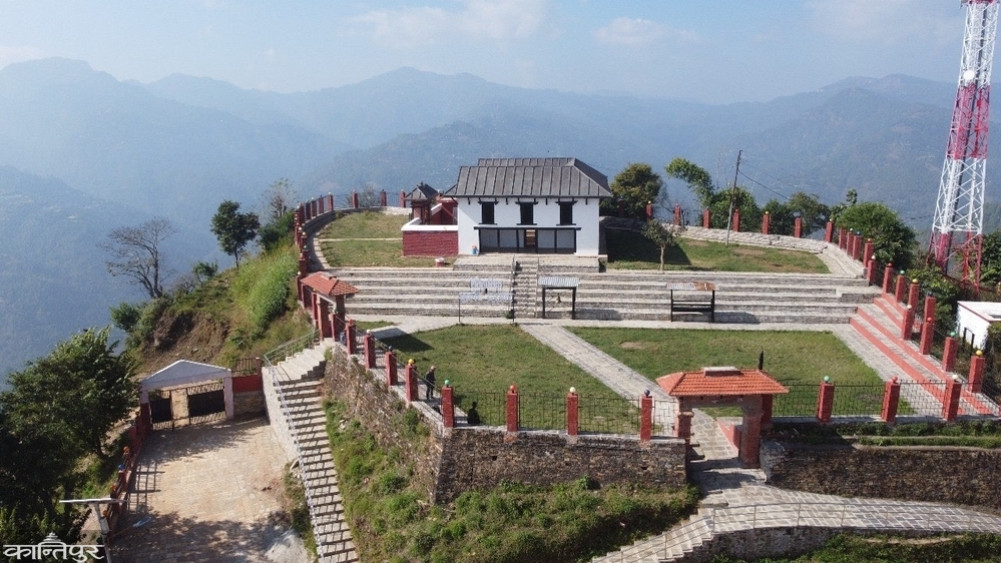
Out of the 12 local levels in the district, 8 municipalities have kept statistics on tourism development and are working at a rapid pace.
We use Google Cloud Translation Services. Google requires we provide the following disclaimer relating to use of this service:
This service may contain translations powered by Google. Google disclaims all warranties related to the translations, expressed or implied, including any warranties of accuracy, reliability, and any implied warranties of merchantability, fitness for a particular purpose, and noninfringement.
Seven out of the 12 local levels in the district are currently engaged in the construction of tourist infrastructure and the expansion of rural tourism for tourism development. From Satyawati Rural Municipality to Madane, Malika and Dhurkot Rural Municipality are working to expand internal and external tourism.
The rural municipality has spent more than 90 million rupees in the last 9 years to make Dhurkot a tourist destination. Rural municipality chairman Bhupal Pokharel said that various structures have been built for tourist destinations in partnership with the federal, provincial and local levels. With the development and expansion of the tourist area, the Bichitra Cave here has also started becoming a center of attraction. Rural municipality chairman Pokharel said, ‘Earlier, only a few people used to come to Bichitra Cave just to visit. Now, more than 30,000 tourists come here annually just to visit.’
Bichitra Cave in Dhurkot, Chaubise Durbar Dhurkot, Shahid Park, Janayudh Park, Dhurkot Great Wall and Jhalyakot are also attracting tourists. These places can be reached in half an hour from the district headquarters. 'In partnership with the federal, provincial and local levels, we have built various structures for tourist destinations,' says Pokharel, the rural municipality chairman. 'In the past, only a few people came to the strange cave just to visit, but now more than 30,000 tourists come here annually just to visit.' Pokharel, the rural municipality chairman, says that educational tourists will increase now that Dhurkot has built an educational museum in Dhurkot 5 for educational tourism.  Malika Pispark built in Malika Rural Municipality of Gulmi.
From the dense forest in Thaple of Satyawati Rural Municipality to the structures built in Bharse, they have become centers of tourist attraction. The area around Thaple, the highest point in the former Lumbini region, is worth visiting because it has Budhi Satyawati, Hile Siddha Baba, Hachingkot Durbar, Magar Museum, Barahi Lake, and Buddhist Stupa, which are also worth visiting, says Niramaya Taramu, vice-chairwoman of the rural municipality.
‘Due to geographical remoteness, people used to come to Satyawati and Bharse areas, which used to be difficult to come even for essential work, but now people come to visit them,’ said Vice-chairwoman Taramu. ‘The number of people who visit the Budhi Satyawati area and Bharse area and stay at Raniban ‘Homestay’ guesthouses is increasing day by day.’ Satyawati is one of the 100 tourist destinations listed by the Nepal Tourism Board. Religious tourists come to see the Shaligram on the banks of Kaligandaki in Ward No. 1 and to visit the Ram Temple in Rudrabeni, where millions of Shaligrams are seen at once.’
In the old Magar settlement of Satyawati-8, Bharse, tourists come to see the attractive settlement of British and Indian Lahures, the Buddhist stupa of Deurali, the view tower of Dabung, Kalika Temple, Chhatra Temple, caves, Gorkha Gallery (Museum), the royal palace of Bhure Takure Raja Jhuleni, Arkul Durbar area, agarwood farming, kiwi farming and orange farming farms, tunnels excavated from old copper mines, and to study and research the World War and mining, said Ward Chairman Hom Bahadur Rana.
Locals have been operating homestays since 2075 BS targeting those who come to visit and study. Homestay Chairman Gangamaya Darlami said that there has been a surge in tourists staying at homestays in recent years. ‘In winter, about 10-15 people come every day, and less in the rainy season,’ said Darlami. ‘Last Dashain and Tihar, there was a flood of guests.’
She says that people from Gulmi, Palpa, Rupandehi, Baglung, Parbat, Kathmandu and other places come to the homestay run by the Magar community. Darlami says that the homestay, which serves local chicken and goat, goat meat, Koda’s dhindo, sisno, Banke’s sinki, black bhatta, corn and phapar roti, also shows songs and dances of Salaijo, Sorathi, Krishna Charitra and Thado Bhaka.  Ranivan Homestay Guesthouse is located in Bharse, Satyawati Rural Municipality, Gulmi.
The rural municipality has built various infrastructures by spending about 30 million rupees for the development of tourism in Satyawati, said the vice-chairman of the rural municipality, Taramu. In addition, a Gorkha Gallery has been built under the leadership of Lieutenant Kul Bahadur Budhathoki, while the residents of Barse, who were born in Barse and settled abroad for foreign employment, have built structures including Buddhist stupas, view points, entertainment venues, picnic spots, love icons, and TikTok logos at a cost of more than 15 million rupees last year.
‘Last year, a dozen sculptors from the country and abroad have carved attractive statues on the Gurans mudha of the Satyawati area, adding to its attractiveness,’ said the vice-chairman, ‘that has also increased the importance of this area.’ Overall, she says that more than 50,000 people visit, study, and observe the religious and tourist sites of Satyawati every year.’
Although Ruru and Resunga are old destinations for religious tourism, Satyawati and Dhurkot areas, which have been developed as tourist areas worth visiting with the active participation of the local level after federalization, have become new tourist destinations in Gulmi.
The rural areas of Malika and Madane rural municipalities, which are considered geographically remote, have also become destinations for domestic tourists to visit. Malika Peace Park, located in the Arkhabang area of Malika rural municipality, is a model park in the district, where an attractive park has been built without compromising the natural steep and rugged geographical structure.  Resunga Park, Gulmi.
Municipal Chairman Deviram Aryal said that the park was built at a cost of Rs 20 million in partnership with the state and local levels. Lekpokhara Peace Park in Malika-5 has been made an attractive area in the same way. Chairman Aryal said that about Rs 30 million were spent to make Lekpokhara a tourist destination. There are ponds, temples that resemble the temples of Lalitpur, parks, walkways, renovation of old religious and historical sites, view towers and other structures have been built there. Students, employees and other tourism enthusiasts from neighboring municipalities and the district headquarters Tamghas have started coming there for sightseeing and forest feasting.
Madane Rural Municipality has spent about 100 million rupees to develop tourism in areas such as Kanke Deurali, Purkot Kot, Rolm Tikhechuli, Khadga Bhavani Kot, Aglungkot, Askuna and other areas.
‘A forest picnic site and other structures have been built in Kanke Deurali, near the borders of Gulmi, Pyuthan and Arghakhanchi, while a zipline and skydiving have been built in Rolm Tikhechuli,’ says Sushil Pokharel, information officer of the rural municipality. ‘Old royal palaces and temples have been reconstructed and renovated in Purkot Kot, Khadga Bhavani Kot, and Aglungkot, while temples have been built in Askuna.’ Pokharel says that more than 10,000 people visit Kanke Deurali, Rolm, Askuna and Purkot Kot every year.
Local levels have also introduced programs to increase tourism attraction by increasing investment in the old religious and tourist areas of Ruru, Resunga, Kaligandaki and Chhatrakot. Within Resunga Municipality, which is the district headquarters, there are various tourist destinations in the areas of Resunga, Arjun, Bhuwane Park, Tree House, Garjura Park, Tamghassthan Temple, Bhagwati Temple, Sano Resunga, Unayachaur Bhagwati Temple, Bhadgaun, Gaushala, etc. For which the municipality has invested more than 130 million rupees, informed Binod Marasini, Planning Officer of the municipality.
‘We have invested Rs 60 million in Garjura Park in Mota Moti Resunga, Rs 1.5 million in the construction of Resunga stairs, Rs 60 million in the small Resunga temple, Rs 20 million in the Gaushala area, Rs 50 million in the Unayachaur temple, Rs 1.7 million in the tree house, Rs 10 million in the Bhagwati temple and Pauwa, Rs 10 million in the Lower Tamghassthan temple, Rs 50 million in the Upper Tamghassthan temple, Rs 60 million in the construction of Bhadgaun temple, Rs 50 million in Arjun Dada, Rs 10 million in Bhuwane Park and other small temples and other structures,’ he said, ‘But this investment is not only the city’s but also the partnership of some federal and state governments and some municipalities.’ A homestay is also operating in Dubichaur of Resunga Municipality. He informed that a tender of Rs 12.5 million is being floated to build a zipline sky cycling from Garjura to Gaushala area in Resunga. Resunga itself is a center of religious, historical and natural attractions.
Chief Administrative Officer Laxman Pandey said that since the establishment of the local level in Rurukshetra, temples, walkways and parks have been built at a cost of 44.2 million rupees. Rurukshetra, which is located in Rurukshetra Rural Municipality, is considered one of the major pilgrimage sites in Nepal. In addition, Shringeshwor Dham and Bamghakot are religious tourist destinations here. According to Pandey, more than 300,000 domestic and foreign tourists come to the religious sites within the entire Rurukshetra Rural Municipality every year for darshan and sightseeing, including Kaligandaki Snan and Maghe Sankranti Mela.
Chhatrakot, an old religious tourist destination, has built various tourist sites including Chhatrakot Devalaya Temple, Chhatrakot Zipline, Rock Garden of Daungha, Deuti Dhunga Cave of Hunga, Homestay in Ward No. 2, Maulipur Lake in Ward No. 4. Hari Tandon, Information Officer of the rural municipality, informed that more than 20 million rupees have been spent for this. According to him, more than 10 thousand tourists visit the tourist areas of Chhatrakot annually for sightseeing and sightseeing.
Kaligandaki Rural Municipality has established a community homestay by spending more than 10 million rupees to make arrangements for the accommodation of tourists. A community homestay has been established in Dhuwakhola, Kaligandaki-7, a place bordering Baglung district of Gandaki Province. The tradition of staying in a house is the main attraction of the homestay run by the Gurung community. In addition, the rural municipality chairman Ved Magar said that there is a system to eat only local dishes including roasted siramle corn, kodo roti, and Banko gundruk jhol.
Although 8 of the 12 local levels in the district have kept statistics on tourism development and have carried out development work, Chandrakot, Gulmidurbar, Musikot, and Ishma have not kept concrete statistics on tourism development. Chandrakot Information Officer Shiva Gyawali said that despite crores of rupees being invested in the tourism sector in Timuretal, Chandrakot Temple, Chakreshwor Temple, Jhuleni, Gwagha, Arjewa Jharana, and Siddhababa areas, there is no data on the amount and number of domestic tourists visiting. Ishma rural municipality employees also say that they have not worked hard on tourism development. Employees say that there is no updated data in Gulmidurbar and Musikot either.