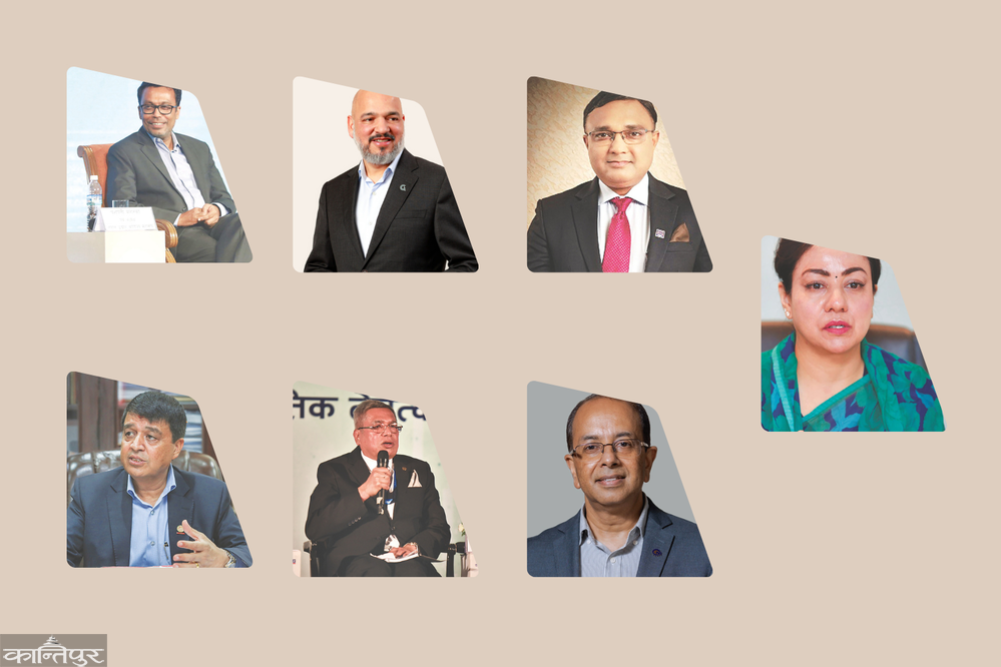
They say, ”Our vote goes to parties and candidates who prioritize political and policy stability, an investment-friendly environment, and economic prosperity.”
We use Google Cloud Translation Services. Google requires we provide the following disclaimer relating to use of this service:
This service may contain translations powered by Google. Google disclaims all warranties related to the translations, expressed or implied, including any warranties of accuracy, reliability, and any implied warranties of merchantability, fitness for a particular purpose, and noninfringement.
Today, Thursday, the election for the House of Representatives is being held across the country. The general public is eager for the election. They intend to vote for the party and candidate of their choice and bring them to the government. Entrepreneurs and businessmen are also equally eager.
They are making a significant contribution to job creation and economic transformation in the country. They want the government formed after the election to be stable and to make the right policy decisions. Therefore, they have one opinion - 'We will vote for the party and candidate that prioritizes political and policy stability, investment-friendly environment, and economic prosperity.'
In this context, Kantipur has talked to not only the leadership of the central umbrella organization of the private sector - Federation of Nepalese Chambers of Commerce and Industry, Confederation of Nepalese Industries, Nepal Chamber of Commerce, but also other industrialists and businessmen and bankers. In a conversation with Kantipur, they said that political parties should mainstream the economic agenda and guide the development of the country. But they have one concern - will the announcements made this time also not be implemented like in the past?
‘In the election manifesto, parties must prioritize the economy and ensure an environment where the private sector can work without hindrance,’ said Federation President Chandra Dhakal. He said that there will be no investment in the country unless there is a smooth policy system for the development of entrepreneurs and entrepreneurship, respect for the private sector, assurance of unhindered access to business and security of property.
President Dhakal is voting from Bishalnagar polling station in Kathmandu-5 on Thursday. He said that along with political stability in the country, he will vote for political parties and candidates that prioritize policy stability and private sector issues. ‘The priority of the government formed after this election should be economic prosperity, for this the private sector agenda should be addressed,’ he said, ‘The country should have an investment-friendly environment. For that, a good candidate should win.’
Confederation of Nepal Industries President Birendra Raj Pandey is voting from the Agricultural Materials Institute in Kuleshwor, Kathmandu-9. He said that despite several political changes from 2007 to 2082, economic changes have not gained momentum. He said that even though the parties brought an economic agenda in their manifestos, implementation did not get priority when they were in government and that mistake should not be repeated now. "Along with political stability, the first requirement for the development of the country should be a strong economic system. Along with the general public, we entrepreneurs and businessmen should move forward with a national consensus on economic development issues and agendas for the prosperity of the entire nation, including good governance, economic development, and employment," Pandey said. "The national consensus should clearly mention the long-term vision for the development of the country, priority areas, and a time-bound action plan for projects and implementation." He said that he would vote for parties and candidates who do similar work.
Nepal Chamber of Commerce President Kamlesh Kumar Agrawal is voting from Kanya Secondary School in Dillibazaar, Kathmandu-1. He said that he would vote for political parties and candidates who carry the agenda of the private sector as there is no alternative to economic prosperity. He said that many movements in Nepal, including Gen-G, have demanded good governance, corruption prevention and job creation, and since this election is based on that, the new government should include those agendas.
‘The new government had to make maximum use of the country’s natural resources,’ Agrawal said, ‘Our most important asset is 57 percent of the youth workforce. They had to be created employment opportunities in the country. With the ups and downs seen in the global economy, it is not certain when and where Nepalis in different places will lose their jobs.’ Therefore, Agrawal argues that political parties should ensure stability of economic policy and investment environment along with politics in the upcoming elections.
Pashupati Murarka, former president of the Federation of Nepalese Chambers of Commerce and Industry, is also casting his vote from the Guheshwari School polling station in Thapathali, Kathmandu-1. ‘Parties and candidates that encourage the private sector and adopt open market economic policies are among my choices,’ he said, ‘We don’t need anything else, let there be stability in the country, let the economic agenda be prioritized and let the citizens be able to live with peace of mind.’
Former president of the Federation of Nepalese Chambers of Commerce and Industry Shekhar Golchha is voting from the Sitapaila polling station in Kathmandu-8. He said that he is seeking political and policy stability, so he will vote for candidates and parties that have entered the election with that agenda and can implement that agenda even after being elected.
Former president of the Federation of Nepalese Chambers of Commerce and Industry Bhavani Rana is voting from the Sanepa polling station in Lalitpur-3. She said that everyone should vote as it is not only a right but also a duty. ‘I will prioritize the economic agenda along with the social agenda,’ she said, ‘I also look at the party along with the person’s ability, background, ability to fulfill the commitments in the manifesto, and other issues.’
Rana also admitted that there was an informal discussion among some close industrialists and businessmen about which party and candidate to vote for this time. ‘No organization or institution has made a formal decision, but we have discussed with some close businessmen about who to vote for,’ she said, ‘Our aim is that a good party and person win and contribute as much as possible to the country’s development campaign.’
Nepal Bankers Association President Santosh Koirala has reached Jhapa on Wednesday to vote. He is voting from Bhagwati Primary School in Jhapa-1. Koirala also said that he will vote by choosing a good agenda and qualified candidate of the political party.
Overall, Nepal’s industrialists and businessmen seem to be a bit worried. They are worried mainly after the huge damage to private property and industry in the Gen-G movement. That is why they had suggested to the political parties to include the demands of the private sector even while the parties were busy writing their manifestos. They said that entrepreneurs would choose a party that prioritizes political and policy stability, creating an investment-friendly environment, and economic prosperity in the country.