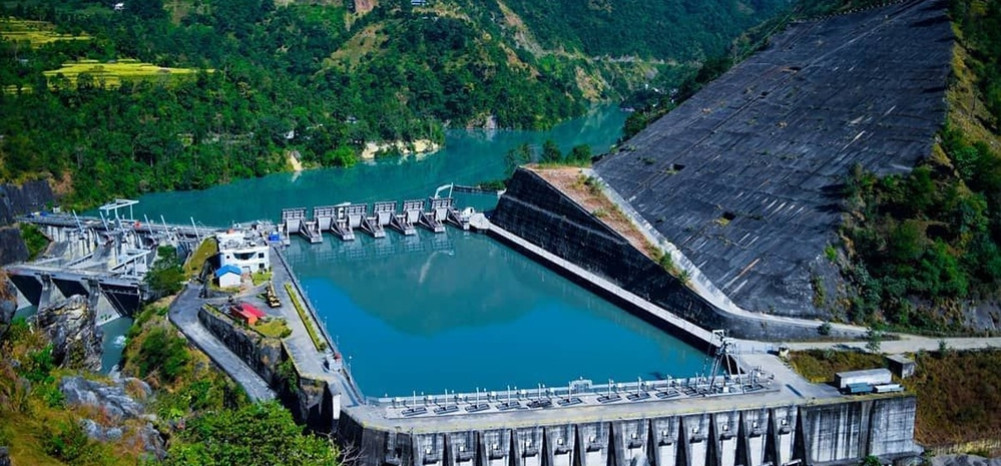
Parties including the Congress, UML, CPN (Maoist), Rashtriya Swayamsevak Sangh (RSS) and others have announced ambitious plans for electricity generation, consumption growth, and exports in their manifestos.
We use Google Cloud Translation Services. Google requires we provide the following disclaimer relating to use of this service:
This service may contain translations powered by Google. Google disclaims all warranties related to the translations, expressed or implied, including any warranties of accuracy, reliability, and any implied warranties of merchantability, fitness for a particular purpose, and noninfringement.
Political parties are bringing out their respective manifestos, pledges, and pledges for the upcoming elections. In those manifestos, they have also prioritized the energy sector.
Most parties have said they will build 5,000-10,000 MW projects in the next 5 years. According to the Nepal Electricity Authority, the current total installed capacity, including solar energy and hydropower, is 4,000 MW. The authority has already signed a power purchase agreement (PPA) for 12,000 MW including solar and hydropower projects.
The Congress has said it will increase the total installed capacity to 14,000 MW in the next 5 years. The current total installed capacity, including solar energy and hydropower, is 4,000 MW. 'Currently, there is about 4,000 MW of electricity installed capacity, but by raising collective investment from the international and private sectors, we will create an environment to take another 10,000 MW of solar power projects to the construction stage, and through policy and regulatory reforms, we will increase the total installed capacity to 14,000 MW,' the Congress pledge states. The Congress has stated that it will increase the current per capita electricity consumption of around 450 units to 750 units within the next five years. The NCP has also stated that it will increase the capacity of the national system to 15,000 megawatts by adding 10,000 megawatts in the next five years. The NCP has mentioned in its letter that the per capita electricity consumption will be increased to 750 kilowatt hours in the next five years. The NCP has stated that it will take initiatives to increase domestic and foreign investment in the hydropower sector to meet the long-term goal of producing 40,000 megawatts of electricity by 2100 BS. The Ujjaya Nepal Party has stated that it will produce 12,000 megawatts of electricity by 2030 with significant participation from the private sector and the per capita consumption will be increased to 800 kilowatt hours. Which political party will produce how many megawatts? Nepali Congress
10,000 megawatts
NCP
| UML | Upper Arun (1062 MW), Dudhkoshi (670 MW) and Budhi Gandaki (1200 MW) |
| Rashtriya Swayamsevak Sangh (RSS) | 30,000 MW in the next 10 years |
| Ujjwal Nepal | 12,000 MW by 2030 |
| Pralopa | Unepa plans to reduce electricity imports to zero in the next 10 years |
| 25,000 MW by 2035 and 40,000 MW by 2045 . Ujjwal has stated that it will make arrangements to keep 15 percent of the amount received from electricity exports in the National Prosperity Fund and will run rural infrastructure and poverty alleviation programs . | UML has written in its manifesto that it will implement the 1062 MW Upper Arun, 670 MW Dudhkoshi and 1200 MW Budhi Gandaki projects . The UML has also said that private power projects will be completed on time. The Congress has stated that it will replace the Electricity Act 2049 and issue a new Electricity Act that will ensure the participation of the private sector in sufficient energy production, transmission, distribution and trade based on the latest technology. The Congress plans to make a policy arrangement for concessional loans to be paid gradually from dividends to the poor families concerned to purchase 10 percent preferential shares of hydropower companies currently allocated for project-affected local residents. The Congress has stated that it will also provide arrangements for the purchase of such shares and financial concessions to Nepali citizen workers involved in the construction of the project. |
| 'If necessary, we will start the construction of reservoir-based and semi-reservoir-based Betan Karnali (439 MW) and Chainpur Seti (210 MW) projects like Budhi Gandaki (1200 MW) and Dudhkoshi (670 MW) with national priority,' the Congress's pledge states. | The Congress has also said that it will take serious initiatives to implement the Pancheshwor Multipurpose Project (5040 MW), which has been stalled for 30 years, through technical and political consensus, while protecting the national interest to the maximum. The Congress has said that it will ensure the production and transmission license period of all types of hydropower projects for 50 years. Although the license period in the Electricity Act 2049 is 50 years, the Department of Electricity is currently issuing licenses for only 35 years. |
Until other options for electricity purchase and sale are available, the Congress is committed to continuing the Power Purchase Agreement (PPA) based on the Take and Pay principle by setting a framework for minimum financial risk management, taking into account domestic demand and the demand of the international electricity market. The then UML and Congress government had introduced a system for PPA on Take and Pay in the budget of the current fiscal year. Since then, the PPA has been stopped.
The Congress has stated that within the next five years, the construction of Chameliya-Jaulijibi 220 kV, Nanpara-Kohalpur 132 kV, Inruwa Purnia and Dododhara-Bareilly 400 kV, and Kerung-Chilime 220 kV international transmission lines with India will be completed.
UML has stated that it will ensure energy security by completing renewable energy production, transmission and distribution projects including hydropower, solar energy, green hydrogen and others and develop Nepal as a 'clean energy exporter' in South Asia. UML has a plan to double electricity production and per capita electricity consumption.
We will increase state investment in clean energy production and construction of transmission and distribution systems. We will develop a suitable environment for the private sector to build transmission lines and export electricity along with production. UML has proposed to establish a reliable energy supply system by developing hydropower, solar energy and green hydrogen.
NCP has said that it will open power purchase agreements (PPA) for new projects and make arrangements for private sector companies to enter into such agreements. The provision for making PPA in accordance with take and pay in the budget of the current fiscal year has also stopped the PPA that was being easily done up to 10 MW. On the other hand, the Nepal Electricity Authority has not even done a PPA for the semi-reservoir project that it itself called for tenders, showing the market risk. The UML has stated that it will increase the renewable energy mix by promoting renewable energy (solar, wind, micro/small hydropower). The UML has announced that it will take necessary steps to declare the country an energy-friendly country with the goal of using 100 percent green energy. The RSP has also stated that it will achieve an installed capacity of 30,000 megawatts of electricity in the coming decade. The RSP has also included the implementation of the concept of a single-door service, ending the complex system that energy entrepreneurs have to visit 8 ministries and 23 departments. The RSP has written in its pledge to maintain uniformity in the existing 35-year production permit system and increase it to 50 years, and to increase the annual electricity consumption per capita to 1,500 kilowatt hours by 2035.
Pralopa has put forward a plan to reduce electricity imports in Nepal to zero in the next 10 years through abundant hydropower generation, construction of necessary transmission lines and electricity trade.
Since water resources are the country's major assets, Pralopa has stated that its all-round development and use will be given high priority and electricity will be provided to all Nepalis' homes. According to the authority, 99 percent of households have been electrified so far. Large reservoir hydropower projects such as Pancheshwor Paschim Seti, Upper Karnali, Nalsingadh, Budhi Gandaki, Dudhkoshi will be constructed by the federal government; medium reservoir and large semi-reservoir projects will be constructed by the provincial government and other hydropower projects will be constructed by the private sector and the electricity left over from domestic consumption will be exported, Pralopa has said.
UNEPA has come up with an ambitious plan to provide at least 1,000 units of hydropower project shares to every household at the primary share price. UNEPA has stated that it will provide concessional loans to poor families to buy primary shares and also make arrangements to convert the labor of workers involved in the construction of the project into shares.
UNEPA has stated that it will make arrangements to keep 20 percent of the revenue from the hydropower project, which will be handed over to the government after 30 years of the PPA, in the People's Hydropower Fund.