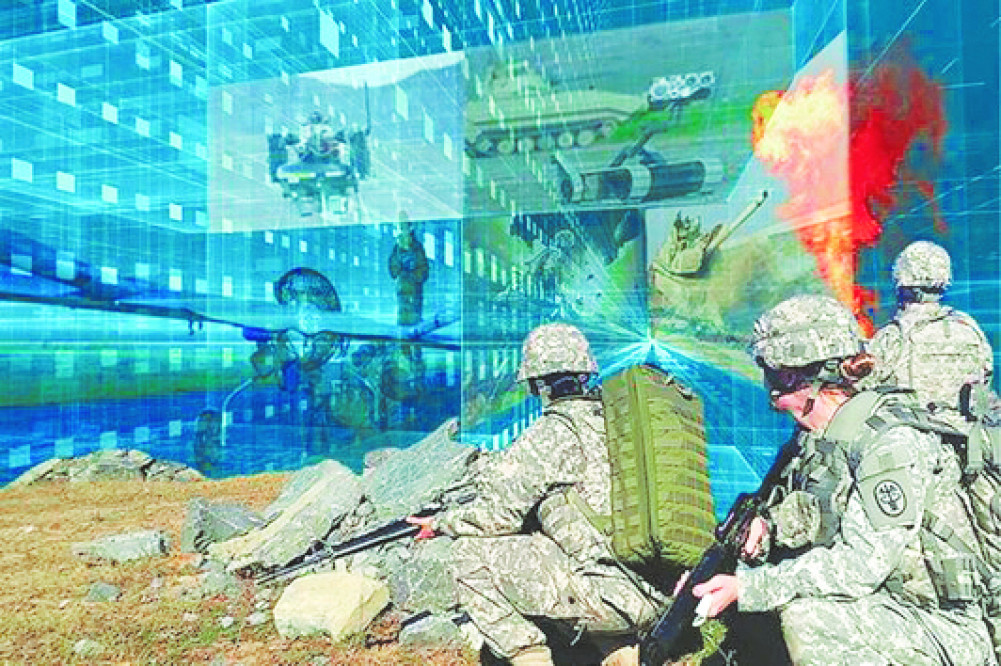
Recently, governments around the world have been investing billions of dollars in developing AI-based defense systems. The use of AI in the military seems to be focused on information collection, cybersecurity, and management.
We use Google Cloud Translation Services. Google requires we provide the following disclaimer relating to use of this service:
This service may contain translations powered by Google. Google disclaims all warranties related to the translations, expressed or implied, including any warranties of accuracy, reliability, and any implied warranties of merchantability, fitness for a particular purpose, and noninfringement.
Separate reports from The Wall Street Journal and Reuters have revealed that the US Department of Defense (Pentagon) used Anthropic’s artificial intelligence (AI) system ‘Clued’ to control Venezuelan President Nicolas Maduro and his wife last month.
This is seen as a strong example of the use of US AI systems in active military operations and the growing use of AI in the face of geopolitical tensions around the world.
Recently, governments around the world have been investing billions of dollars to develop AI-based defense systems. The use of AI in the military sector seems to be focused on information collection, cybersecurity and management. According to security officials, AI has helped reduce the time for research and data analysis. This has also led to increased collaboration between private sector AI companies and the government. American media reported that Anthropic's Cloud AI has also been used by the Pentagon in partnership with Palantir Technologies.
As AI's role in modern warfare is seen as decisive, the 'European Parliamentary Research Service' mentioned in its briefing report that major economic competition has begun in this field. The report said that the Pentagon has allocated 1.8 billion US dollars for AI-related research and development for 2024 alone. The US defense innovation budget is $34 billion. The Pentagon is currently running more than 685 AI projects.
According to a report published in the Wall Street Journal on Saturday, the Pentagon used the cloud to analyze and synthesize a huge amount of intelligence gathered during the operation to capture the Maduro couple. The report states that AI was used to analyze satellite images, communications materials collected using spy equipment and other highly classified data streams to identify Maduro's activities, related daily life patterns and potential locations. According to the report, the system was not used to automatically select attack sites or authorize attacks, but as a support tool to speed up the decision-making process.
Reuters also published news citing the Wall Street Journal report. Senior US officials have confirmed that the AI system developed by Anthropic was used during the operation. But they have declined to provide detailed details about the deployment. Reuters reported that the Pentagon described it as part of a broader effort to incorporate advanced AI technologies into intelligence and planning processes. However, it made it clear that the final decisions and key orders are made by human military officers.
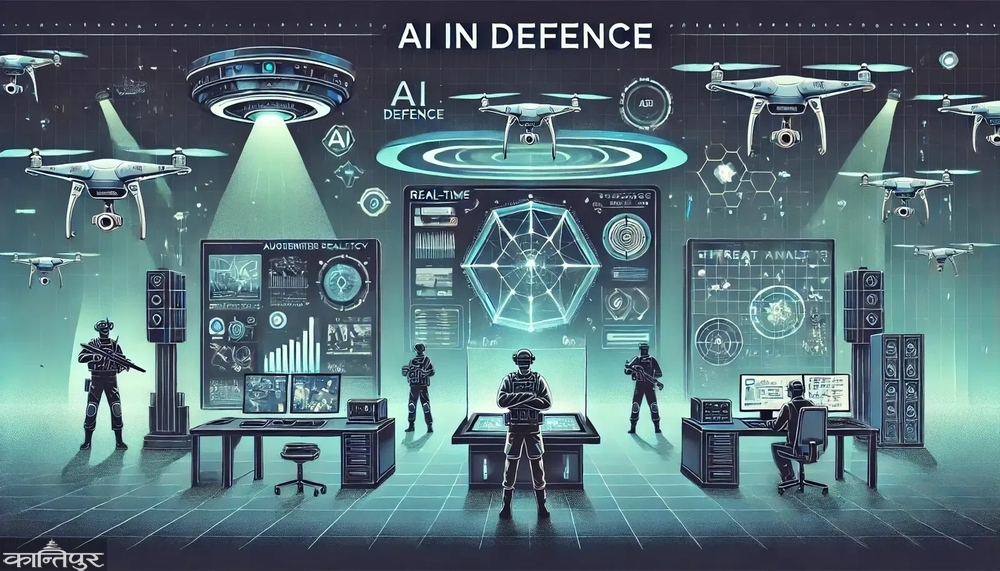
San Francisco-based AI company Anthropic has previously insisted that there are certain conditions for the military use of its models. The company said its systems are designed for analysis and summarization rather than direct combat control. But neither the Pentagon nor Anthropic have disclosed financial details of the collaboration. The US defense and military sectors have allocated billions of dollars in recent years to efforts related to AI modernization. According to news reports, about $14 billion has been requested for this fiscal year.
The disclosure further highlights the fact that AI is moving from experimental defense programs to real war or military operations. The US has previously used machine learning systems to analyze drone footage in counterterrorism operations through efforts such as ‘Project Maven’. Trump has also launched a $500 billion ‘Stargate Project’ to build AI infrastructure. Israel has admitted to using AI tools to process attack plans and target data in recent conflicts. Ukraine has admitted to using an AI-enhanced image analysis system to track military activity.
China is spending heavily on AI-based defense systems. China’s total defense spending is estimated to reach $330 billion to $450 billion by 2024. China is said to be particularly focused on developing autonomous military vehicles and ‘swarm technology’. Russia aims to automate 30 percent of its military equipment by 2025. The Russian military is actively using AI for drones and electronic warfare in its war with Ukraine.
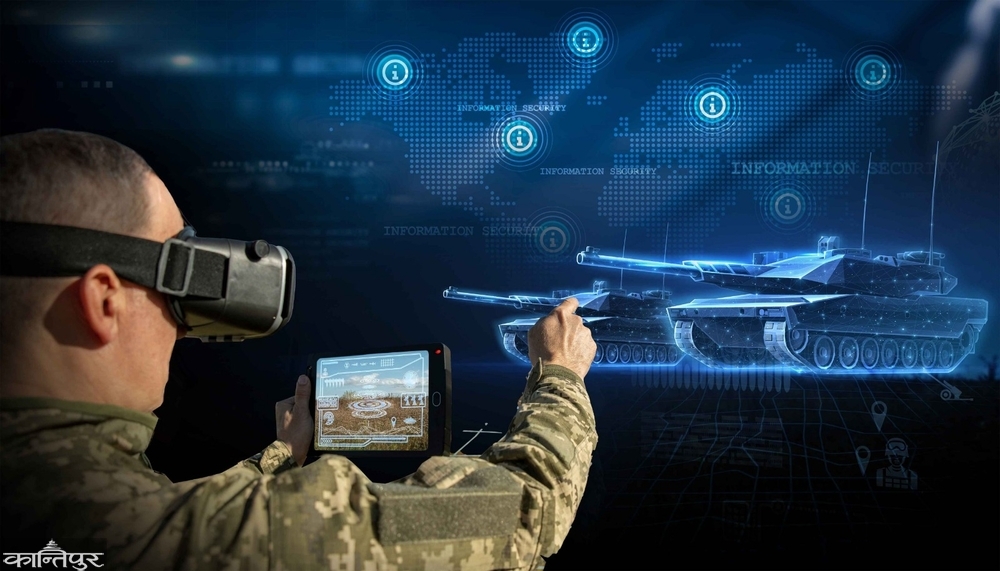
The European Union has put forward a plan to mobilize up to 800 billion euros in funding under the ‘Rearm Europe Plan’ to strengthen its defense capabilities. The European Defense Fund has said it will invest 4 to 8 percent of its annual budget in emerging technologies like AI.
France has decided to spend 2 billion euros on its AI defense budget by 2030. France has established a 'Ministerial Agency for Artificial Intelligence in Defense' with a budget of 300 million euros to use AI in the defense sector. In Germany, private companies like 'Helsing' have also received 450 million euros in venture capital investment to develop military AI software.
According to 'MIT Sloan', the use of AI in national security has increased the ability to process data many times over. This is why a large part of the defense budget of various countries is expected to be focused on technology and AI in the coming years. Experts have pointed out that this increasing use of AI in the defense sector has also increased the risk of a new arms race worldwide. Additionally, questions about surveillance and regulation have also been raised when commercially available AI models are used in sensitive military operations. According to the Wall Street Journal, the Pentagon is expanding a pilot program with leading AI companies to test how large language models can be used in highly sensitive tasks. – With the support of the agency