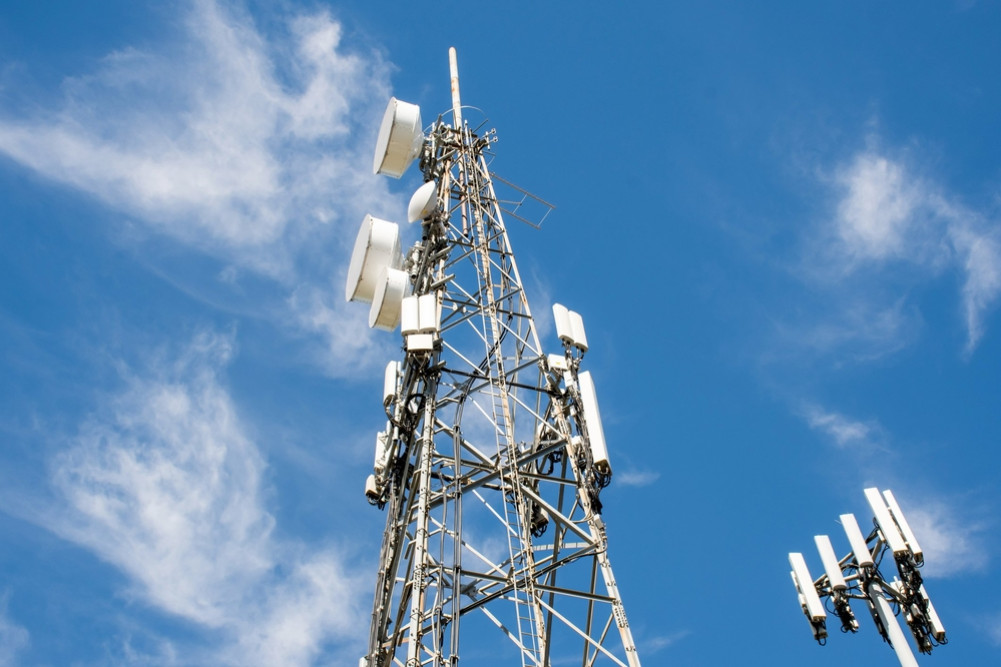
People's representatives from Upper Dolpa, who arrived at Singha Durbar demanding the expansion of 4G services, complained that only Nepal Telecom's 10-year-old 2G technology is available in Dolpa.
We use Google Cloud Translation Services. Google requires we provide the following disclaimer relating to use of this service:
This service may contain translations powered by Google. Google disclaims all warranties related to the translations, expressed or implied, including any warranties of accuracy, reliability, and any implied warranties of merchantability, fitness for a particular purpose, and noninfringement.
Basic telephone and internet services are still not available in mountainous districts like Dolpa and Jumla. On Tuesday, people's representatives from Upper Dolpa had reached Singha Durbar demanding the expansion of 4G services. People's representatives from Shey-Phoksundo, Charka Tangsong and Dolpo Buddha rural municipalities, who had come to Kathmandu by foot and ship, met Minister for Communications and Information Technology Jagadish Kharel and informed him that only Nepal Telecom's 10-year-old 2G technology was available in Dolpa.
They complain that the locals are left without communication because the old technology does not work. On the other hand, in Tatopani Rural Municipality-5 of Jumla, a news was published in Gorkhapatra on Tuesday about the fact that citizens are forced to walk for hours just to make a phone call after the network is not available even after two years since the tower was built. Locals say that due to the lack of communication service, it is impossible to contact security agencies or doctors in the village if someone falls ill or in an emergency.
On the one hand, residents of remote areas are deprived of the basic right to communication, on the other hand, telecommunication operators have been saying that the high tax burden has made the region economically bankrupt and that it is difficult to invest in infrastructure expansion as income from traditional telephone services is decreasing. An analysis of the Customs Department's data for the past decade shows a continuous decline in the import of base stations, which are considered the backbone of telecommunication infrastructure.
While 2,682 base stations worth 853.33 million rupees were imported till Mangsir of the fiscal year 2073, that number had increased to 3,708 in Mangsir of 2076. Its import value was 1.18 billion rupees. By Mangsir of 2082, the import of base stations had decreased sharply to only 326. Its import value was 22.68 million rupees.
Compared to base stations, the import of optical fiber is continuously increasing. Telecom operators as well as internet service providers are also importing optical fiber with great results. An official of Nepal Telecom said that it is natural that the import of equipment like base stations is somewhat less now since Ncell and Nepal Telecom have already expanded their networks extensively. He argues that due to the introduction of advanced technology and solutions, the service has reached most places, and the concept of infrastructure sharing, telecommunication equipment will not be imported as significantly as before.
According to the Customs Department, 472,247,150 meters of optical fiber cables worth 496.25 million rupees were imported by mid-Mangsir 2082 alone. Comparing this with the previous data, 577,720 fiber cables worth 794.23 million rupees were imported in Mangsir 2075. Although operators say that they cannot invest in infrastructure due to the decrease in voice income due to the internet, the increasing access to internet services and the volume of fiber imports indicate that the investment pattern in this sector has shifted from traditional technology to modern internet technology.
Taking the data of smartphones entering the country during this period as a 'reference', it becomes clear how huge the market for communication equipment is. According to the Customs Department's data, 1,070,680 smartphones worth 191.369 million rupees have entered Nepal alone in the current fiscal year 2082/83. From this, the government has collected 356.977 million rupees in revenue. In a short period of one month from mid-November to mid-November, an additional 127,875 smartphones worth Rs 2.98 billion have been imported.
On the one hand, the import of billions of smartphones and on the other hand, the situation where citizens of areas like Topla in Jumla have to walk for hours just to make a phone call illustrates the gap in the distribution of Nepal's digital infrastructure. Although infrastructure expansion and use are moving at a rapid pace, experts have pointed out that it is focused on urban and convenient geography. Amidst the increasing income from internet services and the increasing use of smartphones, citizens of remote areas like Dolpa and Jumla are unable to contact security agencies when they fall ill or in an emergency, which has raised questions about the investment priorities of the state and service providers.
Ncell has mentioned that nearly 200 new towers have been added in all seven provinces in the current fiscal year and that services have been expanded especially in areas with network gaps in Koshi, Madhesh and Lumbini provinces. The company has informed that towers have been built in 43 new places by reusing some old equipment and more than 150 new towers have been added in the last three months alone. Ncell has more than 4,500 towers across the country.
Nepal Telecom has also said that it is accelerating the work of expanding communication infrastructure across the country. So far, 4,701 ground-based and roof-top towers are in operation and 2G, 3G and 4G base stations have been installed in these physical structures as required, said Prakshet Thapa, assistant spokesperson of the telecom. There are 4,545 towers for 2G, 2,993 for 3G and 4,449 for 4G.
Nepal Telecom has so far expanded 4G services to 749 local levels and the 4G project has been completed, Thapa said. The telecom's progress report mentions that VoLTE and Voice over WiFi services have also been started commercially. Explaining the communication problems seen in remote Himalayan areas like Dolpa and Jumla, Assistant Spokesperson Thapa said that services are currently being provided through VSAT satellite technology in those areas where the transmission network does not reach. “Since VSAT technology cannot provide high-speed internet, only 2G services are currently available in those places,” he said. “The telecom has a plan to expand 4G services only after the optical fiber backbone network is reached. We have set a goal to complete 4G services in the entire district.”
Telecom experts say that building towers in the Himalayan region is very expensive, but due to the low population, it is difficult for service providers to reach there in terms of return on investment. In such a situation, they suggest that the government should mobilize the Rural Telecommunication Development Fund (RTDF) in the most remote areas.
In this context, the Nepal Telecommunication Authority has submitted a detailed progress report on the mobilization of the Rural Telecommunication Development Fund in its annual report 2081/82. The Authority has made public the details of the completion of broadband internet service connection work in 708 municipal offices, 5,933 ward offices, 5,318 community secondary schools and 4,249 health institutions in 74 districts so far.
Informing about the progress of the construction of information highways in remote and remote areas, the Authority said that a total of 2,27 kilometers of optical fiber were laid on the Mid-Hill Highway and the roads connecting the district headquarters in the last fiscal year. Under this, the Authority's report mentions that 1,449 kilometers of fiber was extended in Package-1 covering Koshi, Madhesh and Bagmati provinces and 578 kilometers in Package-3 covering Karnali and Sudurpaschim provinces. However, since the progress of work in Gandaki and Lumbini provinces under Package-2 is zero, the Authority has mentioned that the process of canceling the contract agreement and moving forward the work through Nepal Telecom has been initiated.