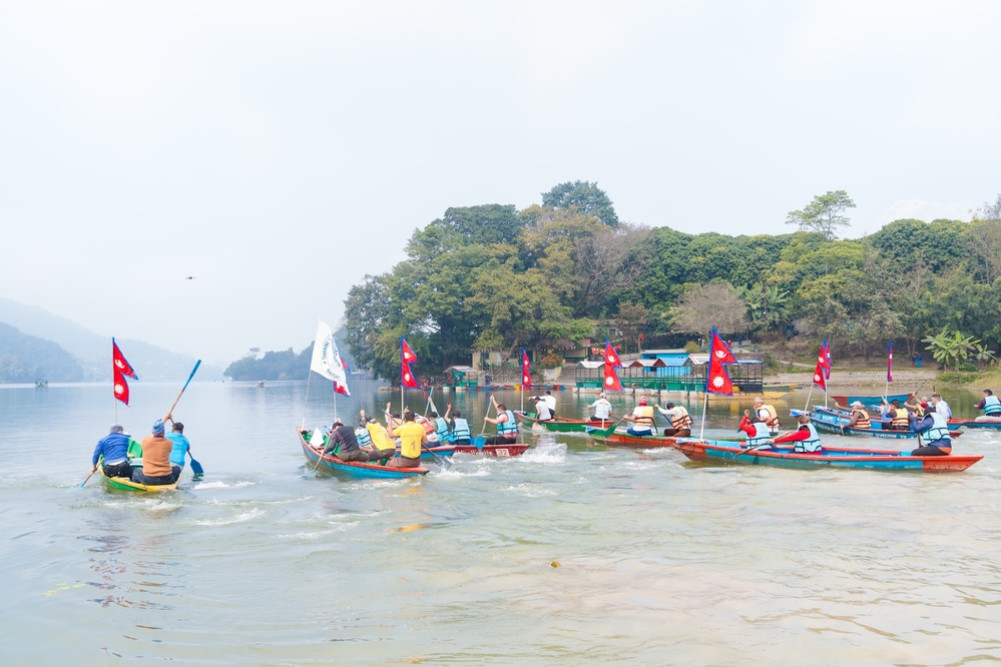
Two major tourism festivals are scheduled to be held in Lakeside, Pokhara, and Sauraha, Chitwan, to signal hope and momentum within the country.
We use Google Cloud Translation Services. Google requires we provide the following disclaimer relating to use of this service:
This service may contain translations powered by Google. Google disclaims all warranties related to the translations, expressed or implied, including any warranties of accuracy, reliability, and any implied warranties of merchantability, fitness for a particular purpose, and noninfringement.
Nepal has been going through a period of deep despair in recent times due to political instability, inflation, lack of employment and youth migration. At a time when Nepali society is trying to catch its breath amidst uncertainty about the future, two major tourism festivals are being held on the streets of Pokhara and in the Sauraha area of Chitwan to give a sign of hope and momentum within the country.
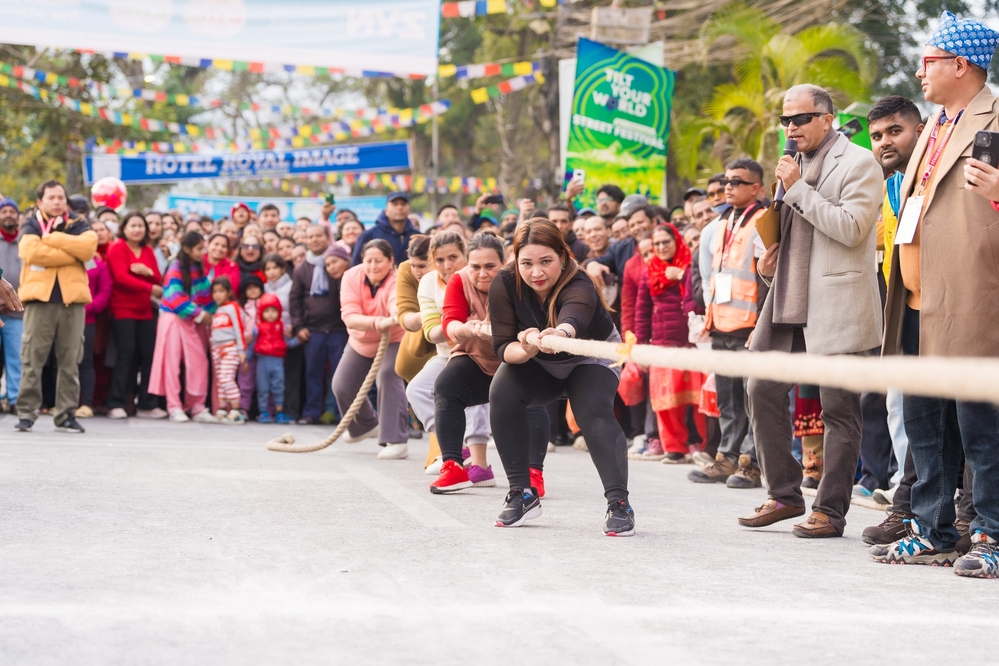
The Pokhara Street Festival, which is organized every year on the occasion of the English New Year in the tourist capital Pokhara, is being held from 13 to 17 February on Lakeside Road this year.
This festival, which was started about two decades ago at the initiative of local tourism entrepreneurs when Pokhara's tourism was slowing down, has completed its 25th edition. The Pokhara Street Festival, which started with the concept of making the road itself a festival venue, has over time established itself as the largest, oldest and continuously organized tourism festival in Nepal.
According to Bishworaj Poudel, President of Pokhara Restaurant and Bar Association (REBAN), the target is to attract 500,000 to 600,000 domestic tourists to Pokhara through this year's five-day festival. According to him, the festival has been made more attractive with the aim of boosting domestic tourism as it is the time for foreign tourists to return to their countries to celebrate Christmas. It is estimated that about one billion rupees will be directly and indirectly traded in five days by filling the approximately 40,000 beds in Pokhara.
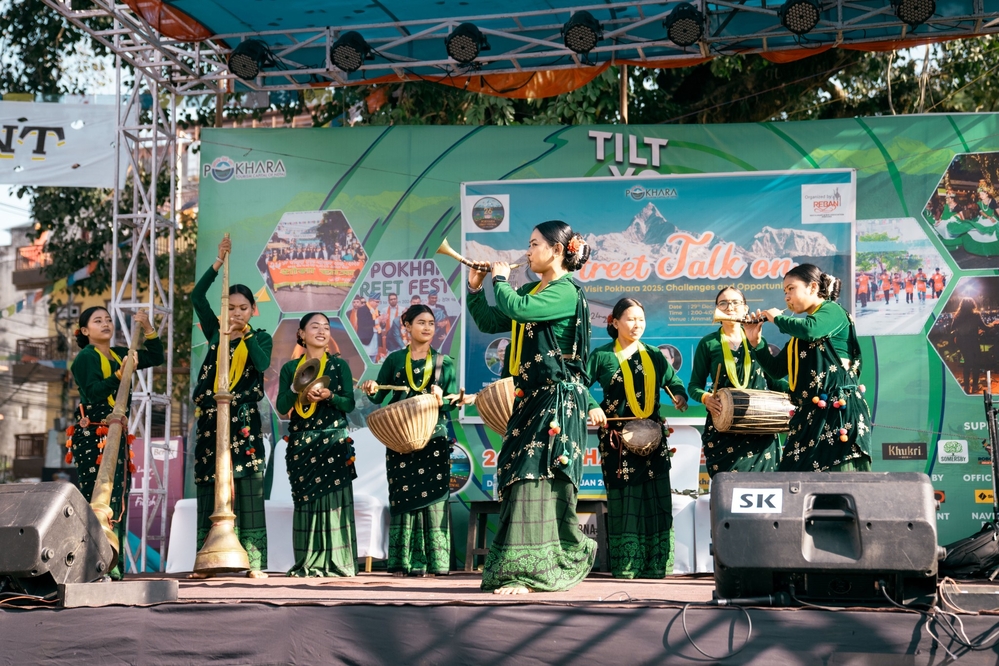
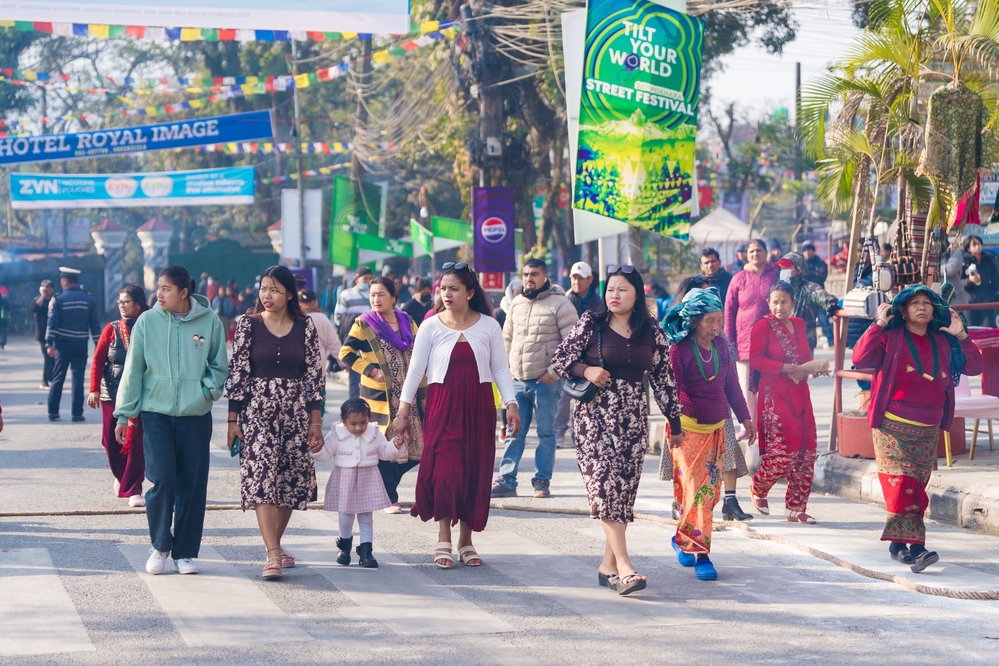
The main road of Lakeside will be closed to vehicles from 3 pm throughout the festival. The same road will be decorated with stalls selling handicrafts, pottery, recycled materials, home-made products, agricultural produce produced by farmers, honey and authentic Nepali food. Cultural programs from different geographies and communities of the country will be presented on four separate stages. A countdown program will be organized on the road on New Year's Eve, for which the road will be open from 2 to 3 am on that day.
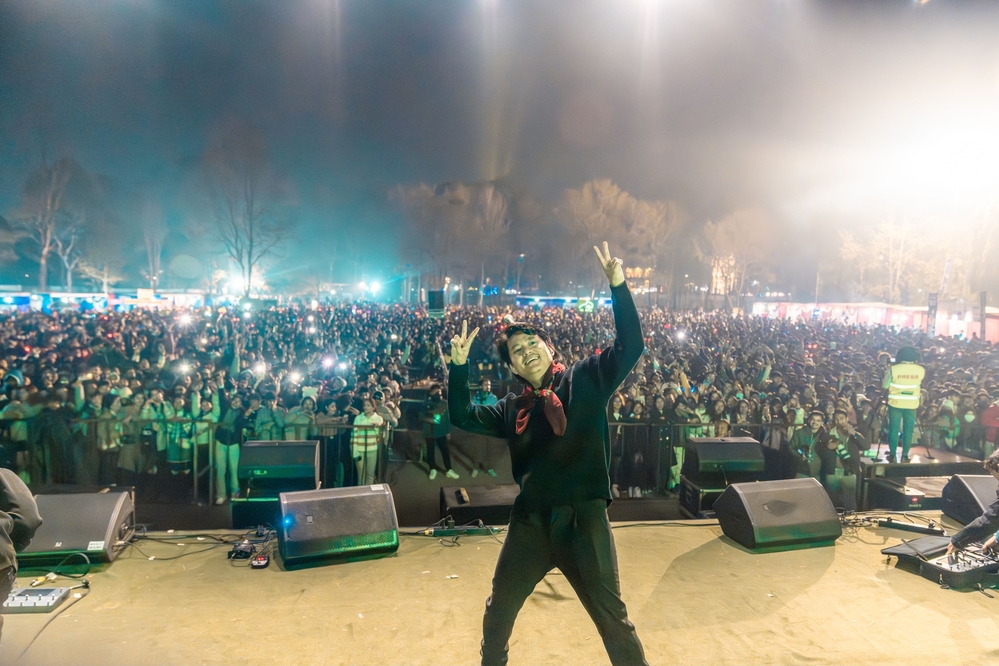
The Pokhara Street Festival is not just a food exhibition or entertainment venue but also a vibrant exhibition of Nepal's cultural diversity. The specialty of this festival is that the culture, costumes and dances of communities including Rai, Magar, Gurung, Newar, Tharu, Maithili, Brahmin, Kshetri and others can be observed walking on the same road. Along with this, adventure tourism activities such as rock climbing in Fewa Lake, sports activities and paragliding, skydiving, zipline, hot air balloon and ultralight flights available in Pokhara will also be more active with the festival.
While Pokhara's street festival continues to heat up tourism, Sauraha in Chitwan will witness the confluence of forest, elephants and culture. The 19th Chitwan Elephant and Tourism Festival is being organized in Sauraha, known as the center of biodiversity and wildlife tourism, from 11th to 13th of February. This festival, which started in 2055 BS with the aim of institutionalizing Chitwan tourism, which has a history of about 50 years, has been playing a significant role in introducing Sauraha and the entire Chitwan on the world tourism map.
According to Om Prakash Pandey, President of Regional Hotel Association Nepal (HAN), Chitwan, about 70 to 80 elephants will participate in this year's festival. During the festival, a grand elephant procession, cultural tableaus of different castes, elephant dressing competitions, elephant feasts, health camps, information about the daily lives of elephants, municipal-level boat races and elephant-friendly competitions will be organized. In addition, to promote safari tourism, guests will be given the experience of elephant, jeep, boat and forest trekking on foot. The
festival is expected to make a significant contribution to the internal economy of Chitwan. According to Mahesh Khanal, General Secretary of Han Chitwan, about 130 hotels in Sauraha and the same number of restaurants will be full during the festival period. The three-day festival is estimated to create economic activity worth Rs 500 to 600 million in the Chitwan region. This year, a 10 percent discount on food and accommodation in hotels and restaurants has also been arranged on the occasion of the festival.
Keeping in mind the criticisms raised on animal rights and conservation issues in the last few years, the organizing committee claims that this time the Elephant Festival has been made more sensitive and responsible. The use of sharp or harmful tools is completely prohibited, and arrangements have been made for all elephants to undergo health checks by veterinarians before and after the program. Only qualified mahouts who take care of the elephants on a daily basis will be allowed to participate in the program. The festival activities have been restructured to focus on the message of tradition, coordination and coexistence rather than competition.
According to the organizers, elephants are creatures deeply connected to Nepali religion, culture and tourism. Reminding that elephants have been continuously raised even during the difficult days of the Corona pandemic, the organizing committee has claimed that the Elephant Festival is a living example of coexistence between humans and wildlife. Organized in collaboration with Chitwan National Park, Department of Wildlife Conservation, Nepal Tourism Board and local levels, this festival is expected to contribute to the promotion of other tourist destinations in Chitwan, including Sauraha.
At a time when the atmosphere of despair and confusion is spreading across the country, the Pokhara Street Festival and the Chitwan Elephant and Tourism Festival are believed to provide Nepali society with a sense of happiness, excitement and hope, even if only for a short while. For those who are bored of staying at home, who want to travel within the country and experience Nepali culture up close, these two festivals are not only an opportunity to travel, but also proof that Nepal's tourism is still alive.