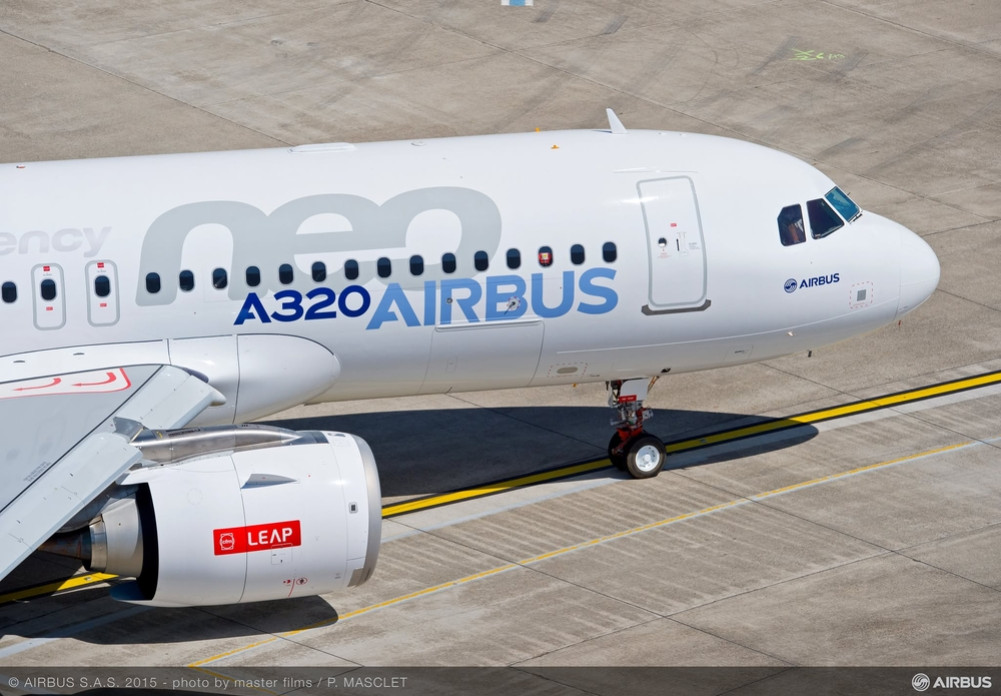
These two airlines operate six Airbus A320 series aircraft.
We use Google Cloud Translation Services. Google requires we provide the following disclaimer relating to use of this service:
This service may contain translations powered by Google. Google disclaims all warranties related to the translations, expressed or implied, including any warranties of accuracy, reliability, and any implied warranties of merchantability, fitness for a particular purpose, and noninfringement.
Flights in various countries were affected after aircraft manufacturer Airbus sent a precautionary notice to operators worldwide, citing a potential technical risk in some of its A320 series aircraft. However, flights of Nepal Airlines and Himalaya Airlines, which use the same series of aircraft, were not affected by the incident.
These two airlines have a total of six Airbus A320 series aircraft in operation. Representatives of both companies informed on Sunday morning that all their aircraft are flying regularly without any disruption.
According to an airworthiness inspector of the Civil Aviation Authority of Nepal, Nepal had also received the information (alert) sent by Airbus to operators around the world. The information mentioned the possibility that solar radiation could affect critical data in the flight control system. The inspector said that the authority has confirmed that no aircraft need to be grounded after coordinating with both airlines.
What is the problem with the Airbus A320 series?
On Friday, Airbus issued a statement saying that intense solar radiation could affect critical data in the flight control system and urged regulatory bodies around the world to immediately implement protective measures.
About 6,000 A320 series aircraft manufactured by Airbus are in operation worldwide. Airbus has identified a risk of flight control data instability due to intense solar radiation at high altitudes (cruise level) on a small number of these aircraft. Airbus had issued an Alert Operators Transmission (AOT) on this issue from its headquarters in Toulouse, France.
In the notice, all operators have been instructed to ‘rollback’ the L104 software used in the aircraft’s Elevator and Aileron Computer (ELAC) to an older, safer version before the next flight.
According to an engineer at Nepal Airlines who is aware of this update, a few months ago, Airbus had provided a software bulletin with the L104 version for aircraft belonging to the A320 family. However, since this update is not mandatory, Nepal Airlines had not installed the L104 version on its aircraft. For this reason, despite the problems with aircraft of this series flying around the world, there were no problems with Nepal Airlines flights.
Himalaya Airlines had already updated the L104 software provided by Airbus on all four aircraft. But after Airbus's notification, Himalaya Airlines removed L104 from all its aircraft in Nepal and China on Friday and Saturday and returned to the old version, according to the authority's sources.
According to the New York Times, the incident that caused global alert was seen a month ago at the American airline JetBlue. A JetBlue A320 aircraft en route from Cancun, Mexico to New Jersey made an emergency landing in Florida after experiencing a pitch-down problem at cruise altitude.
The incident left 20 passengers hospitalized, and the aircraft was taken out of service for a detailed inspection. After this incident, global attention focused on the flight control system of the A320 family of aircraft.
The ELAC used on the aircraft is a flight control computer. It controls the pitch and roll of the aircraft. Airbus and the European Aviation Safety Agency have launched a joint investigation after a problem was found with the L104 update installed on the same system. The European Aviation Safety Agency issued an emergency directive on 29 November 2025, asking all A320 operators to immediately remove L104 and use L103 Plus or another safe version in the ELAC.
The news agency reported that hundreds of passengers were delayed as American, Delta, BlueJet and other airlines cut flights on the eve of the Thanksgiving holiday due to a software problem.
Note: This news has been updated.