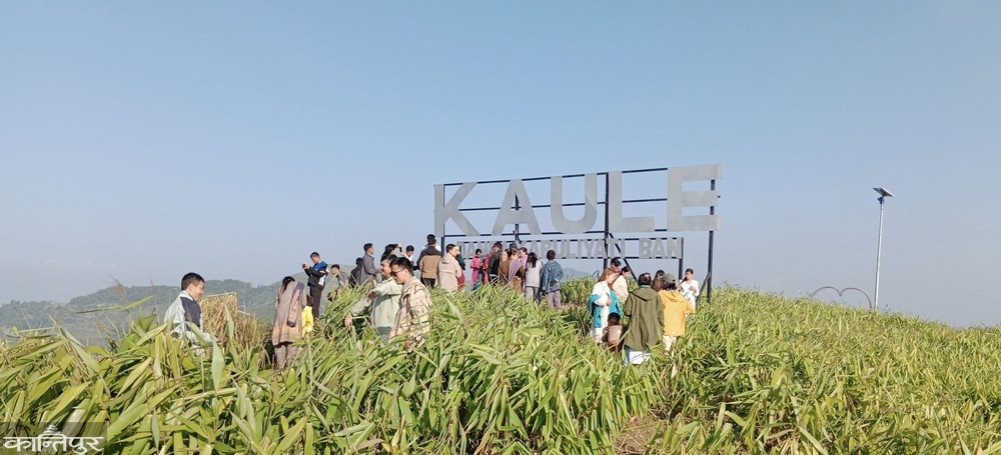
After the cultivation of amriso began in 2067 BS in Kauledanda, which was once covered in dense forest, it has now become an attractive destination for domestic tourists.
We use Google Cloud Translation Services. Google requires we provide the following disclaimer relating to use of this service:
This service may contain translations powered by Google. Google disclaims all warranties related to the translations, expressed or implied, including any warranties of accuracy, reliability, and any implied warranties of merchantability, fitness for a particular purpose, and noninfringement.
Kauledanda, located in Jhirubas, Nisdi Rural Municipality-3, Palpa, has become a favorite destination for domestic tourists. Once filled with wild bushes, Kauledanda has now become an attractive destination for domestic tourists after the start of amriso cultivation in 2067 BS.
According to Ward Chairman Nabindra Thapa Soti, at least 500 people have visited Kauledanda every day since Dashain. ‘Tourists come here because they can enjoy the view of the tall mountains, the orchards of Amriso, the Terai, the mountains and the hills on both sides,’ he said. ‘This has also contributed to the economic development of this area.’ Groups from various places in Palpa as well as from Nawalpur, Nawalparasi, Chitwan, Syangja, Tanahun and other districts also come for tours. It has also become an attraction for forest feasts.
Daman Bahadur Thapa Pata, Chairman of Kauledanda Collective Forest Intergroup, said that more than 2,000 tourists came in a single day after Tihar. ‘If there had been no unseasonal rain this year, it was expected that many tourists would have come,’ he said, ‘after the rain, the road would be damaged and people would be afraid to come.’
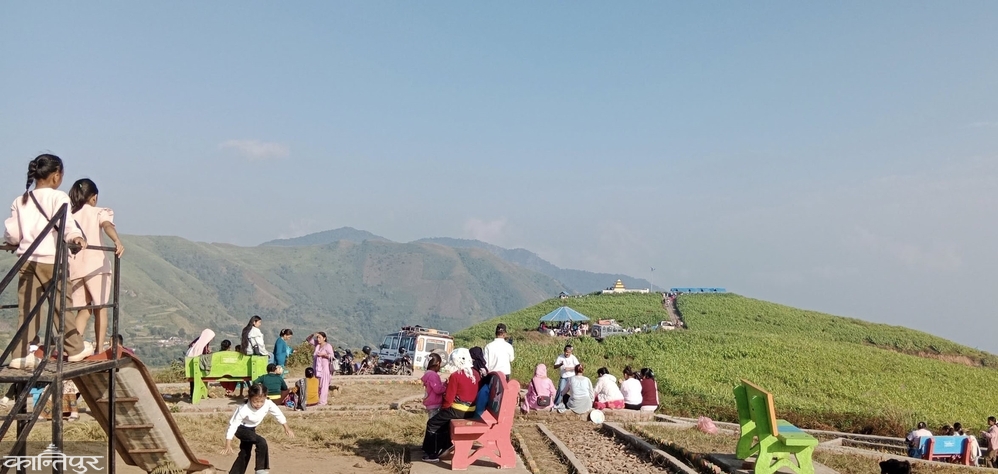 Even though it is a tourist area, one has to suffer due to the lack of easy access to the road leading to this place. Kauledanda has an area of 246 hectares planted with human labor. Chairman Thapa Pata said that tourists come from more than a dozen districts to observe the beautiful natural environment here.
Tourists visiting Kauledanda have to pay a ticket of Rs 20 per person. He said that they have to pay Rs 50 for a motorcycle, Rs 500 for a jeep, and Rs 1,000 for a bus. He said that those who come in a jeep for a picnic are charged Rs 300 and those who come in a bus are charged Rs 500 separately.
As the attraction of tourists here has increased, homestays have been started in 5 houses in Dharkesing village with the help of Nisdi Rural Municipality. He said that an additional 6 houses have been expanded. The forest-filled Kauledanda forest of Jhirubas was registered as a forest reserve and Amriso cultivation was started here. Seventeen years ago, it was full of Amriso. Last year, Amriso erased the look of Ilam's tea gardens, said Yubaraj Pant, who visited Kauledanda from Rampur.
'The place is very charming, but the road to reach here has caused problems,' he said. 'Even though it is a narrow and steep, unpaved and difficult road, there is no shortage of tourists.'
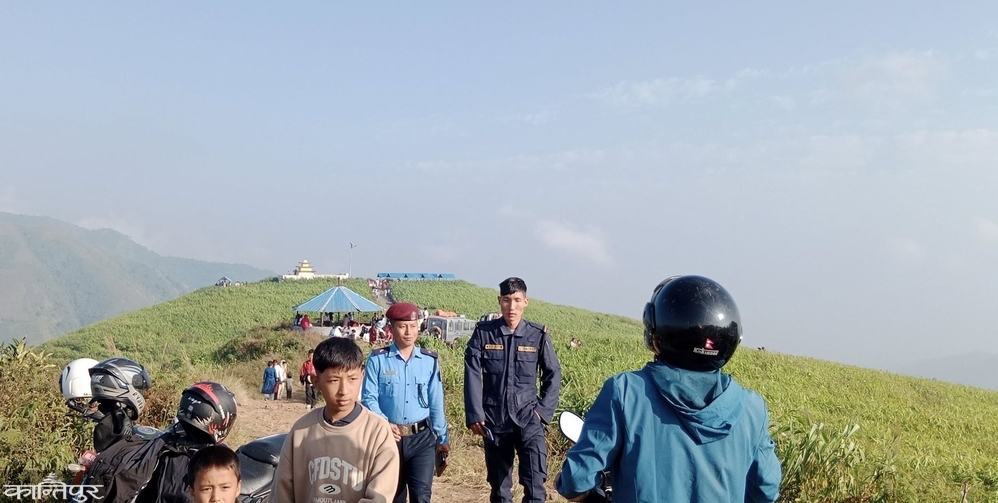 The hard work done by the locals can be observed in the Kauledanda area. Local leader Bir Bahadur Pata Magar said that tourists enjoy the panoramic views of the mountains and the Terai from the high hills. He said that with the construction of road infrastructure, the number of tourists visiting has increased in recent years.
Pata said that the lifestyle of the locals here is also changing after the income from amriso farming started coming in. ‘The government’s Kabuliyati Forest Program has made Kauledanda a tourist destination,’ he said, ‘The group has earned income and the place has also been promoted.’
The annual income from amriso planted in Kauledanda forest is more than 60 lakhs. Although there were some problems in the conservation of amriso initially, the inter-group has reported that a lot of income has been generated from amriso lately.
Jhirubas is a Magar-dominated village. Its leader Laxmi Prasad Pata said that the Jhirubas area has been developed as a tourist area along with the kaule forest while preserving the Magar culture. According to him, as the amriso farming started in Jhirubas has flourished, locals from neighboring Mityal and Sahalkot have also started commercial farming of amriso.