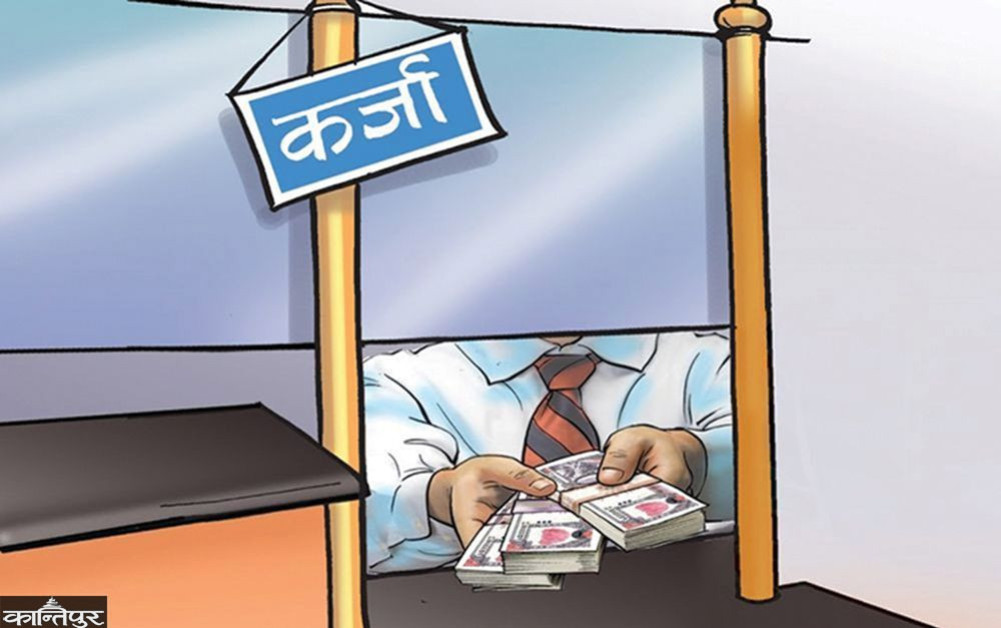
The government has reduced the interest subsidy through the 'Interest Subsidy Procedures for Concessional Loans 2082' recently revised by the Ministry of Finance. In the procedure, interest subsidy was given for 10 types of loans, but it has been reduced to 8 types.
We use Google Cloud Translation Services. Google requires we provide the following disclaimer relating to use of this service:
This service may contain translations powered by Google. Google disclaims all warranties related to the translations, expressed or implied, including any warranties of accuracy, reliability, and any implied warranties of merchantability, fitness for a particular purpose, and noninfringement.
The government is going to give only 3 percent interest subsidy on subsidized loans operated for the purpose of increasing production, promoting internal employment, and developing entrepreneurship in the country. Earlier, the government was subsidizing 5 percent interest for 6 types of loans under the title of women entrepreneurs and the remaining nine types of loans.
The government has reduced the interest subsidy through the 'Interest Subsidy Procedures for Concessional Loans 2082' recently revised by the Ministry of Finance. In the procedure, 10 types of loans were previously given interest subsidy, but they have been reduced to 8 types. Along with this, it is also mentioned in the new procedure that the procedure issued in 2075 has been cancelled. Rastra Bank issued a circular on Thursday to banks and financial institutions to implement the new procedure.
Banks and financial institutions have been instructed by the National Bank to publish separate details of current borrowers in accordance with the 'Interest Subsidy Period for Concessional Loans, 2075' and borrowers who have received subsidized loans in accordance with the 'Interest Subsidy Period for Concessional Loans, 2082' on a quarterly basis through their website.
According to the new system, the government will provide interest subsidy only for 8 types of loans, namely agriculture and livestock, women entrepreneurs, youth self-employed who have returned from foreign employment, educated youth projects, Dalit community Bhagat Sarvajit enterprise development, start-up enterprises, boiler replacement in industry and construction of private housing for victims of natural disasters.
According to this, citizens can get loans up to 50 million for agricultural and livestock loans, up to 2.5 million for women entrepreneurs, up to 20 million for self-employed youth who have returned from foreign employment, up to 20 million for educated youth projects, up to 20 million for Dalit community Bhagat Sarvajit enterprise development, up to 25 million for startup enterprises, up to 50 million for boiler replacement in industry and up to 5 million for the construction of private housing for victims of natural disasters. There is a provision that the mentioned loan will be paid in installments and the concessional loan limit once approved cannot be increased again.
"Concessional loans will not be provided to more than one member of a household and the interest subsidy facility will be maintained only until June 2087 (maximum of five years)," it is said in the procedure, "When providing concessional loans, banks and financial institutions can add a maximum of 1.5 percent premium to their base rate." Interest on the loan, loan notification fee and insurance fee to be borne by the borrower cannot be charged from the borrower. Previously, banks and financial institutions were allowed to add a premium of up to 2 percent to the base rate. The
methodology also covers startup ventures. Businesses are defined as startups in the procedure if they are less than 10 years registered as an enterprise business, registered as a private firm, partnership firm, company or cooperative organization, annual turnover does not exceed 150 million rupees in any financial year, and have the potential for rapid growth by transforming the latest and creative thinking into an enterprise business.
While providing such loans, banks and financial institutions have to provide loans by securing the business project as a personal or group guarantee of the family members of one household. "An amount of three percent of the interest rate charged on loans provided by banks and financial institutions will be provided by the Government of Nepal in the form of a subsidy," the procedure states, "The amount of the interest subsidy will be provided after the borrower pays or pays the entire interest amount, security fee and insurance premium fee to the respective bank." If found to have misused the
loan, the interest subsidy facility for the remaining period will not be provided and if such interest subsidy facility has been taken, the entire subsidy amount (including interest) will be recovered from the borrower. In this way, the relevant banks and financial institutions have the responsibility to monitor whether the loan has been utilized or not. The government had formally launched the interest subsidy concession program since 2075 with the objectives of increasing production in the country, promoting internal employment, and developing entrepreneurship. In order to increase production, create jobs and develop entrepreneurship for building a productive economy, the Government of Nepal issued the Integrated Procedure 2075 regarding interest subsidy for subsidized loans. According to the same procedure, on October 20, 2075, the National Bank issued instructions to banks and financial institutions for the implementation of the procedure related to subsidized loans.
Initially this loan was voluntary. When the banks and financial institutions refused to pay, the National Bank decided to make the payment mandatory by specifying the number. Initially, interest subsidies were given for seven types of loans, including agriculture and livestock, educated youth self-employment, youth projects returning from abroad, women entrepreneurs, Dalit community business development, higher and technical and vocational education and private housing construction loans for earthquake victims. Of these, agricultural credit is the oldest. The Ministry of Finance, on the recommendation of the National Bank, has now issued a unified procedure for interest subsidy after it was found that this loan was used beyond the intended purpose.
The government did not give 10 billion of interest subsidy
The government has not yet paid more than 10 billion of the obligation to pay for subsidizing interest in subsidized loans. Banks and financial institutions have not provided subsidized interest rate loans for about two and a half years since the government did not provide the funds for the subsidy. Even in the subsidized loans that were provided earlier, most of the banks are now collecting the entire interest (including the subsidy) on the condition that they will return the amount for the interest subsidy after receiving money from the government.
According to the instructions of the government, banks and financial institutions have been providing 10 types of low-interest loans so that they can get the interest subsidy money. But for the last two and a half years, the government did not give the amount for the interest subsidy. According to Rastra Bank, although some funds have been disbursed, there is still more than 10 billion remaining.
Banks have stopped disbursement of the loan as the government did not pay the amount for the interest subsidy. "Until now, about 10 billion rupees for the interest subsidy from December 2081 has yet to be paid," a Nepal Rashtra Bank source said, "we are demanding the remaining amount." We have received positive assurance from the Ministry of Finance.'
Currently, not all banks and financial institutions provide subsidized interest loans to new borrowers. Therefore, banks and financial institutions have stopped disbursing new concessional loans as the government still has some money to give. A banker said that there is no possibility of disbursing new loans under this program until the remaining amount is paid.
"The money for the interest subsidy has not come from the government, so now you have to pay the full interest, and when the money comes from the government, the bank is charging the full interest," said a borrower who took a subsidized loan.
In interest subsidized loans, the government should pay the insurance fee to the insurance company and the loan protection fee to the deposit and loan protection fund to the banks and financial institutions through the Rashtra Bank.
How much loan for what purpose?