For a long time, the local residents have been demanding that the import of coal should be stopped because of the spread of pollution in the slums.
We use Google Cloud Translation Services. Google requires we provide the following disclaimer relating to use of this service:
This service may contain translations powered by Google. Google disclaims all warranties related to the translations, expressed or implied, including any warranties of accuracy, reliability, and any implied warranties of merchantability, fitness for a particular purpose, and noninfringement.
A large amount of coal has been imported through the Sirsia dry port crossing amid local protests. At present, in the western part of the port, there is a mountain of coal imported from India.
The people of Sirsia Khalwatola, which is located in the west of the port, have been demanding for a long time that the coal being imported into the port should be stopped because it has spread pollution in their settlement. Coal has been imported at the port since last year.
Importing coal by rail has been started by claiming that it will be imported in large quantities at the same time and the cost of transportation will be cheaper. Earlier, at the railway station in Raxaul, a bordering Indian city of Birgunj, Nepali importer's coal was unloaded from the train and transported by truck to Birgunj. Residents of Raxaul were protesting for a long time around the Raxaul railway station saying that Nepali importer's coal was causing pollution.
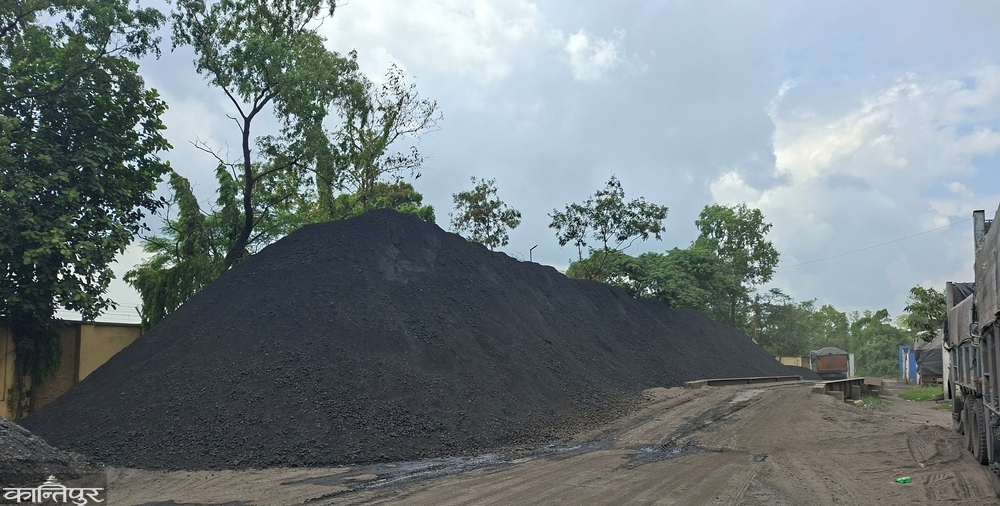
Due to the pressure of the people of Raxaul, the Indian government also facilitated the coal to go directly to Nepal without unloading the coal from the train at Raxaul. Now the pollution has decreased in Raxaul, while the pollution has increased in Khalwatola, the dry port west. The locals are strongly protesting that the coal pollution has spread to their homes and they are also having breathing problems.
The waste generated from coal is spread inside the port premises, while the pollution can be seen even on the road outside the port. Pristine Valley, the port operating company, has been accused of showing indifference in pollution control.
Kamal Gyawali, the head of the inter-modal transport development committee office at the port, says that there is currently 25,000 to 30,000 metric tons of coal in the port complex. . He said that since it is customary for importers to import large quantities of coal before the rains, it is possible that a large quantity of coal has been brought into the port at present. He said that 18 rail racks entered the coal port in May and 22 in June.
Currently, coal is the number one among the items entering through this port as loose cargo. Coal import has been contributing rapidly to the revenue of the Birgunj Customs Office. However, even the customs office has not shown the necessary vigilance in controlling the pollution spread from coal to the settlements around the port.

