The Electricity Bill gives priority only to the Nepal Electricity Authority and foreign investment.
We use Google Cloud Translation Services. Google requires we provide the following disclaimer relating to use of this service:
This service may contain translations powered by Google. Google disclaims all warranties related to the translations, expressed or implied, including any warranties of accuracy, reliability, and any implied warranties of merchantability, fitness for a particular purpose, and noninfringement.
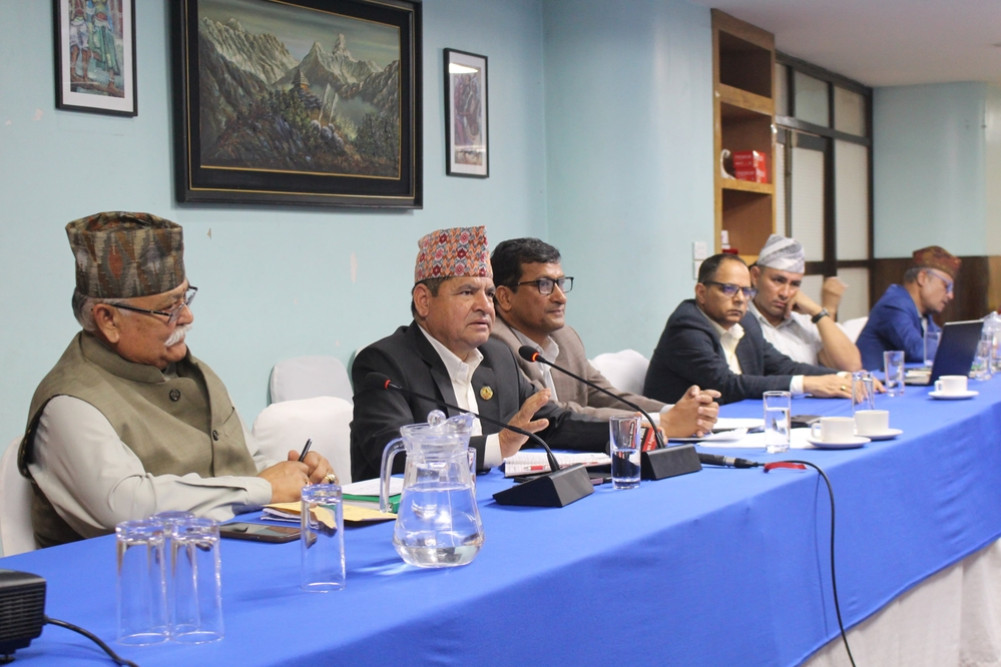
Stakeholders have demanded that the private sector be given priority and facilities in electricity generation. At a discussion on the topic of ‘Interaction between Parliamentary Committee and Stakeholders on the Electricity Bill 2080’ organized by the Association of Community Radio Broadcasters (ACORAB) Nepal in Kathmandu, private sector representatives said that the bill has provisions that will make it easier for the Nepal Electricity Authority and foreign investors.
Prakash Dulal, Deputy Secretary General of Independent Power Producers Association of Nepal (IPPAN), said that the Electricity Bill has given less importance to Nepal's private sector. Stating that the competition provisions in Section 5 of the Bill have not been made equal, he demanded that the provision that the government does not have to compete during the process of electricity generation be repealed. Expressing dissatisfaction over the provision in Section 6 of the Bill that no foreign company is required to enter into any Power Purchase Agreement (PPA), Deputy Secretary General Dulal commented that the definition of electricity in the Bill has been wrong. Demanding that the provision that the license should be transferred after the expiration of the license should be removed, Dulal claimed that if the Electricity Bill goes ahead in its current state, the investment of 6.5 million citizens will be at risk. Consumer rights activist Jyoti Baniya requested that the provisions made in various sections of the Bill be corrected and requested that the Bill be moved forward in a way that does not protect those who walk with the river in their bags. Baniya objected to the provision that the government has made an agreement and easily gives it to foreigners if they want it, and demanded that a compensation provision be made.
MP Bina Lama pledged to play a role in making the Electricity Bill more prosperous and said that the suggestions given by the participants in today's discussion will be incorporated in the amendments in the coming days. MP Shankar Bhandari said that the parliamentary committee and subcommittee are discussing the bill so that the law made today can be used for a hundred years. Stating that the law will not be made to everyone's satisfaction, he committed to passing the bill by incorporating the legitimate suggestions made in today's discussion.
Former Energy Minister and member of the Infrastructure Development Committee of the House of Representatives Shakti Basnet said that the private sector has not been able to accept the new provisions made in the Electricity Bill. Stating that the law was delayed due to lack of coordination between the system and the situation, he said that the Electricity Authority has been given facilities and priority because it is the 'lifeline' of the government.
MP Basnet says that the role and status of the Electricity Authority and the private sector cannot be the same in terms of electricity production. Informing that arrangements have been made to cancel the licenses of individuals or organizations that do not work to prevent a river from flowing into the bag, he said that the legitimate issues that came up in today's discussion will be added while revising the draft bill.
Former Minister of Physical Education and MP Prakash Jwala said that the discussion on the Electricity Bill has not gained momentum due to the government's lack of readiness. Stating that the private sector need not worry about the provisions of the bill, he said that the final conclusion will be reached by keeping the people as the first priority.
Chairman of the Infrastructure Development Committee Deepak Bahadur Singh informed that 611 amendments have been made to the Electricity Bill so far and that discussions have been held with more than 50 stakeholders. Chairman Singh claimed that he spoke to Gokarna Bista, the sub-committee coordinator of the Infrastructure Development Committee, about 5 days ago.