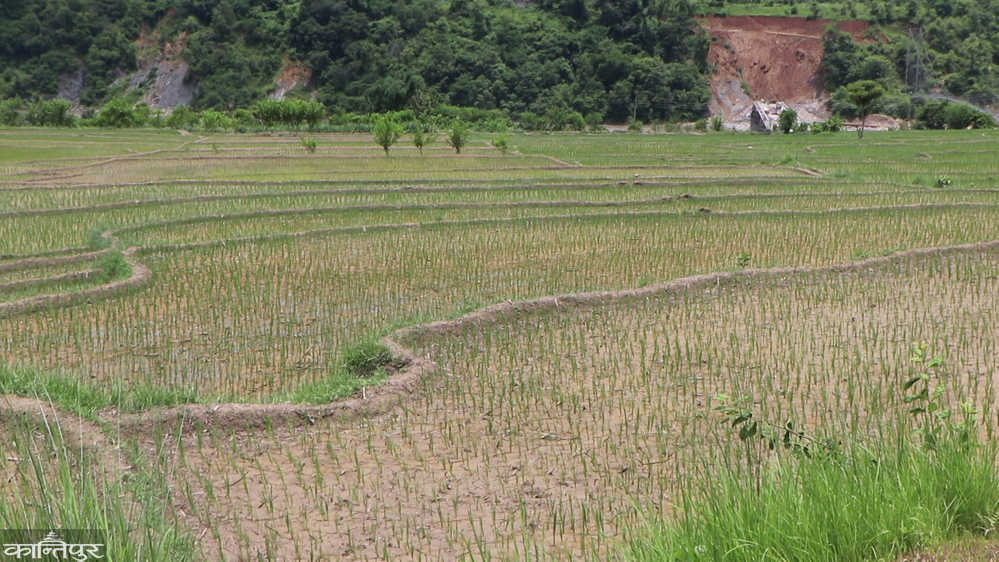
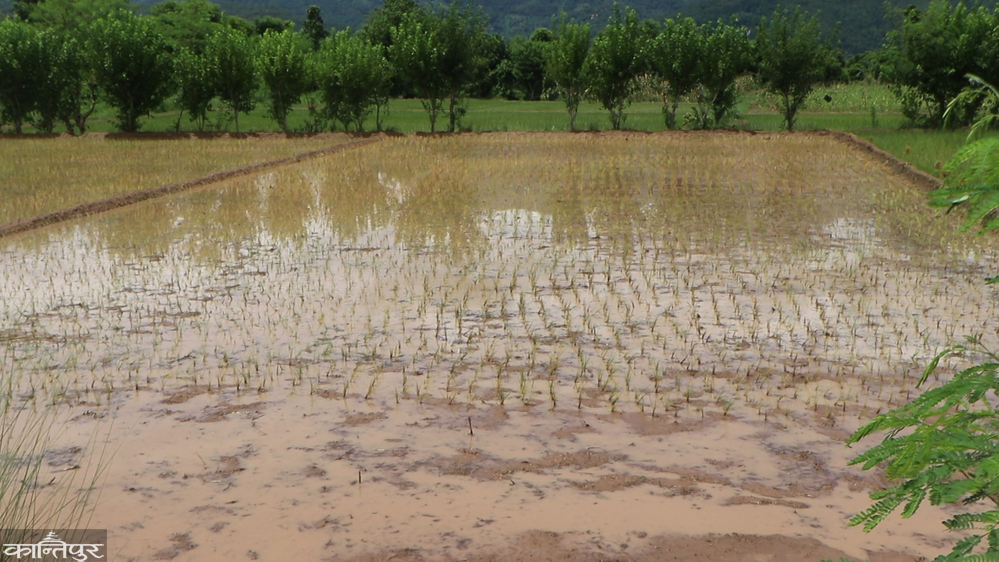
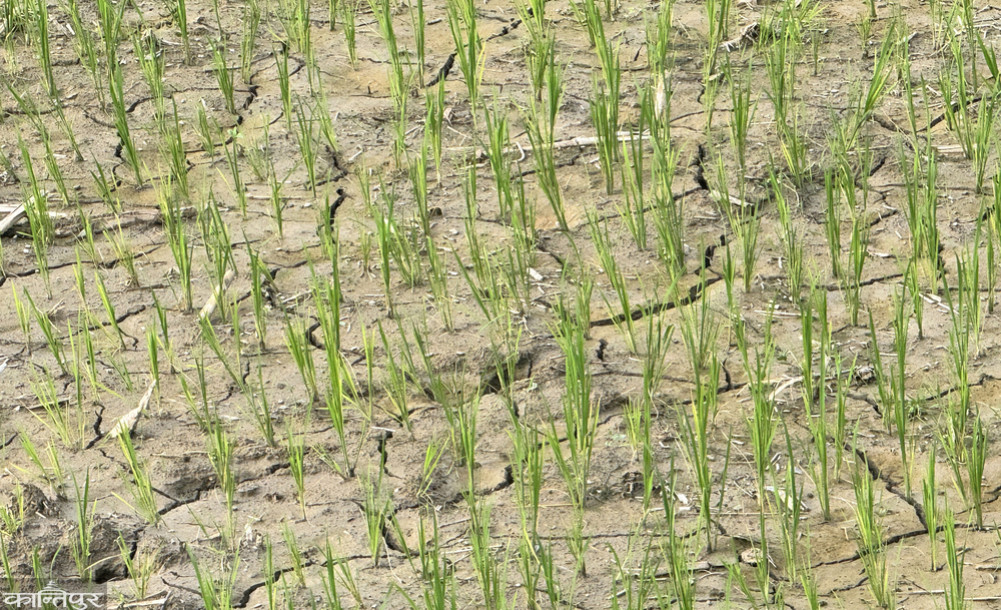
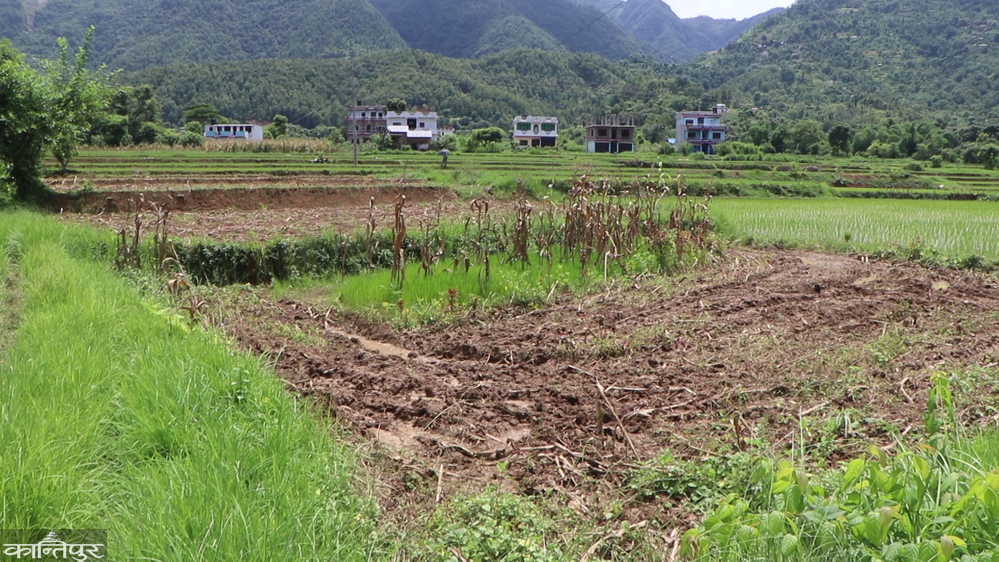
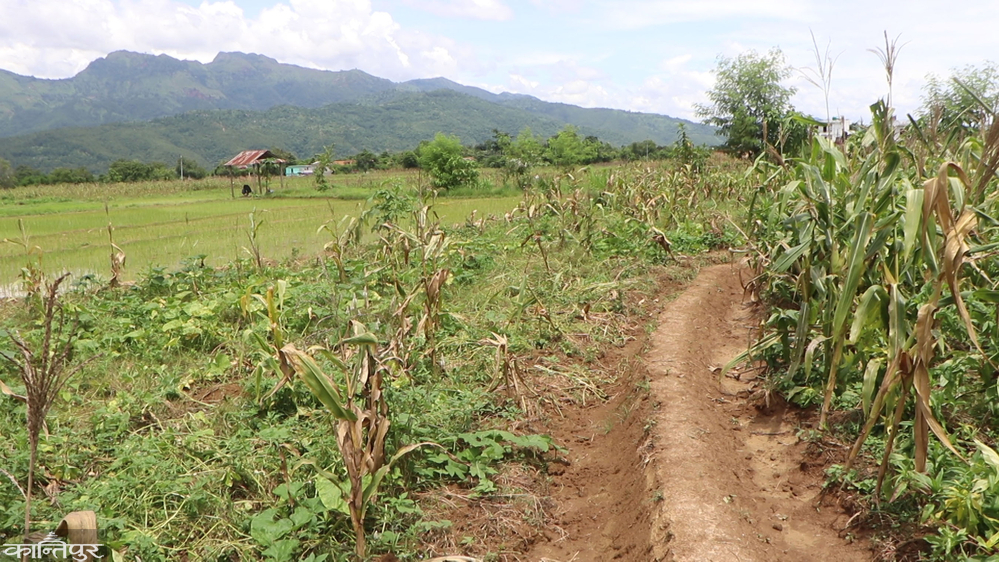
Due to the lack of rain from the sky, there was a problem in the planting, even in the planted fields, the corns broke
We use Google Cloud Translation Services. Google requires we provide the following disclaimer relating to use of this service:
This service may contain translations powered by Google. Google disclaims all warranties related to the translations, expressed or implied, including any warranties of accuracy, reliability, and any implied warranties of merchantability, fitness for a particular purpose, and noninfringement.
Sita Gharti of Rampur Municipality-7, Ekletar could not drink only one drop of water during the night. Due to light rain for some time on the previous day, more strength was reached. Gharti said that after waiting for water all night, they were able to plant the field in only one gara.
"Bed seeds should be planted in 20 to 25 days, but 40 days have been cut," she said. He complains that he has not been able to plant the fields after waiting for rain day after day.
There are still many fields left to be planted and the condition of the neighbors is the same. Sapna Ghartimagar of Rampur Municipality-7 said that she could not plant paddy due to lack of rain in both the months of June and July. There is no water in the river now. "Since the river did not rise, the water in the canal and the canal could not flow," she said. But this time they did not get to plant. Due to lack of rain, planting has not been done not only in Madhesh but also in Rampur district which is known as the granary of Palpa.
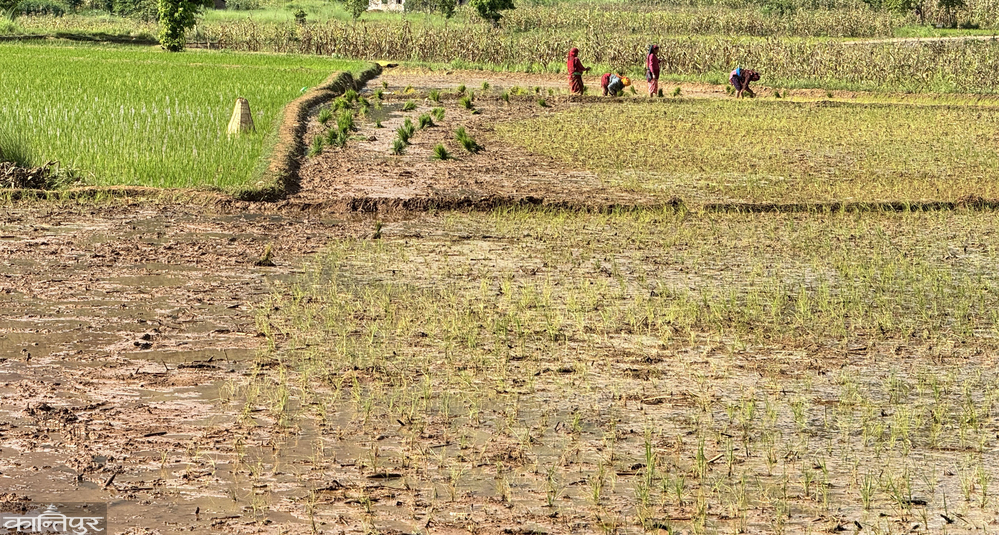
Not only within the Rampur municipality area, but also in Gejha, Lamdikhola, Bhujat, Nisardi, Wardale, Rambha, the fields are yet to be planted. However, even in the planted fields, the seedlings are dying due to the breaking of the vines. Ram Bahadur Gharti, a farmer from Rampur, said, "Some farmers have harvested the seeds and kept them, and they have come to a situation where they have to forcefully plant the fields after getting little water." Even the bad seeds have now reached a state of whether they can be planted or not.'
Out of the 34,000 paddy fields in Rampur municipality area, nearly 40 percent of the fields are still lying fallow, and the farmers are complaining that the rice production will also decrease this year. The saplings that were planted by the rains of June have also dried up. After not getting water, they have started a campaign to save by driving a motor. Farmers are complaining about not being able to use the Kaligandaki river nearby.
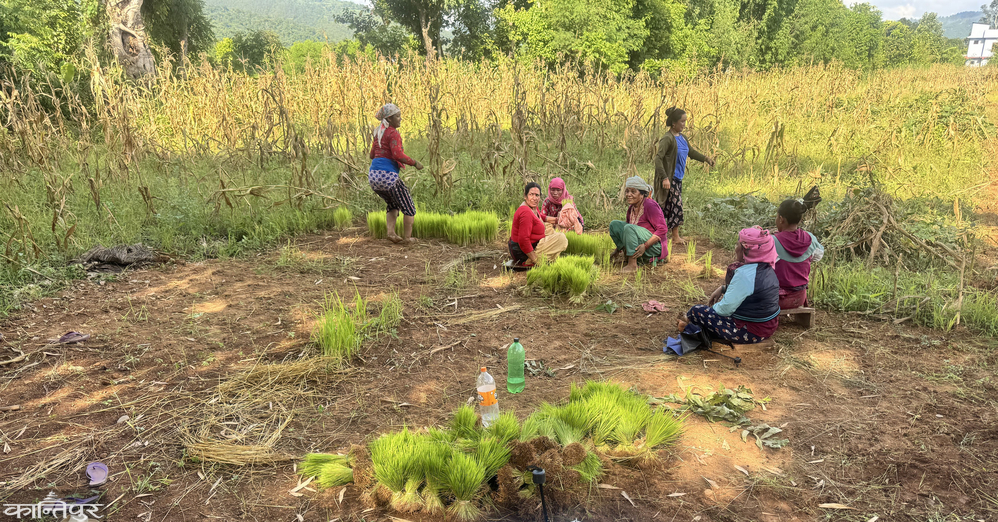
"What to do after planting the field in June, the rice planted has turned yellow," said Ekraj Gautam, a farmer from Rampur Municipality-5, "I have been running a motor to collect water from the chapakal to save it." He said that most of the farmers in the district are suffering from drought.
Farmer Sita Nepali of Rampur Municipality-5 complained that she would not be able to import rice in November due to lack of planting time. At the beginning, he planted rice in the valleys of the river, Kholsa, and Dhavati in the district. Among the areas where rice is cultivated, all the fields do not have river irrigation facilities. The saplings planted in the settlements above the river bank where paddy is grown in the sky water have dried up.
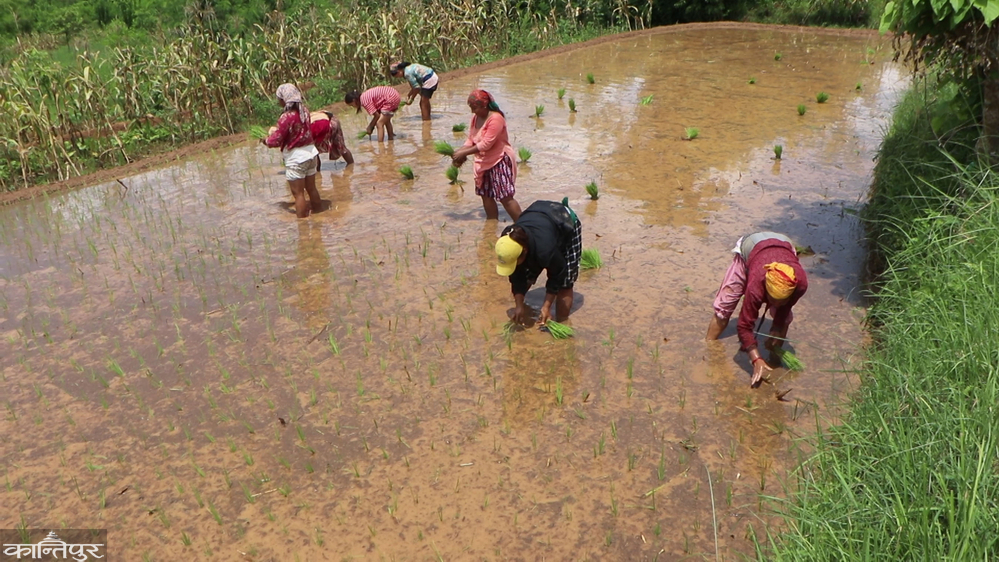
"Seedlings planted by Bhalpani, hoping that the sky will rain, have started to dry up and become unusable," Nepali said, "It has already started." We don't know what will happen if we don't get water. This year, I don't see any paddy crop.'
There is a canal under the Rampur Fant irrigation scheme in the Rampur Municipality area. But the canal cannot cover all the farms. Bahkhola, Turundikhola water resources have not increased. The problem has arisen because the source has not increased due to the lack of rainfall in fields that are not cultivated.
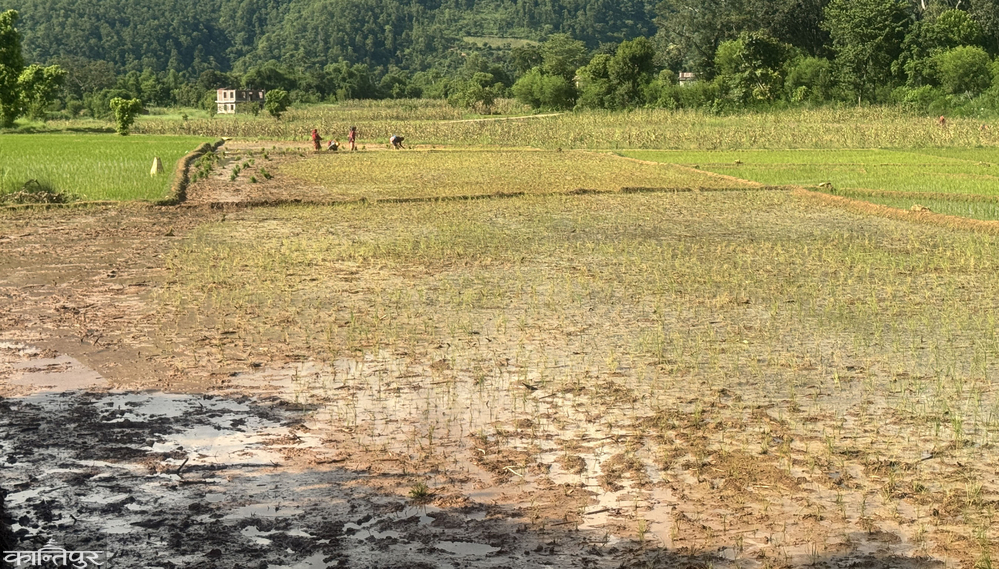
In July, farmers did not experience drought like now. Paddy planting has been done in different areas of 10 local levels, including two municipalities and eight rural villages in the district.
In areas where irrigation could not be managed, when it rained, the roots would split and the plants would be planted. But until now, since there has been no rain from the sky, the rice fields have not been planted.
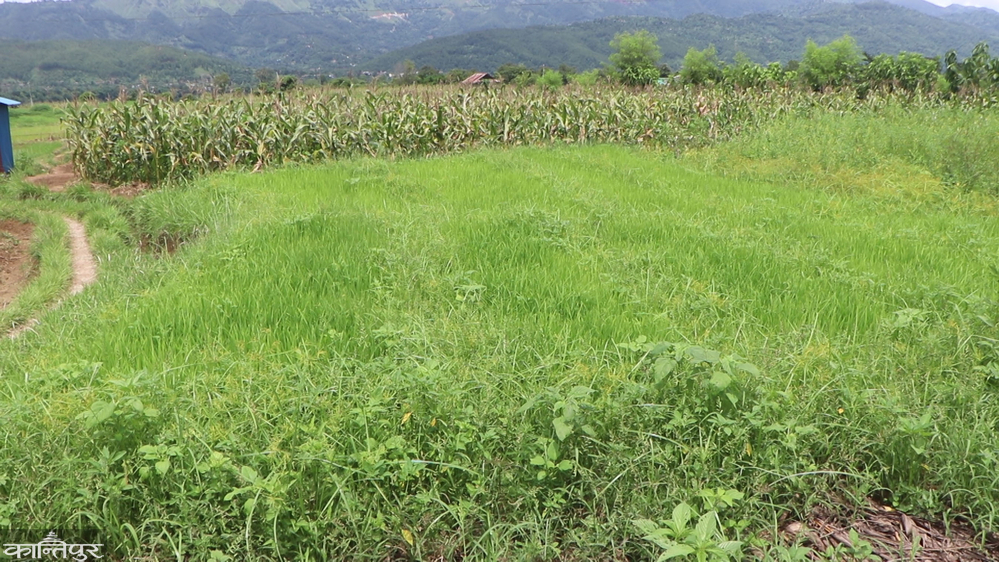
In Palpa Water Resources and Irrigation Development Division Office, Agricultural Knowledge Center, Local Level, Prime Minister's Agriculture Modernization Project spend more than 20 million annually on small and large irrigation. But the Water Resources and Irrigation Development Division office has returned more than 60 million last year only. Planning for farmers in the district is based on access.
In Palpa, 8 thousand 210 hectares of land has been cultivated annually. Farmers have been cultivating advanced varieties and hybrid varieties of rice. 60 percent of the paddy fields do not have river irrigation facilities.
Rampur municipality agriculture branch head Narayan Prasad Gayre said that even if it rains from the sky, the planting will be a little later than elsewhere in Rampur area of Palpa. "The main problem is the lack of rain from the sky," he said.
According to him, 40-45 days old seeds have to be planted. There is no water in the rivers and streams. Krishi Gyan Kendra Palpa claims that 85 percent of rice has been planted. Agricultural Knowledge Center reported that planting has been done except for some large areas planted with corn. Although the data shows that rice has been planted, in reality the farmers are suffering from drought.
"It is wrong to say that the farmers have planted more fields sitting at the headquarters of Tansen," Keshav Neupane, a farmer from Rampur, said, "I would have come to the field and seen whether they have been planted or not." Recently, farmers tend to cultivate advanced varieties and hybrid varieties of rice instead of local varieties. Under advanced and hybrid, farmers have been planting Sanwa Mansuli, Ramdhaan, Radha, Khumal, Basmati, US 312, Savitri, Hardinath varieties of paddy.