We use Google Cloud Translation Services. Google requires we provide the following disclaimer relating to use of this service:
This service may contain translations powered by Google. Google disclaims all warranties related to the translations, expressed or implied, including any warranties of accuracy, reliability, and any implied warranties of merchantability, fitness for a particular purpose, and noninfringement.
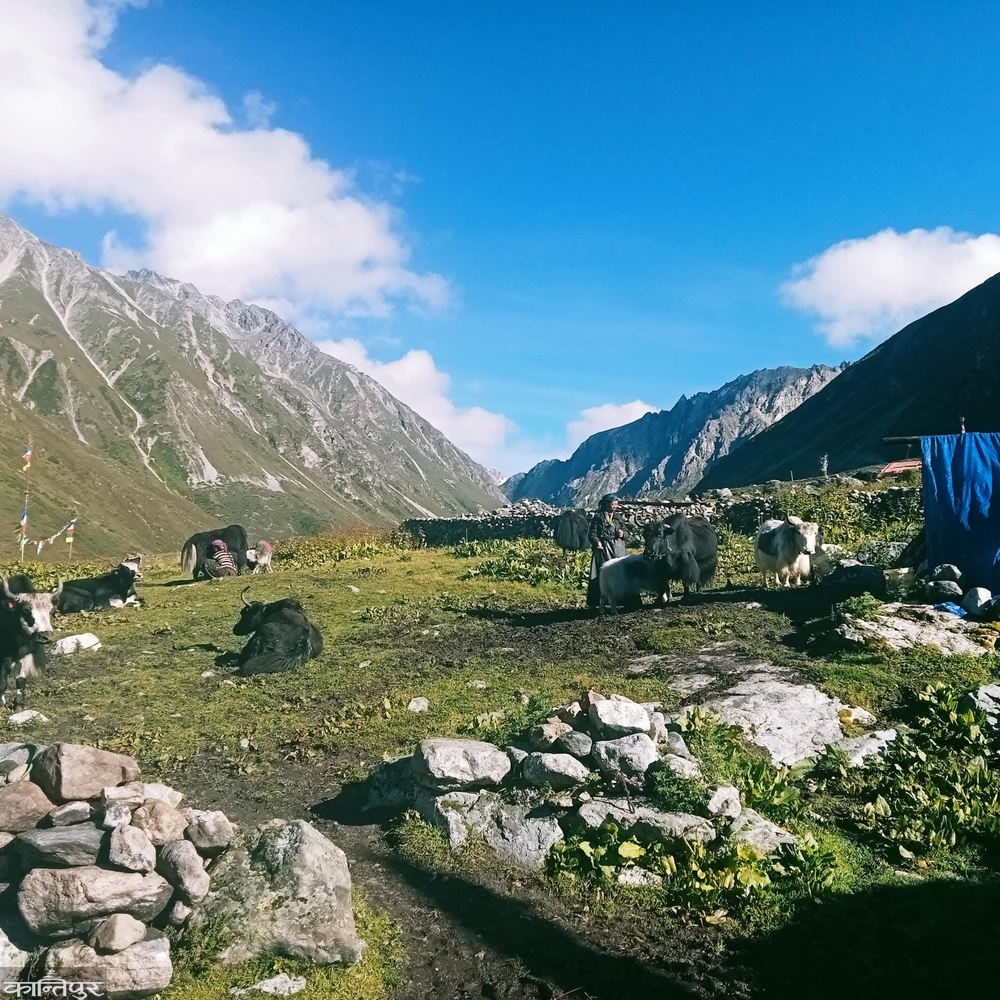
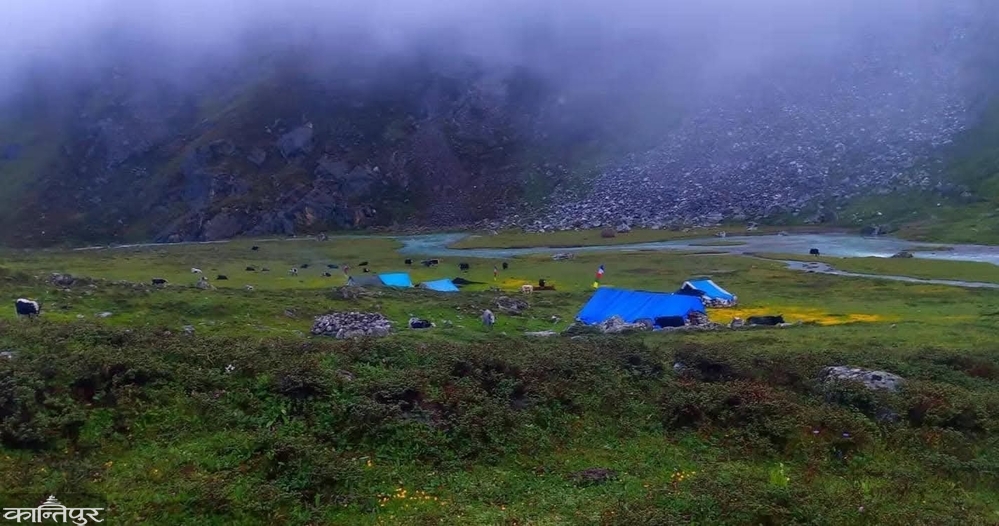
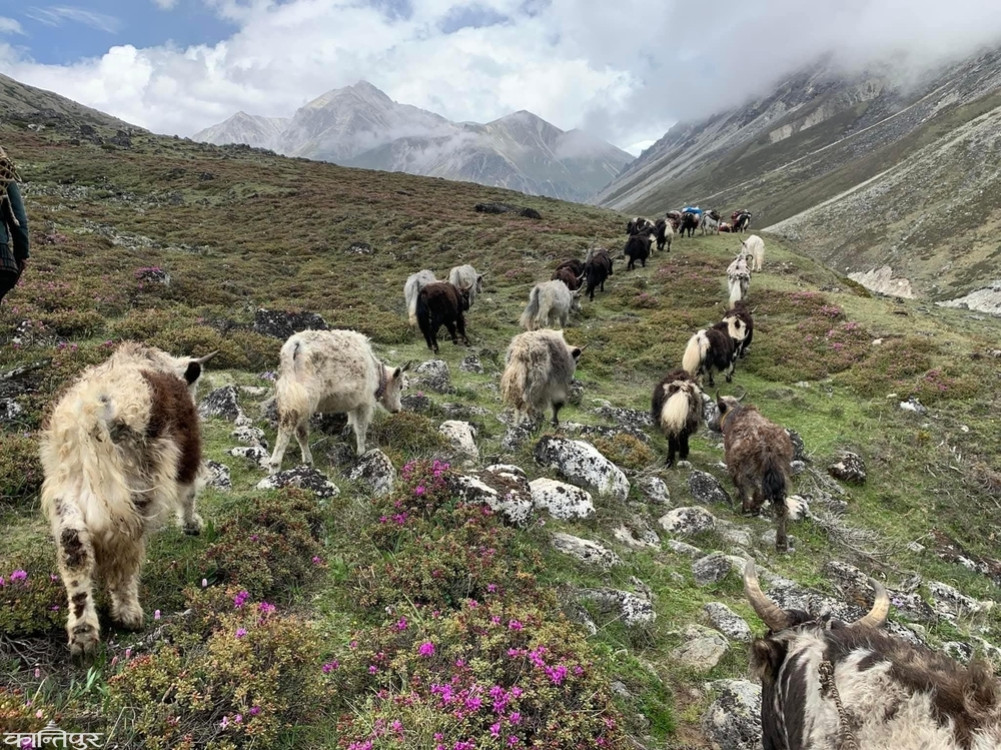
The yaks of Vigu-1 Lapchi, which is bordered with China, have reached the grazing area of Tibet in search of pasture. Every year from mid-June, the yaks of Lapchi come across the border to graze the cows of Chawri. Since there is no grazing in the Lapchi region during the dry season, shepherds with yak chauri used to go across the border with horses.
This year, about 300 yaks from 11 cowsheds went to the Chinese Khark across the border for grazing, said local Kunchok Norbu Sherpa. "In winter, we take the cows that have come down to Lumnang to graze the upper area through Lapchi to cross the border," he said. He said that the Yak Chowri from Lapchi, which reached the border area of China, will return to Nepal from the second week of October. After the earthquake of 2072, the Chinese side stopped taking yak chawri from Lapchi to China.
After about 5 years, Yak Chouri was allowed to be taken away again in Khark, and was allowed to be taken away completely after Korana . Tenzing Sherpa, a local, said that since last year, the yaks have been allowed to be taken to the Chinese Khark. He said that due to the lack of fodder for a long time, the locals have stopped raising yaks in the grazing area. "At one time, we used to chase more than 1,000 yak chawri and take them there for grazing," he said. ``We used to tie up three-month-old Satusamal calves and go to Khark,'' he said, ``The yak chauri calves are born there, we take care of them, we make ghee in the cowshed and collect it. "We have been giving ghee as a fee in the grazing area of Mau Yak Chouri," he said, "sometimes people from there come to buy calves, horses and ghee from Yak Chouri and sell them there too." In Lapchi, the main source of income for the locals of every house is the yak calf and ghee. But recently, the locals of Lapchi have stopped raising yak chauri. In Lapchi where 48 families have disappeared, currently only 11 families are rearing yak chawri . Their main market is Tasighang across the border .
In the same market, they have been selling yak chauri calves and horses with ghee. Karma Waiser Sherpa, a local, said that recently, grass stopped being found in the grasslands of the grazing area and when the border crossing was closed by the Chinese government, the locals stopped raising yaks.
"In mid-June, we used to chase the yak chauri and go there to graze there," he said. "We used to sell calves and ghee every month, it seems like a hot market across the street," he said. He said, "In the Charan area, we have to give 750 grams of ghee for each of the mau yaks when they graze," he said. "We heard that the government gives subsidies to yak chauri farmers," he said. He said that even electricity and telephone services have not reached in Lapchi.