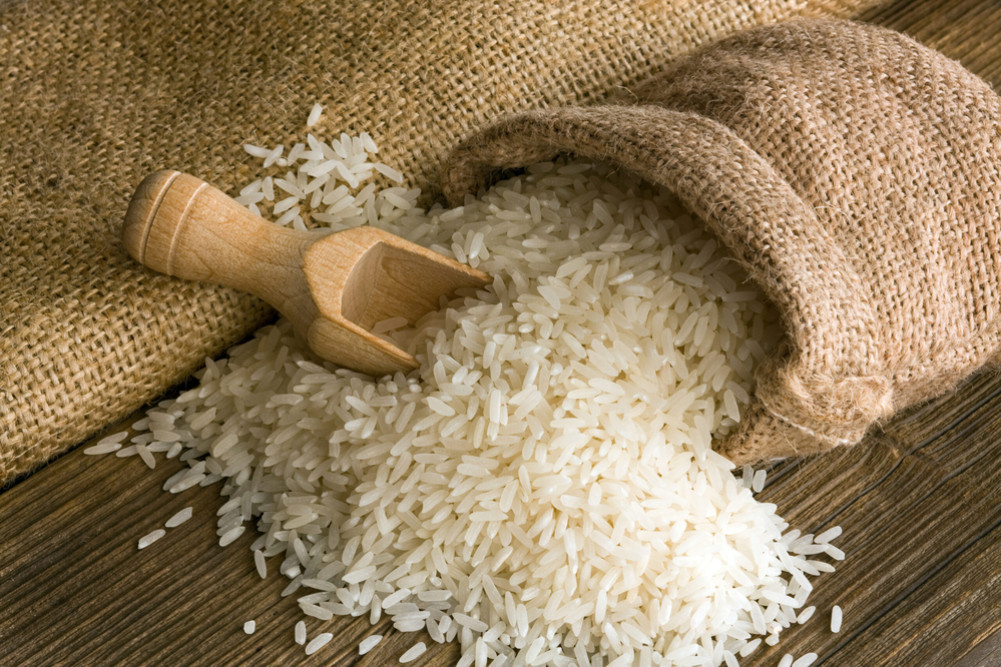
Even though Raithane rice is being sold through department stores, hot bazaars and online channels, they have different prices for the same rice.
We use Google Cloud Translation Services. Google requires we provide the following disclaimer relating to use of this service:
This service may contain translations powered by Google. Google disclaims all warranties related to the translations, expressed or implied, including any warranties of accuracy, reliability, and any implied warranties of merchantability, fitness for a particular purpose, and noninfringement.
At this time, the farmers are busy in the fields. Farmers are definitely covered by the seedbed. Farmers are planting different varieties of rice. They are planting varieties of paddy ranging from hybrids to Raithane. But the price of Raithane rice has been found to be different in the market from online shopping to department stores.
For example, Jumli Marsi rice is priced at Rs 380 per kg in Bhatbhateni. But the same rice is being sold by the food management and trading company at 230 rupees per kg.
An online shop called Local Rice has priced black salt rice at Rs 300 per kg. R&R Food Suppliers Pvt Ltd is selling black salt at Rs 220 per kg. Our Natural Hub has set a price of Rs 280 per kg for this rice.
Local Rice Online is also selling old rice at Rs 310 per kg. Our Natural Hub is selling this rice at 290 rupees per kg.
Lately Raithane rice is being sold from department store, hot bazaar to online medium. Bhim Thapa, head of the sales and distribution department of the food management and trading company, said that the sale of Raithane rice is increasing because the general public is sensitive about health issues. Raithane rice is in high demand due to its various properties. The food company is also selling jumli marsi rice,' said Thapa, 'comparatively, the demand is high when the food is sold cheaper than the market price.'
Uddhav Adhikari, the coordinator of the agricultural campaign for food, says that the importance of Raithane rice is special. It is considered important for food and nutrition security, crop breeding and improvement. The number of people using Raithane rice is increasing day by day as it is also health promoting,'' said the official who is also the founder president of Farmers Group Federation. Comparatively, the price of such rice is higher. Kala Namak, Samudra Fini, Rani Ghaiya and Humla's Chino Rice are also famous.
Although the government has fixed the support price for other rice, it has not fixed all Raithane. As a result, the price of these rice varies online and department stores. The price of black rice is Rs 500 to Rs 800 per kg and that of black salt nunia rice is Rs 225 to Rs 300 per kg. Samudra Phini rice is 240 to 300 per kg and Jumli Marsi rice is 230 to 338 rupees.
The price of old rice is Rs 290 to Rs 320 per kg, Taichin rice is Rs 140 to Rs 175 per kg, Basmati rice is Rs 130 to Rs 432 per kg. "Farmers have got the price, common people have also preferred Raithane rice as they have got quality products," said Tilak Dhakal, president of Raithane Agri Products.
He says that the demand for Samudra Phini rice is high in the hot market in Darbarmarg, Dhapasi and other areas. He said that black salt and tichin are equally preferred rice.
Humla Chinese rice is available in the market for up to 235 rupees per kg. Rani Ghaiya rice is 230 rupees per kg, Humla Kaguno rice is 260 rupees per kg, Taichin rice is 215 rupees, Jira Masino rice is 90 to 144 rupees depending on the brand, Susi rice is 230 rupees, Anadi rice is 350 rupees per kg, Pokhreli rice is priced up to 128 rupees per kg.
Keshav Devkota, head of the Crop Development and Agricultural Biodiversity Conservation Center, said that the price of rice is determined by the market. He says that even though farmers show interest in hybrids because they yield more, recently there has been an increase in interest in Raithane crops. The government has given grants in collaboration with various municipalities. Along with the government, private businessmen have also bought and sold Raithane rice,' said Devkota, 'That is the reason why farmers have moved here.' Of these, 94 rice varieties are indigenous products. 2 of those varieties are seeds of hybrid varieties.
54 out of 148 are imported rice varieties, of which 48 are hybrid rice seeds. Farmers use hybrid rice to produce more fruits. But recently they have shown interest in Raithane paddy crop. There are more than a dozen registered Raithane rice seeds. Although some Raithane rice varieties are not registered, farmers are cultivating them.
According to the data of the Ministry of Agriculture and Livestock Development, rice is the main source of food for more than half of the world's population. In the year 2024/25, it is estimated that 535.8 million tons of rice will be produced worldwide. According to the ministry, about 90 percent of its production and consumption is in Asia.
Most of the rice production is in China, India and Indonesia. There is an international trade of about 60 million tons of rice," said Ramkrishna Shrestha, joint secretary of the ministry, "India is one of the countries that export the most. Nepal ranks 13th in the world in terms of rice consumption. He said that it is ranked 17th in production and 64th in productivity. In the fiscal year 2081/82 in Nepal, paddy was cultivated in an area of 14 lakh 20 thousand 636 hectares both Barkhe and Chaite. From this, 59 lakh 55 thousand 476 tons were produced. But still 1 million tons of rice is insufficient.
'Out of the 7 million tons of rice required for the country, one million tons is insufficient. Until the end of May, 753 thousand tons of rice products including paddy, rice seeds, rice and grains have been imported. 38 billion 94 crore rupees have gone abroad from this," said Prakash Kumar Sanjel, Director General of Agriculture Department.
The Ministry has been supporting the availability of fertilizers and seeds, providing support and subsidies, irrigation and mechanization, concessional loans and insurance. However, the production has not been able to meet the demand. The country is forced to depend on imports to meet its demand.
How much is the price of which rice?
Name of Rice
Price (per kg)
| Black Rice | Rs 500 – 800 |
|---|---|
| Black Salt/Nuniya | Rs 225 – 300 |
| Samudra Phini | Rs 240 – 300 |
| Jumla Marsi | Rs 230 – 338 |
| Elder Old | Rs 290 – 320 |
| Taichin 1 | Rs 140 – 750 |
| Jira Masino | Rs 90 – 144 |
| Humla Chino | Up to Rs 235 |
| Susi | Up to Rs 230 |
| Anadi | Up to Rs 350 |
| Pokhreli | Up to Rs 128 |
| Rani Ghaiya | Up to Rs 230 |