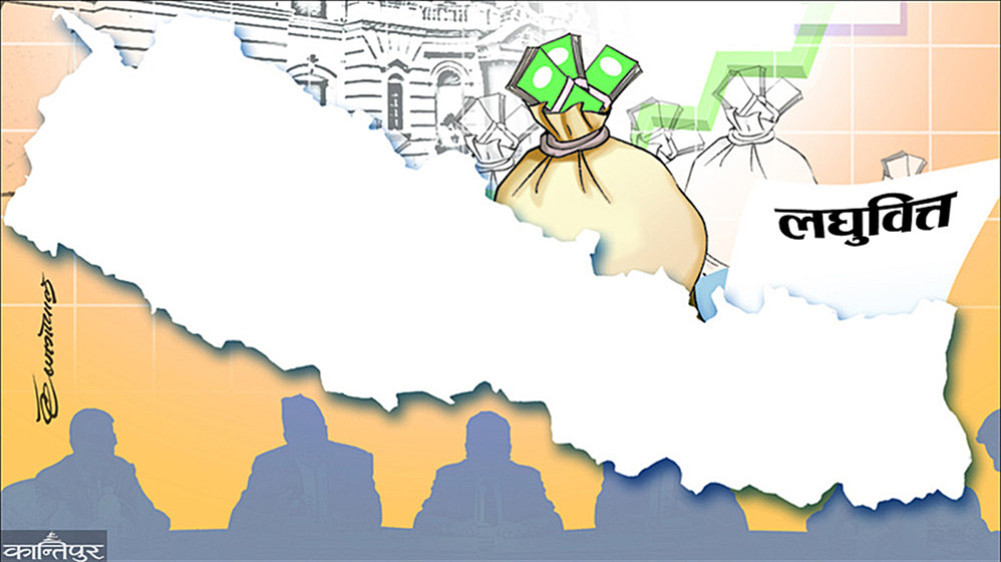
After the loan restructuring facility was removed, 40 percent of the borrowers were paying regular installments and 60 percent could not pay the principal and interest regularly.
We use Google Cloud Translation Services. Google requires we provide the following disclaimer relating to use of this service:
This service may contain translations powered by Google. Google disclaims all warranties related to the translations, expressed or implied, including any warranties of accuracy, reliability, and any implied warranties of merchantability, fitness for a particular purpose, and noninfringement.
By the end of March, bad loans of microfinance institutions reached 7.25 percent. It has increased by 1.08 percentage points compared to the end of last June. Last June, the average bad loans of microfinance institutions was 6.17 percent.
The off-site supervision report of microfinance financial institutions for the third quarter of the current financial year published by the National Bank has shown that the non-performing loan ratio of retail credit providers microfinance financial institutions has increased by the end of March 2081. According to this, as of last March, the total non-performing (bad) loans of microfinance financial institutions are 31 billion 53 billion rupees.
As of last March, the total loan and equity of microfinance is 4 trillion 34 billion 86 billion rupees. Compared to the previous year, the growth rate of non-performing loans in the third quarter of the current financial year is 27.04 percent, which has increased by 46.64 percent in the same period of the previous financial year, according to the National Bank.
By last March, the total loan loss provision of microfinance financial institutions has reached 26 billion 240 million. It is 21.28 percent more than last June. The provision for non-performing loans increased by 55 percent compared to the end of June 2080 and reached 26 billion. In the same period of the previous financial year, total loan loss provision amount increased by 25.54 percent.
According to Ram Bahadur Yadav, president of Nepal Microfinance Bankers Association, bad loans have increased to an average of 10 percent compared to the data till last March. The facility given by the National Bank of rescheduling and restructuring the loans of troubled borrowers remained in effect until last December. Therefore, many loans were not bad. The National Bank collected the data at that time," Yadav said, "since the facility was removed, many of them have become bad loans. That's why bad loans have increased since then.' Yadav said that after the removal of
loan restructuring facility, 40 percent of those borrowers are paying installments regularly and the remaining 60 percent are not paying principal and interest regularly. Although the interest rates of commercial banks have decreased, he said that the cost of microfinance has decreased and the profit has increased.
Until last March, there has been a general increase in the share of credit from microfinance financial institutions to the agricultural sector. According to this, till last March, 52.66 percent of the total credit flowed into the agricultural sector. At the end of June 2080, 49.81 percent of credit was disbursed in the agricultural sector. According to the report, out of the total loans disbursed by microfinance financial institutions in the third quarter of the fiscal year 2081/82, 23.19% were in the service business sector, 9.88% in wholesale loans, 3.51% in domestic and small scale industries and 10.77% in other sectors.
By the end of March 2081, the total loan and equity amount of the wholesale loan provider microfinance financial institution has decreased, while the non-performing loan amount has increased. The total amount of loan and loan disbursed by these institutions has increased by 11.49 percent compared to the end of June 2018 at 47 billion 67 million till last March. During the review period, the non-performing loans of the microfinance financial institutions totaled 1.4 billion rupees or 2.93 percent. The ratio of non-performing loans was 0.71 percent at the end of June 2080 and 2.59 percent at the end of March 2080. By the third quarter, non-performing loans have increased by 13 percent, while active loans have decreased by 12.06 percent. In the same period of the last financial year, non-performing loans increased by 231.05 percent. But active loans were reduced by 11.30 percent. According to the
report, the capital fund position of microfinance institutions is generally satisfactory. There is a provision that microfinance institutions must maintain a minimum primary capital and capital fund of 4 percent and 8 percent, respectively, based on their risk-weighted assets. In the end of March 2081, the ratio of primary capital and capital funds to the risk-weighted assets of microfinance financial institutions as a whole is 10.48 and 11.90 percent respectively.
During the review period, the paid-up capital of microfinance financial institutions increased by 6.87 percent and risk-weighted assets by 6.84 percent. There has been a decrease in the investment of microfinance financial institutions. In March 2081, the total investment of microfinance financial institutions decreased by 2.56 percent compared to the end of June 2081 and was limited to 9 billion 93 crores. Total investment increased by 17.02 percent during the same period of the previous financial year.
2081 52 microfinance financial institutions are in operation by the end of March. Among those institutions, 3 are wholesale loan providers and the remaining 49 are microfinance institutions providing retail loans. The number of branches of microfinance financial institutions seems to have decreased recently. In the third quarter of the previous financial year, the number of branches of microfinance financial institutions decreased by 0.16 percent, but in the same period of this financial year, it decreased by 1.08 percent. Compared to the end of June 2081, the number of members of microfinance financial institutions increased by 2.79 percent to 61 lakh 62 thousand in the end of March 2081.
Regionally, branches of microfinance financial institutions are most visible in Lumbini region. At the end of March, 21.96 percent (1089 branches) of the total number of branches in the province. In terms of accessibility, the presence of microfinance institutions in Karnali province seems to be low. It is mentioned in the report that there are only 4.82 percent of the total number of branches in that province.
There has been a decrease in the liquid assets of microfinance financial institutions that collect deposits from the general public during the review period. The only microfinance institutions that collect deposits from the general public are Nirdhan Utthan Microfinance Institutions and Neighborhood Microfinance Institutions.