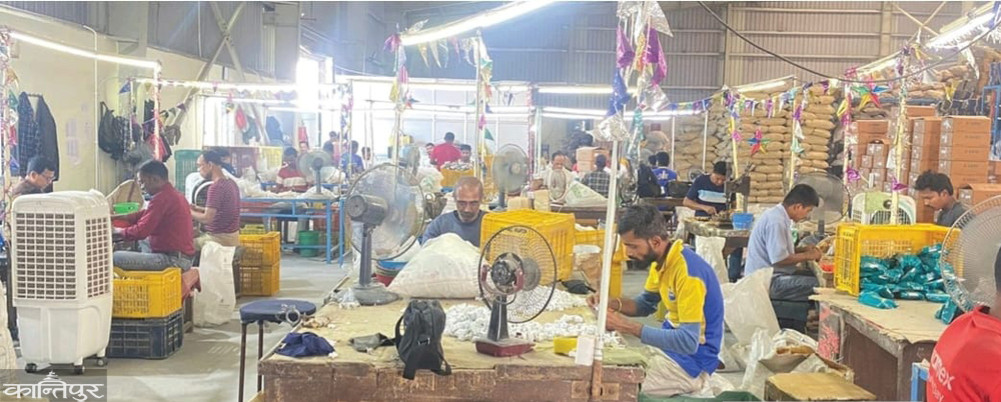
Industrialists claim that the cost of domestic production has gone down when the government imposed zero customs duty on ready-made goods and 15 percent customs duty on raw materials along with an additional 15 percent consumption tax.
We use Google Cloud Translation Services. Google requires we provide the following disclaimer relating to use of this service:
This service may contain translations powered by Google. Google disclaims all warranties related to the translations, expressed or implied, including any warranties of accuracy, reliability, and any implied warranties of merchantability, fitness for a particular purpose, and noninfringement.
More than 50 switch and socket manufacturing industries operating across the country are on the verge of closure. Industrialists complain that the cost of domestic production is high because the government has maintained zero customs duty on finished goods and imposed an additional 15 percent excise duty on raw materials along with 15 percent customs duty.
They say that due to the increase in production costs, they are unable to compete in the market.
Imported switch-sockets from China and India are relatively cheap, say industrialists. Switch-sockets worth more than 7 billion rupees and more than 3 billion rupees from China are being imported annually from India. This is the reason why domestic products are gradually leaving the market competition. There is an obligation to pay more than 30 percent tax on raw materials when producing domestically, while there is no customs duty when importing ready-made materials.
Due to the inequitable tax structure, indigenous industries are facing the threat of closure. "Until now, about 50 industries have reached the point of closure. The production is decreasing, the market is disappearing and the workers will have to be laid off," says Arun Rathi, owner and industrialist of Annapurna Electrics. "There is an increased risk of more than 5,000 workers and employees becoming unemployed." Demanding to protect the indigenous industry, the industrialists had met with Finance Minister Bishnu Paudel and Prime Minister's Economic Adviser Yuvraj Khatiwada before the budget was announced. "They had also promised to make necessary reforms," says Rathi, "but the budget disappointed us again."