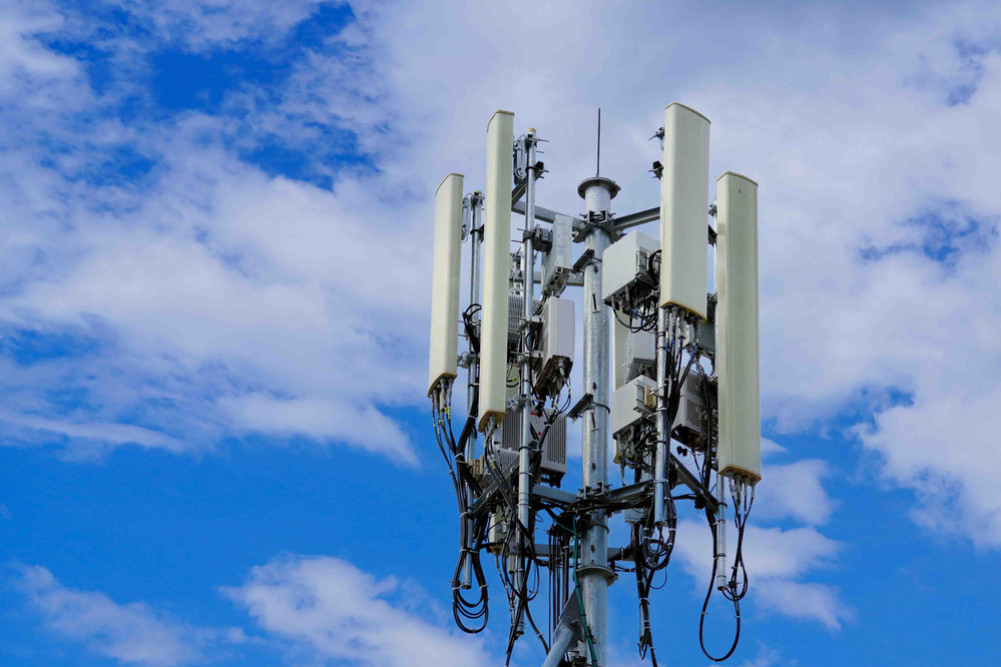
While the government is saying that policy reform, 5G, AI and other issues are priorities, service providers are expressing concern about the insufficient preparation of tax-related arrangements, financial complexity, etc.
We use Google Cloud Translation Services. Google requires we provide the following disclaimer relating to use of this service:
This service may contain translations powered by Google. Google disclaims all warranties related to the translations, expressed or implied, including any warranties of accuracy, reliability, and any implied warranties of merchantability, fitness for a particular purpose, and noninfringement.
Contrary to the claims of officials including the Minister of Communication that 5G service will be extended to major cities of Nepal within this year, service providers are of the opinion that it is not possible immediately. Both government-owned Nepal Telecom and private service provider Ncell have responded that it is difficult to operate commercial 5G service in technical, economic and practical terms.
Some experts are suggesting to finish the 4G expansion as soon as possible and go to 5G.
In a program organized on May 19 on the occasion of the 8th National Information and Communication Technology Day, Minister of Communication and Information Technology Prithvisubba Gurung announced that 5G service will be extended to the major cities of the country within this year. "Now 5G network has to be reached in all new cities, it is too late," he said, "Telecom and IT facilities have to be reached in all municipalities and wards. The next era in the telecom sector is 5G. The next era in the IT sector is AI.'
Minister Gurung claims that they are aware of how to promote 5G and AI. He said that the start of 5G network within this year will be expanded through the two metropolitan cities of the valley, Pokhara Metropolitan City, other municipalities and markets. Although he announced such plans, the country's two largest telecom service providers, Ncell and Nepal Telecom, have been repeating that they are not in a position to bear the financial burden of technology expansion.
Nepal Telecom Assistant Spokesperson Navin Mishra said that although 5G has been tested, no process has been carried out for commercial purposes. "There has been talk of bringing 5G to five big cities, but no formal process has been started," he said.
Telecom started internal testing of 5G in Kathmandu from January 2079 on the occasion of its 19th anniversary. Despite the success of the 5G test of the Non-Stand Alone (NSA) model, Mishra's experience is that commercial expansion is not easy at the moment.
Telecom installed 5G equipment at the telecom offices in Babarmahal, Sundhara, Pokhara and Birgunj and conducted an internal test. In July 2078, the regulator Nepal Telecommunication Authority provided 60 MHz frequency free of charge under the 2600 MHz band to Nepal Telecom for 5G testing. Even though it was said to be tested so that the general public can use it for free, the users could not use it. Some experts say that there is no rush to go to 5G without the expansion of 'full-fledged 4G' in Nepal.
'5G will be brought after closing 4G,' said an expert in the telecommunication sector, 'Now they are trying to bring equipment without tendering to run 5G in Kathmandu and Pokhara. Buying a 5G device without 4G working is pointless.'
Although 5G is necessary, it is not possible just by wish, said Jabor Kayumov, head of private service provider Ncell. In a session of the Kantipur Economic Summit held on May 31, Kayumov claimed that operators are not able to introduce expensive technology like 5G when the telecom sector in Nepal is collapsing. "We pay 60 percent of income tax, 20 percent capital expenditure is required, and the remaining 20 percent is salary, rent and other expenses," he said, "so how can we invest in 5G?"
According to Kayumov, it is not possible to invest in new technology due to high taxes and lack of capital. He said that there is no professional basis either. He believes that the reason why India can deliver 5G services to villages is the business-friendly environment. While the government is saying that issues such as policy reform, 5G and AI are priorities, service providers are expressing concern about the tax system, financial complexity, and insufficient preparation on the practical side.