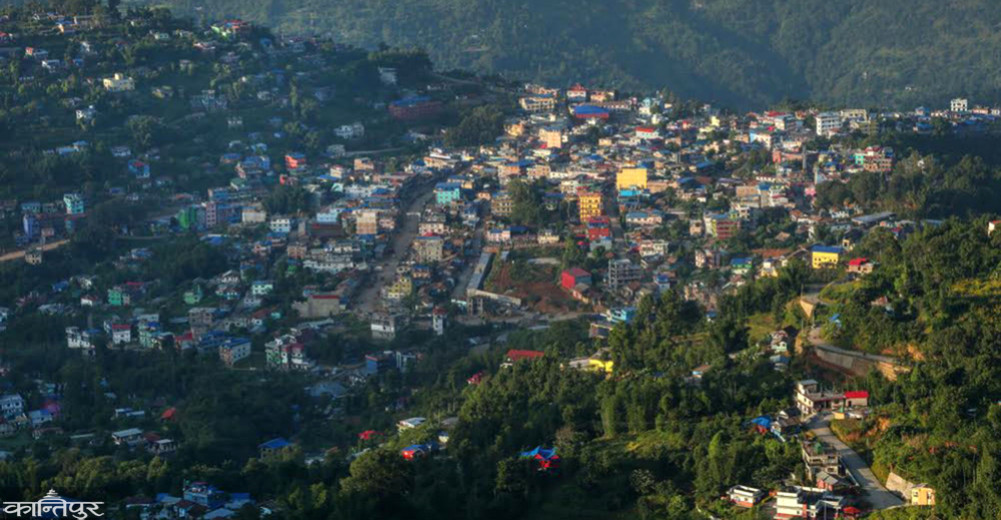
Complaints that the work in all the cities is at an early stage, and that the budget and manpower are not enough to carry out the work
We use Google Cloud Translation Services. Google requires we provide the following disclaimer relating to use of this service:
This service may contain translations powered by Google. Google disclaims all warranties related to the translations, expressed or implied, including any warranties of accuracy, reliability, and any implied warranties of merchantability, fitness for a particular purpose, and noninfringement.
It has been a decade and a half since the Ministry of Urban Development declared the new city. But how many cities have been built so far? Neither the Ministry nor the New City Project Coordination Office has the answer. The number of cities which started from 10 has been increased to 54. According to the project office, the allocation of the budget to each city after increasing the number has been scattered and there has been no progress.
So far, all the city work is in the initial stage. The budget and manpower are not enough to carry out the work. The work of the city has been carried forward with the help of limited manpower. Milan Acharya, head of New City Project Coordination Office, said that due to lack of sufficient budget and manpower, progress could not be made as expected.
"When the project started, there was a good budget, the number of cities was less," he said, "the budget is decreasing as it should be increased, only one and a half billion rupees is being allocated for the next financial year, so there is a problem that when it is distributed to all, it will be small and not enough." In the year 2067/68, two cities from each development area were selected and construction of new cities was started. According to the project, 10 cities were initially selected after much study.
At that time, the city was chosen according to the idea of developing and building a new city in the Madhyapahari region. In the meantime, the question arose as to why the city should be built only in Madhyapahar and not elsewhere. MPs and Ministers expressed interest in it. And, they started pressing for the addition of cities in their respective districts. Then the number of cities like Barseni was added. The project complains that the amount of the budget has not increased while the number is increasing.
The number of cities increased from 10 to 54 when covering all regions and geographies under the pressure of ministers and MPs. According to the project, the division of the same resource into several cities has not achieved the achievement. "There is a post of Divisional Engineer (DE) in the district office of New City, but it has not been possible to keep it everywhere," he said. "As many problems as there are in the project now," he said, "we are trying to solve them and move forward." He said that even though the land consolidation program is complicated, work is being done on it.
A new city project has been started by covering the settlements around the meeting point of the Madhyapahari Highway and the North-South Corridor Road in order to prevent the unorganized urbanization caused by the migration pressure from the Madhyapahari region to the big cities and Terai region.
Initially, it was estimated to cost 3.5 trillion in 20 years to build 10 cities. So far, 8 billion 299 million has been spent in 10 cities. Initially, there are 10 cities under the Madhyapahari highway, Fidim (Panchthar), Vasantpur (Tehrathum), Khurkot (Sindhuli), Baireni-Galchi (Dhading), Dumre-Bhansar (Tanahun), Burtibang (Baglung), Chaurjahari (Rukum), Rakam-Karnali (Dailekh), Sanfebagar (Achham), Patan (Baitdi). The number of two cities on this route was added later. Accordingly Bheriganga (Surkhet) and Bhingri (Pyuthan) were added.
Lately, unorganized settlements in Hulaki Highway, Himali Padarg, Terai Madhesh have been declared as new cities. The postal highways include Gaurigunj (Jhapa), Rangeli (Morang), Manra (Mahottari), Brahmapuri (Sarlahi), Maulapur (Rautahat), Mahagadhimai (Bara), Bardghat (Nawalparasi), Rajapur (Bardia), Bhajani (Kailali) and Belauri (Kanchanpur). Similarly, the settlements along the Himalayan footpath are Lukla (Solukhumbu), Phungling (Taplejung), Kimathanka (Sankhuwasabha), Syafrubensi (Rasuwa), Jomsom (Mustang), Chame (Manang), Simkot (Humla), Martadi (Bajura) and Kolti (Bajura).
The number of smart cities is 17. Among them are Lumbini (Rupandehi), Nijgarh (Bara), Palungtar (Gorkha), Dhankuta (Dhankuta), Mirchaiya (Sirha), Chandrapur (Rautahat), Kavre (Kavre), Bharatpur (Chitwan), Waling (Syangja), Tulsipur (Dang), Dullu (Dailekh), Tikapur (Kailali), Amargarhi (Dadeldhura), Gundu (Bhaktapur), Bhimdatta. (Mahendranagar), Gourigunj (Jhapa) and Moulapur (Rautahat).
Former secretary Maniram Gelal said that only cities that give returns should be built by prioritizing. "If you can't give money, what should you do by naming a new town?" Now people don't live in a new city, the investment is wasted.'
He said that 10 cities should also be prioritized. "From among 54 cities, only cities that can be built should be selected, where internal migration can be controlled if settlement can be established," he said, "We have invested, but it did not stop internal migration, if it continues to increase, there will be no return by investing there."
Its construction has been started with the aim of creating and developing a city with state-of-the-art services that can accommodate at least 100,000 people in each city by the financial year 2086/87 in 10 major locations around the intersection of the Madhyapahari Highway and the North-South Corridor. According to the 62nd annual report of the Auditor General, it is estimated to cost 11 trillion 78 billion 68 crore rupees to build all the selected cities.
It is mentioned in the report that so far only land development program of 4 thousand 777 ropani land in 10 places, 189 ropani area land purchase, 589 km road upgrading, 34 km black road and 51 km road slope.
"While new projects are being added without completion of the announced new city project, there is a situation where the project work remains incomplete for years and the expected returns are not achieved," the report says, "The project should be implemented in such a way that it is completed within the stipulated time after analyzing the low progress."