We use Google Cloud Translation Services. Google requires we provide the following disclaimer relating to use of this service:
This service may contain translations powered by Google. Google disclaims all warranties related to the translations, expressed or implied, including any warranties of accuracy, reliability, and any implied warranties of merchantability, fitness for a particular purpose, and noninfringement.
Humkumari from Sikles teaches at Annapurna High School in Gurung village. Besides, he has another acquaintance in the village. She is the 'president of the museum' for the villagers. The museum is filled with the lifestyle, culture and traditional items used by the Gurung community in Sikles.
Humkumari is the chairperson of this museum's management sub-committee. There are two features of 'Eco Museum Cycles' located in Madi Rural Municipality-1. First, here you can understand the Gurung community in detail. Secondly, the management of this museum has been entrusted to women.
The museum was established on 071 Baisakh 1 with the help of Annapurna Conservation Area Project (ACAP). Since its inception, its responsibility has been given to 15 women of the village under the leadership of Humkumari. This museum is under the Conservation Area Management Committee Sikles under ACAP.
Gehendra Gurung, the secretary of the committee, said that women are in charge of the museum because the leaders of other organizations in the village are mostly men. All the associations and committees of Sikles were led by men, and the majority remained. Let's go in a new way, we made a sub-committee to let women or mother groups operate,' he said. Gurung, Santoshi Gurung, Muna Gurung, Indrakumari Gurung, Sita Periyar and Lilima Garung were members of the management sub-committee during the establishment of the museum.
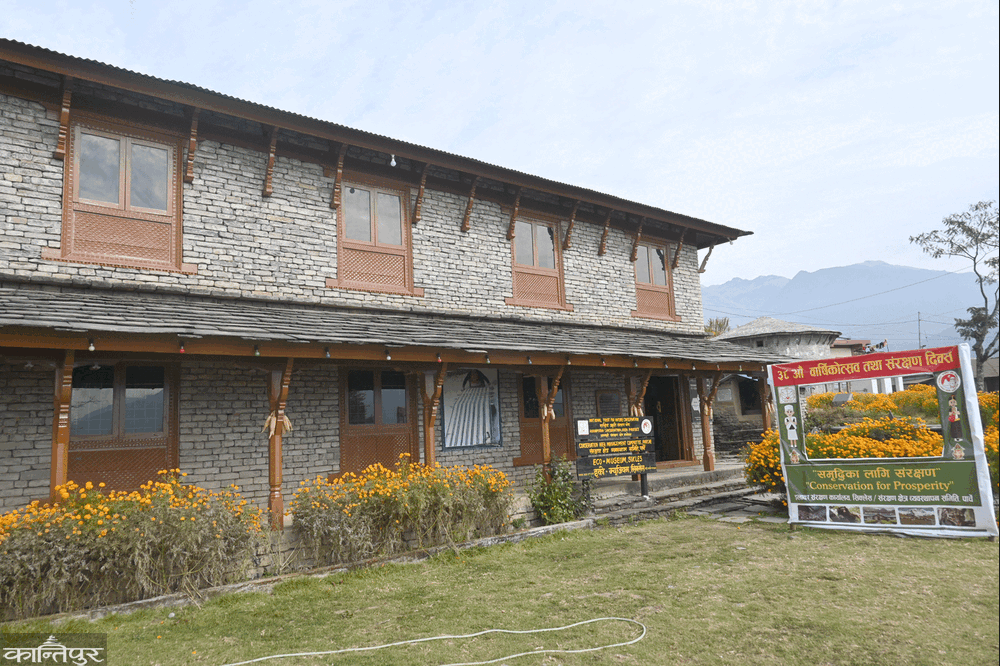
The museum at Siklay . Photo: Anup Poudel/Kantipur
 Among these 15 people, President Humkumari, Vice President Jamuna, Treasurer Gesuba, Members Hema, Ausuba, Rupa, Nandkala, Mensuba, Kusma were teaching in Annapurna Mavi at that time. At that time, Chairman of Conservation Area Development Committee Man Bahadur Gurung (currently a member of the House of Representatives) and the village leader entrusted the management to the teachers because those who are in the teaching profession are knowledgeable.
'In the beginning, there were 8/9 teachers in the committee . Now someone has gone out of the village . Now there are 6 teachers in the committee,' said the president Hum Kumari. She told that the meeting of the committee is held once in two months. Having worked for 10 years, she asked ACAP to form a new committee three months ago. However, she said that ACAP did not want to bring a new leadership because it was better for the teachers to be in the committee. All those in the
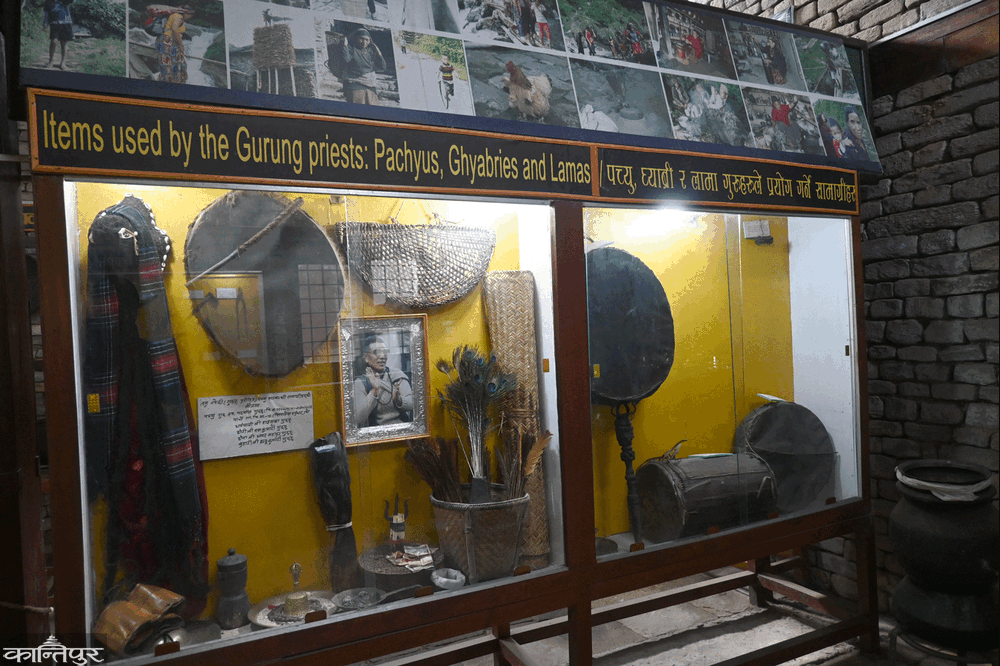
committee are in the age group of 30 to 50 years. In the museum, the traditional measuring instruments Tame Mana, Tame Pathi, Ane Ane (Dungro), Dharni, Taraju, instruments of Badyavadan, Muri, Flute, Sarangi, Narsinga, Dhol are also kept . Reti (a tool used for sharpening tools), Sayani (a tool for cutting rice), Khurpito, Ghan, Gurung Vansha, Lama Guru Pachyu, Ghyabri and Jhampta, Dhol, Dhangro used by them are also kept on the first floor of the museum .
Museum manager Kristi Gurung, who is also the secretary of the sub-committee, told about 300 types of items related to the Gurung community. She told that all the materials were collected from the villagers on the initiative of ACAP and Conservation Area Management Committee Sikles. Helicopter 063 carrying Sikless conservationist Dr. Chandra Gurung crashed on October 7 at Ghunsa in Taplejung. In the memory of Gurung and Mingma Norbu Sherpa who lost their lives in the
accident, a separate room has been built on the second floor of the museum. There are photos and passports of them speaking on the platforms of the country and abroad, traveling, with high-ranking officials. In coordination with Gurung's family, the clothes he used, cameras, his poems and songs, the awards he received are also kept in the museum. Butterflies found throughout Madi rural municipality are also collected there.
Manager Gurung said that most of the students come to see the museum. The new generation has not seen the old stuff. In the museum, we have preserved the old stuff,' she said, 'some of them who have reached this age don't come because they have already seen it. Students enter to see what many have not seen. The house with the
museum was built by ACAP 23 years ago. There were ACAP meetings, photo exhibitions, documentaries and film exhibitions. According to the plan of the conservation area management committee, the same house has been given the form of a museum in 071 . ACAP budgets for maintenance in the annual budget . Apart from that, the manager Kristi said that other expenses will be spent from the fees collected from the museum entrance. In the current financial year, ACAP has allocated 150,000 rupees for dyeing.
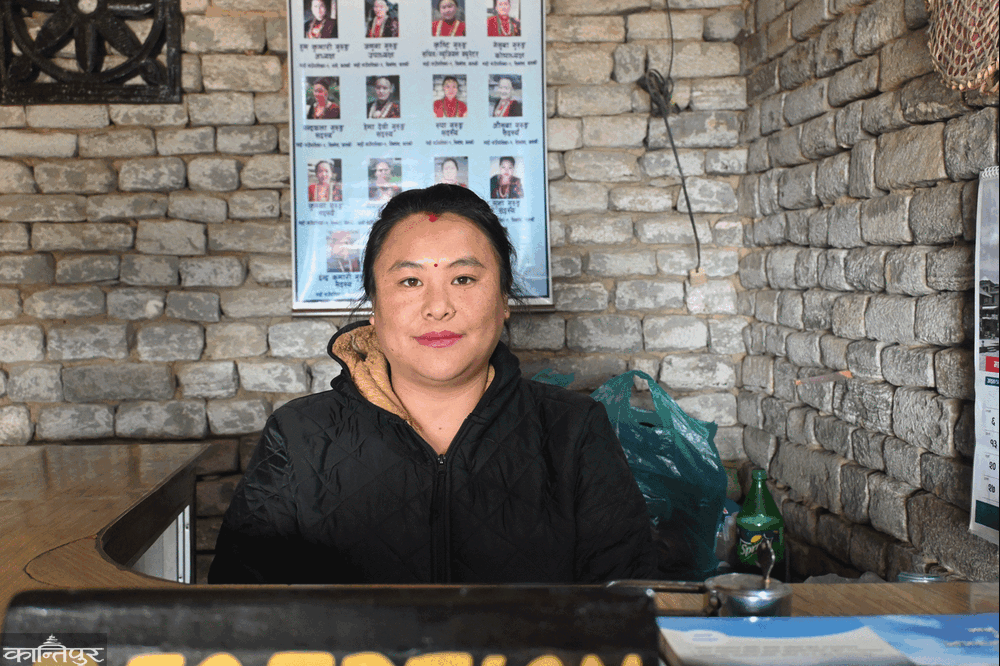
Manager and Management Subcommittee Secretary Kristi Gurung of Siklas Museum. Photo: Anup Paudel/Kantipur
 Manager Gurung said that the museum building is being painted with this budget. To visit the museum, a fee of 150 rupees is charged for foreigners, 50 rupees for Nepalese and 30 rupees for students. Dressed in Gurung costume, tourists approach the museum to take pictures. 150 rupees are charged for wearing Gurung dress.
Manager Gurung informed that 2 thousand 39 people visited the museum till the end of February of the current financial year. According to him, this number is the most since the establishment of the museum. In 10 years, 2,000 people did not come every year. This year, 2,000 people have come here in 8 months," she said. Last year, 1,700 people visited the museum.

