10.56 billion rupees for Karnali and 7.72 billion rupees for Madhesh are recommended for financial equalization grants.
We use Google Cloud Translation Services. Google requires we provide the following disclaimer relating to use of this service:
This service may contain translations powered by Google. Google disclaims all warranties related to the translations, expressed or implied, including any warranties of accuracy, reliability, and any implied warranties of merchantability, fitness for a particular purpose, and noninfringement.
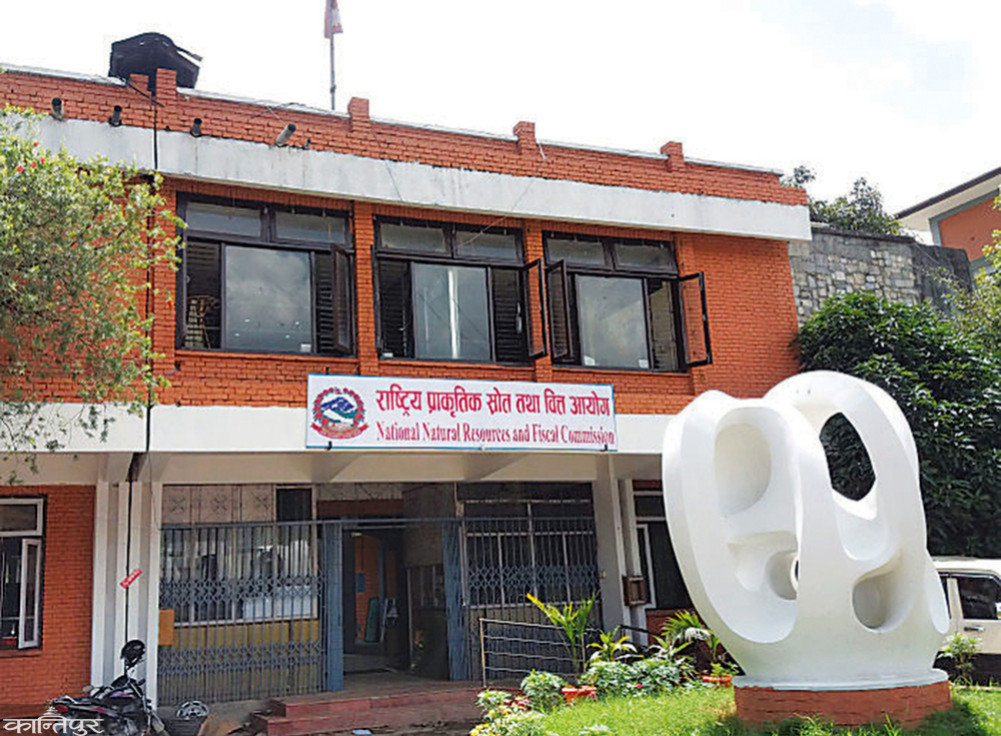
The National Natural Resources and Finance Commission has recommended the federal government to provide 1 trillion 49 billion 628 million rupees for financial equalization grants to provinces and municipalities in the financial year 2082/83. For the financial year 2082/83, the commission has recommended that the government provide Rs. 60.66 billion to the provincial government and Rs. 88.96 billion to the municipality.
On the recommendation of the commission, 60 billion rupees were allocated to the province and 88 billion rupees to the municipality last year. The Commission will provide minimum grants and formula based grants and financial equalization grants based on performance . The commission has recommended 10.56 billion rupees to Karnali and 7.72 billion rupees to Madhesh towards the financial equalization subsidy.
8 billion 98 million to Koshi, 7 billion 72 million to Madhesh, 8 billion 28 million to Bagmati, 7 billion 73 million to Gandaki, 8 billion 44 million to Lumbini, 10 billion 56 million to Karnali and 8 billion 92 million to Sudurpaschim .
According to the National Natural Resources and Finance Commission Act, Section 16 Subsection 3 of 2074, the total financial equalization subsidy has been determined by calculating the minimum subsidy, the subsidy based on the formula to be received in accordance with the basis specified in Section 16, Subsection 1 of the same Act, and the subsidy to be received based on performance evaluation in accordance with the provision in Section 3, Subsection 2 of the said Act.
When calculating the amount of subsidy, the commission also said that 21 municipalities will get less than 65 million rupees from the minimum subsidy and formula-based subsidy. However, the commission has decided that the said amount is not enough to fulfill the constitutional mandate of the local government as a minimum, and the commission has recommended that each local government should get a minimum subsidy and a formula-based subsidy of at least 65 million rupees.
The Commission has stated that the share of conditional grants is decreasing and the share of financial equalization is increasing in the total grants allocated for transfer to the province. In the current fiscal year, equalization grants of 60 billion rupees were allocated to be transferred to the provinces, which is 62.21 percent of the total grants. In the last fiscal year, the share of equalization subsidy in the total subsidy was 55.84 percent and in the fiscal year 2079/80, it was 47.45 percent.
Although the equalization grant is increasing in the province and the conditional grant is decreasing, it is the opposite when it is sent to the municipality. The federal government has been increasing the share of conditional grants and reducing the share of financial equalization grants in the total grants allocated to the municipalities. According to the commission, data including population, area, human development index, economic and social inequality index in the state and local governments, infrastructure development, road density, electricity facilities, information technology, drinking water, sanitation and urbanization conditions, expenditure needs and ability to raise revenue and performance evaluation indicators were used in the recommendation of the financial equalization grant.