To produce electricity till the end of March
We use Google Cloud Translation Services. Google requires we provide the following disclaimer relating to use of this service:
This service may contain translations powered by Google. Google disclaims all warranties related to the translations, expressed or implied, including any warranties of accuracy, reliability, and any implied warranties of merchantability, fitness for a particular purpose, and noninfringement.
The reconstruction work of Mandu Hydropower, which was damaged by the flood in the Bagmati river due to the incessant rains on October 11th and 12th, has reached its final stage.
77 percent reconstruction work of the damaged Mandu Hydropower has been completed. After completing the reconstruction work of the hydropower damaged by the flood in the Bagmati River, it is planned to produce electricity again by the last week of March.
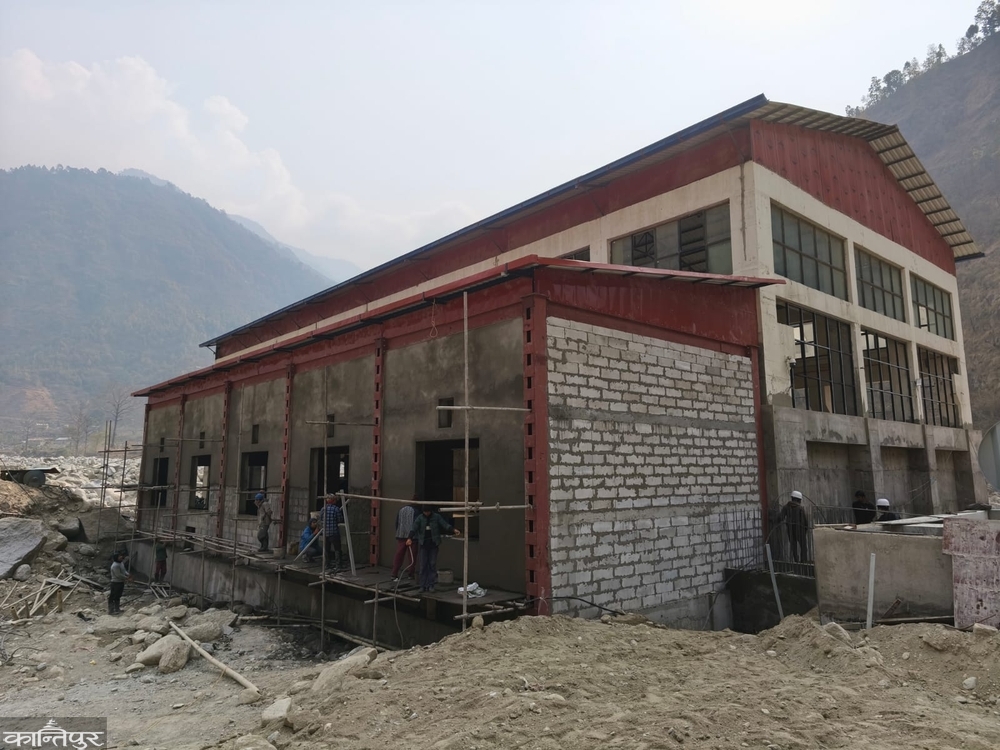
More than 100 people have been working for the past two months as technicians and laborers for the reconstruction in different areas of hydropower. Retrofitting of the damaged power house has been completed. Installation of equipment inside the power house is going on at a fast pace.
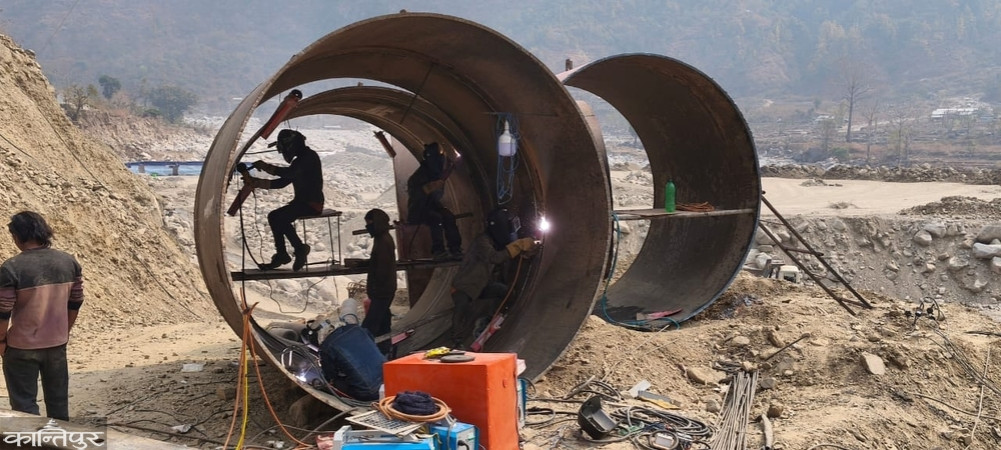
The repair of the penstock pipe and the removal of sand and silt from the tunnel have reached the final stage, according to the senior technician of Mandu Hydropower, Manoj Singh. "The repair work of the damaged dam of the Bagmati River has been completed," he said, "We are carrying out maintenance work from morning till late at night."
The landslide damaged the headworks, powerhouse, penstock pipe and electricity tower of Mandu Hydropower, which is producing electricity by keeping a production house in Bhimfedi Rural Municipality-8 Bagmati Dobhan in Makwanpur.
Hydropower, which has been producing 22 megawatts of electricity since 2075, has caused damage of more than 1 billion due to the Bagmati flood, Chief Operating Officer Sunder Shrestha has said. "The flood in Bagmati caused unimaginable damage to hydropower," he said, "its maintenance work has reached its final stage."
The road from Cisneri Bazaar to the project site was damaged by the flood. Mandu Hydro opened the access road to the project site by repairing the road. The flood in Bagmati river damaged 100 meters of penstock pipes out of 600 meters of penstock.
'The work of the penstock pipe has also been completed,' said Technician Singh, 'The 2,424 meter long main tunnel was damaged by sand and silt, and the sand and silt removal work has also been completed.'
The water of the Bagmati river flowing from Kathmandu was generating electricity from the power house at Wagarbesi in Makwanpur Bhimfedi rural municipality-8 EPapanchkanya.
Private sector Mandu Hydropower Company and Chinese company jointly invested electricity from Bagmati water. With the help of Sichuan Heichwang Chinese Company, Mandu Hydropower Company started construction of Bagmati Small Hydropower Project from June 2072 with an investment of four billion.
The project was inaugurated on Chait 19, 2075. The Bagmati and Koga water was constructed in a 10 to 13 meter high dam at Epapanchkanya Dovan and then transported to the power house at Wagarbesi in Epapanchkanya through a tunnel to generate electricity.
A 55-meter long dam constructed in Bagmati was damaged by floods. The reconstruction of the dam has been completed. Through the dam, 12 cubic meters of water per second flows through the tunnel.
The power house (power house) is at a distance of 2,440 meters from the dam constructed in Bagmati. Nepali technicians and Nepalese workers of the said hydropower dug tunnels, built dams, and constructed a site for installing penstock pipes. Now Nepali technicians and workers are also doing the repair work.
Mandu Hydropower Company had an agreement with the Nepal Electricity Authority to sell the electricity produced at 4 rupees 40 paisa per unit in rainy season and 8 rupees 40 paisa per unit in winter.