We use Google Cloud Translation Services. Google requires we provide the following disclaimer relating to use of this service:
This service may contain translations powered by Google. Google disclaims all warranties related to the translations, expressed or implied, including any warranties of accuracy, reliability, and any implied warranties of merchantability, fitness for a particular purpose, and noninfringement.
Mekhathon is being held in Kathmandu from February 4 to 6 with the aim of providing information about 'assistive equipment' or 'assistive technology' that makes the daily life of people with disabilities easier. According to the Asian Development Bank (ADB), the competition related to the production of auxiliary equipment and discussions with experts and stakeholders are going to be held in the program.
Assistive devices will be manufactured in collaboration with need-knowers, engineers, designers, occupational therapists, etc.
Nepal Government, ADB, Japan Fund for Prosperous and Resilient Asia and the Pacific, Kathmandu University and others are participating in the Mechathon. In a program organized on Friday to inform about this, ADB Nepal's social sector expert Rudy Van Dyel said that the government is prioritizing the expansion of assistive technology through various programs in Nepal. However, he also pointed out that a solid plan is needed for proper use of resources and long-term effectiveness.
He also discussed the challenges in the management of assistive technology in Nepal. "Sometimes 20 canes are available where only five are needed and 15 are enough or five wheelchairs are requested but there are no people to use them," he said, "resources are limited, technology is expensive." But if it can be managed properly, it can have a long-term effect. Rudy said that his mother walks in a wheelchair and that there is no wheelchair-friendly infrastructure in Kathmandu. ADB Nepal has informed that information about 3D printing for manufacturing auxiliary equipment will be given, stakeholders will be alerted and discussions will also be held in
Mechathon program. According to ADB's Gender and Project Implementation Support Specialist Sangeeta Budhathoki, 6 groups will be formed to compete in the Makeathon program to make support tools. In the program, Occupational Therapist Ganga Gurung held the view that it is necessary to integrate the assistive devices with the health care system.
'Participating in society and working is a matter of human rights, so these tools are important,' said Gurung, 'but in Nepal, having a helpful tool is like a convenience or a special benefit. Many people have not heard about it, it is also expensive. She said that such devices are essential for children to eat and read. According to Gurung, there are only 8 occupational therapists in Nepal so far.
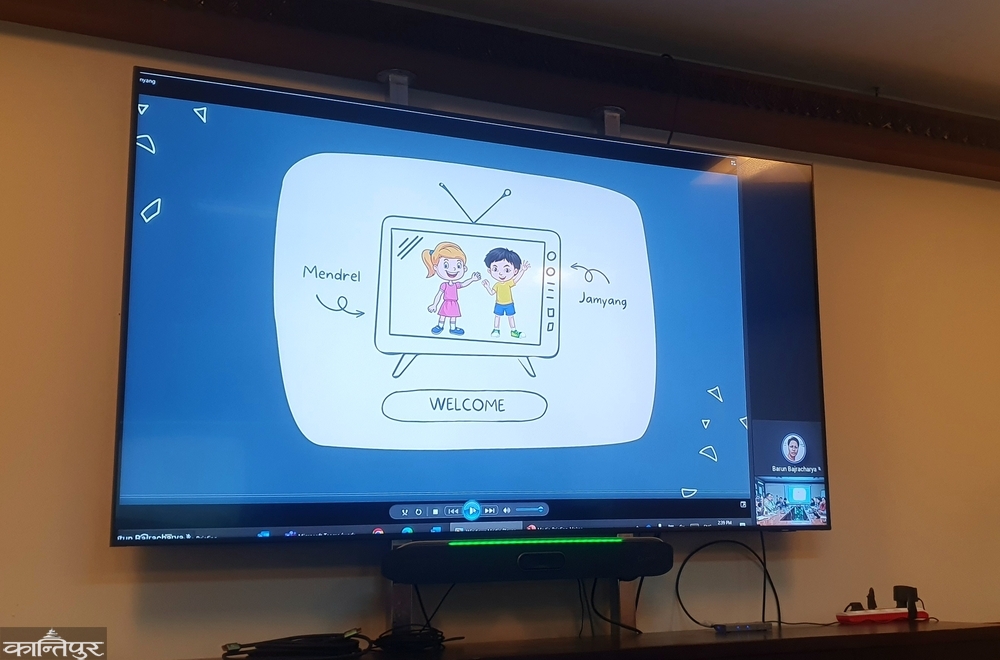
13-year-old Bhutanese girl Mendrel Sherab and Jamyang of the same age, a group including Sashank Dewan, an engineer from Fablab Nepal, have won the first place in the recently held 'Sahayak Uparakan Mekathon' competition held in Thimphu by making an accessory that makes it easier for them to hold a pencil. Mendrell, who has cerebral palsy (paralysis of the brain), has responded to his mother's response that the assistive technology made in Mechathon made it easier to write.
"When we first made Mandrel write on paper without an auxiliary device, she said that her finger hurt, then we made a soft device that can be placed between the finger and the pencil," Dewan, who recently returned to Kathmandu, said, "We also made a chair that can be bent as she writes crookedly and slouched." We made three auxiliary devices with the technology of holding so that the copy does not break while writing.'' Those devices made in two and a half days were selected as the best in the mechathon.
According to the National Census 2078, 2.2 percent of the total population in Nepal has some kind of disability. UNICEF said that the number of people with disabilities in Nepal is 11 percent of the total population. For persons with disabilities, the government has made guidelines for the operation of the list of primary auxiliary materials . 45 such Tools are included. There is a provision to get the necessary materials for persons with disabilities as a right from the state.

