We use Google Cloud Translation Services. Google requires we provide the following disclaimer relating to use of this service:
This service may contain translations powered by Google. Google disclaims all warranties related to the translations, expressed or implied, including any warranties of accuracy, reliability, and any implied warranties of merchantability, fitness for a particular purpose, and noninfringement.
Kesari Kumal along with two other helpers went on a bicycle carrying Doko in the morning. Kesari of Ratnanagar municipality-16 has cultivated corn by renting 22 katta land. The merchant who bought the horse came to the house and bargained for his corn.
Bhandara trader Rimal Tamang had already reached the field with a pick-up vehicle to pick up corn, so she rushed. It was hot, the fields were covered with frost. Kesari and her friend took turns to break the corn by covering them with thin plastic raincoats so that they would not be affected by the cold. The phone of the businessman Tamang, who was helping to break the corn and put it in the pig's head, had started ringing continuously . As soon as he picked up the phone, Tamang would say, 'I will come to the square by seven o'clock with the corn anyway, I am in the field now.'
This busyness in the field to buy and sell corn in the cold and wet morning of Pus, the demand for green corn in the market is changing. So Kesari decided to rent land and cultivate corn. It's been two years since he started selling hogs like this . Ghoga corn can be sold up to three times a year. But because it is a little difficult during the dry season, he said that he sells only two seasons of corn. Corn does not grow well when it rains. In this season too, it was as if the corn was spoiled by water, but it came,' said Kesari . She sold 22 bushels of corn for 1 lakh 90 thousand rupees.
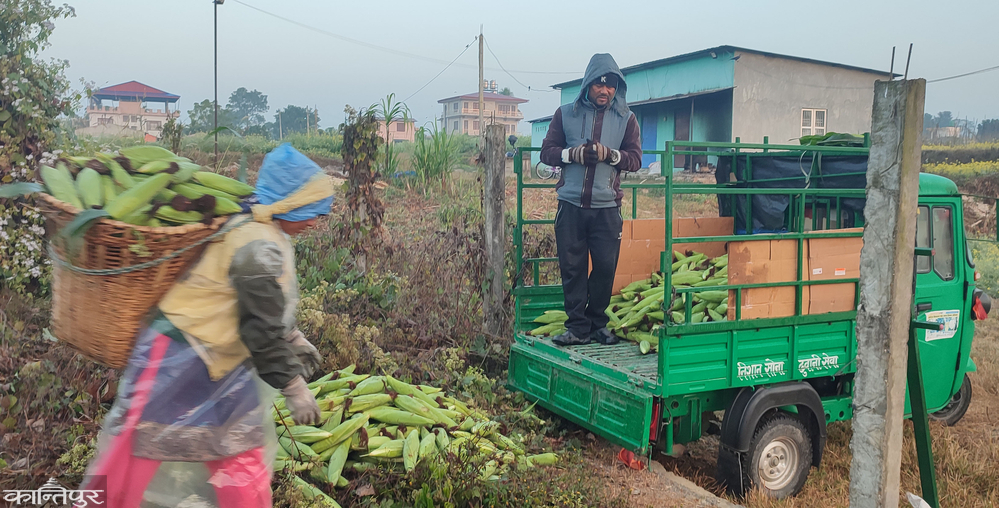 Green corn husks used to be sold at the rate of 10,000 rupees. But this lot is not as expected, she says. Tamang, the merchant who bought the corn, says that there are 800 to 1000 bushels in one bushel. "We also sold more than one horse for the same 12/15 rupees," Rimal said. According to the Agricultural Development Office in Bharatpur, corn is cultivated in an area of 17 thousand 110 hectares in Chitwan. It is an old custom to hide the cob of corn and break it after it dries on the plant . After separating the seeds from the hog and drying it, if there was nothing to sell, it was cooked and fried at home. Later corn was also sold for livestock feed.
But now the corn kernels are enough, they don't need to dry on the plant . The number of people selling burnt corn sitting in the streets and sidewalks of the city has increased. You can definitely see people selling green corn from house to house like vegetables in carts or rickshaws or bicycles. Senior Agriculture Extension Officer Jhalaknath Kandel, head of the office, said that the sales of green maize will be higher in Pituwa under Ratnanagar municipality in the eastern area of Chitwan, in the highway north area of Khairhani municipality and in Padampur area of Kalika.
Similarly, in Bharatpur Metropolitan City-23, 24 and 25 and 26, some amount of Ghoga corn has started to be sold, said Umraj Aryal, officer of Planning, Study, Test and Statistics Branch of Agricultural Development Office. Ghoga sellers often use hybrid varieties of maize. Aryal says that hybrids are preferred because they are big and identical dogs.
The practice of selling green hogs is a bit old in Ghandakot of Nawalparasi near Narayangadh . Later this custom was also introduced in Chitwan. Hariprasad Khatiwada of Dhading Gajuri migrated in 2049 and came to Chitwan Ratnanagar municipality-16 Kunwar village. Three/four years after he came here, he started selling corn green beans . Later he expanded it. It must have been like this since 52/54, people used to come to my farm looking for corn. They used to give up to two rupees for a horse. Selling corn in this way would have helped to raise the cost of planting," said Khatiwada. Later he started to grow maize by selling horses. After starting to get a satisfactory income from this, he planted corn in seven bighas .
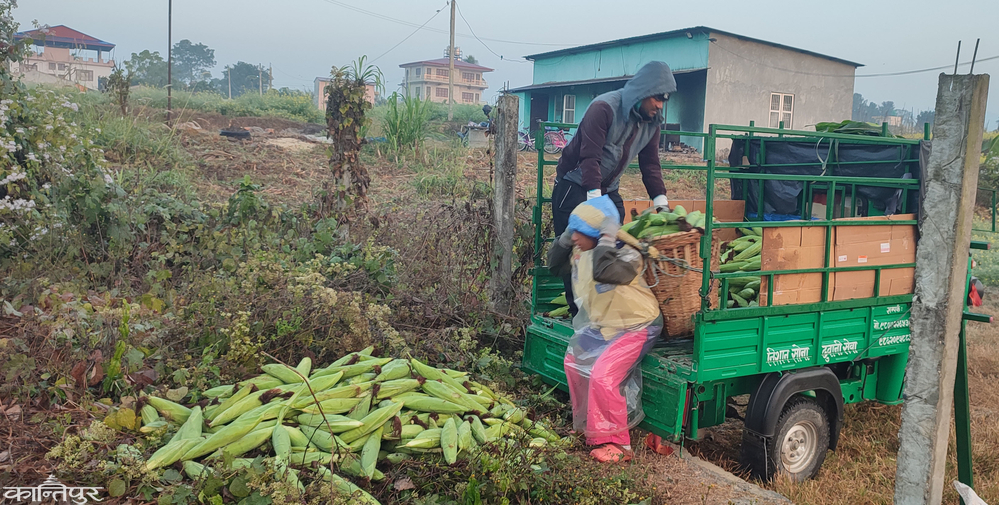 'Me and my friend Kamal Thapa planted corn in seven bighas. Ghoga can be sold up to three times a year . After deducting all the expenses, the income was up to three lakh rupees per year," said Khatiwada. But he said that the market price of green corn has been falling for the last two years. In Chitwan too, maize cultivation has flourished by selling the corn in some places. Khatiwada said that Ghoga corn has started to be found even outside Chitwan. "Corn cultivation has flourished in Sarlahi as well, the traders haggle saying that it is cheaper there. If the merchant says that we will give corn at the former price, then we will go into loss . Farming is expanding to sell green corn, but the price has started to fall," said farmer Khatiwada. The farmers were excited when the corn started to go from the local market to Pokhara, Kathmandu. But as the price is reduced, the fear of getting hurt has started .

