Makar Bahadur, who cultivated paddy by renting land from his neighbors and moneylenders and in Adhiyan, has grown the most paddy in the municipality this year and won the award.
We use Google Cloud Translation Services. Google requires we provide the following disclaimer relating to use of this service:
This service may contain translations powered by Google. Google disclaims all warranties related to the translations, expressed or implied, including any warranties of accuracy, reliability, and any implied warranties of merchantability, fitness for a particular purpose, and noninfringement.
The farm has only two plants. There are only two people working at home. But he has grown the most 174 bushels of paddy in the village. And won the title of best producer for the second time. He is Makar Bahadur Tamang of Falgunand Rural Municipality-1 Navamidanda.
Tamang had grown the most rice in the village last year as well. Makar Bahadur was busy gathering and filling paddy along with his neighbors in his farm at Lapsibung in Navmidanda. The job of accounting for the paddy grown by him was completed only when 12 people including people's representatives and employees from the village along with neighbors and relatives worked hard for three hours. How many seeds planted in how many areas yielded so much rice? Makar Bahadur said, "I have only 2 plantations in my name, 7 muri have grown there, and the remaining 167 muri have been cultivated by my neighbors, relatives and moneylenders in Adhiyan and Kut."
Makar Bahadur told that it was possible to grow so much rice by bringing in some laborers including his wife and himself. Makar Bahadur has a family of three including his wife and elderly mother. His two daughters are married and his sons are living in Damak, Jhapa. The 78-year-old mother can't work, the old man works until she can, and if she doesn't, she calls the neighbor to pay for the labor. Sometimes we go and help," said neighbor Jamuna Tamang. Makar Bahadur planted rice in 5 valleys namely Falgunand-1 Lapsibung, 7 Kabreti, Khalasaile, Karambote and Sisne. All these villages are taken from neighbors and relatives in Adhiyan Kut. Last year, he had delivered 50 muri of paddy to Sahu-Mahajan through Adhiyan and Kut.
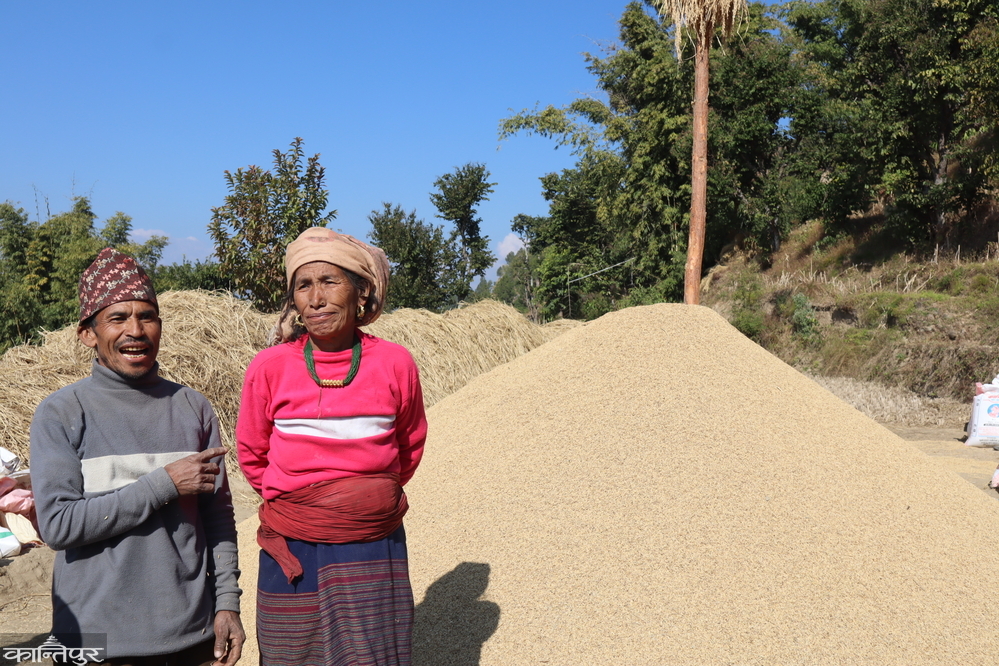
This year, Makar Bahadur said that after the landslide in the Kabresoti valley, which would produce 30 muri this year, not a single plant was grown there. "Due to the floods, there was a fear that the rice would not grow as much as the flood and Izzat would be lost, six muri more than the flood, the wealth and honor were lost," Makar Bahadur's wife Takamaya said. The Tamang couple said that they planted 3 muri 5 pathi (65 pathi) seeds to grow yeti paddy. Tamang told that about 150 manpower labor was spent to plant paddy including 39 bullocks and 39 ploughshares, plowing, plowing, plowing and shoveling. Tamang went to Saudi Arabia in search of employment in 056. Having spent four years there, he has been engaged in rice farming for 60 years.
'I went abroad because of the hardships of eating and growing, there was even more suffering, I returned to the village and came here saying that I would cultivate even if I had to press the soil on the stones, before I had to hide 2 bags of paddy and celebrate the festival, now I sell it for 2-3 lakhs,' the past He said remembering. The Tamang couple was declared the best rice producer in the district by growing 168 muri paddy last year. This year, he surpassed himself and secured the award for the second time by growing 174 muri. Last year, the village council gave him a cash prize of 50,000.
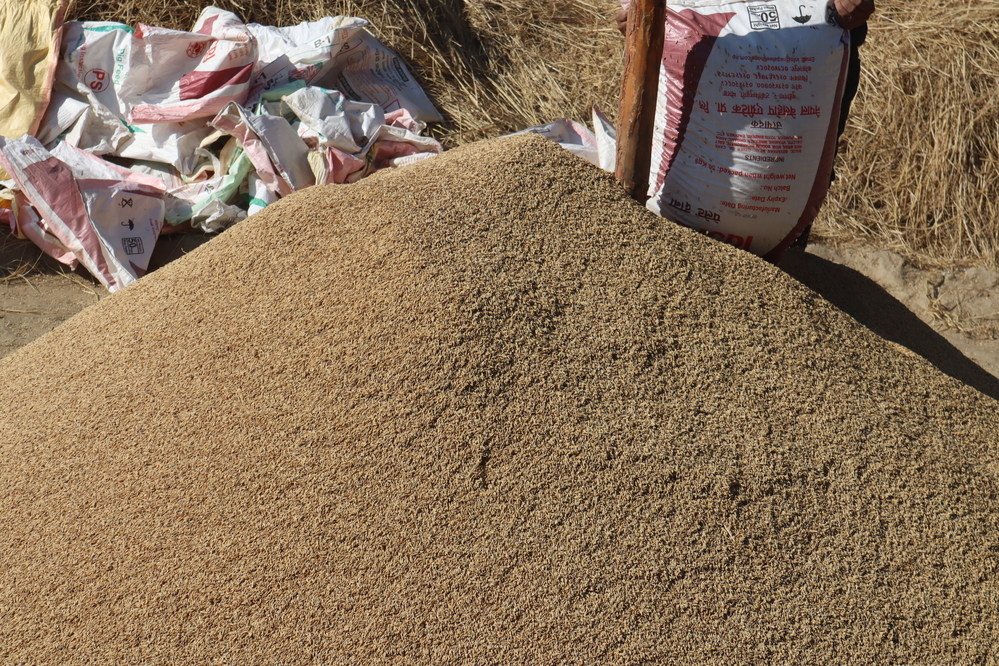
This year too, the village staff and people's representatives, who have continued to award the prize, filled the fields of Tamang with rice and garlanded them and carried them around the square. The chief administrative officer Devi Tumbapo said that the award will be distributed on the occasion of the village meeting on the 29th of December.
Falgunanda has started giving cash prizes of 30,000 to those who grow more than 50 muri and 50,000 to those who do not grow 100 muri from last year. Last year, the number of rice growers with more than 100 muri was two, this year it has increased to three. This year, after Makar Bahadur, Dipsan Chemjong of Falgunand-7 has grown 115 and Til Bahadur Chemjong has grown 180 Muri paddy. President Brijahang Angdembe said that last year, 29 farmers who grew more than 50 muri were awarded, and this year it has increased to 46. "The policy of incentives and rewards has returned the farmers to agricultural work, the barren fields have started to be planted, we will also arrange incentives and rewards for other crops to make Falgunand Rural Municipality self-sufficient in grain," said President Angdembe.

