Economic, social and educational indicators of separated, divorced and unmarried women aged 35 and above are satisfactory.
We use Google Cloud Translation Services. Google requires we provide the following disclaimer relating to use of this service:
This service may contain translations powered by Google. Google disclaims all warranties related to the translations, expressed or implied, including any warranties of accuracy, reliability, and any implied warranties of merchantability, fitness for a particular purpose, and noninfringement.
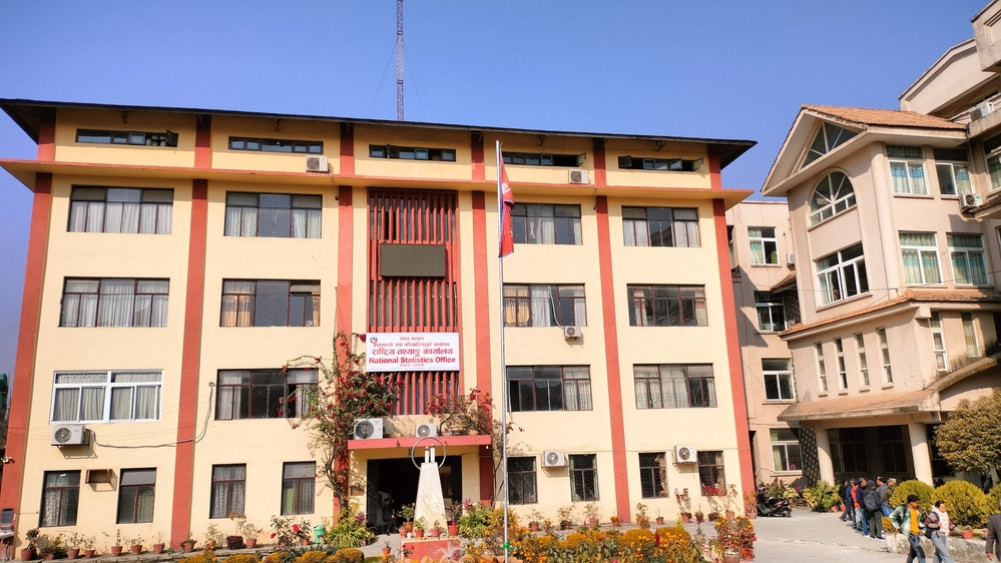
It is seen that the situation of widowed women in Nepal is weak in economic, social and educational indicators. The thematic report on single women released by the National Statistics Department on Monday showed that the condition of widows is weak in almost all aspects.
It is mentioned in the report that the economic, social and educational indicators of single women other than widows (separated, divorced and unmarried women aged 35 and above) are very good. The
report defines 'single women' as widows, separated, divorced and unmarried women aged 35 and above. About 8 percent of the population in Nepal (997 thousand 662 people) are single women. Among them, there are 8,26,147 widows, 21,287 widows, 59,525 divorcees and 90,733 unmarried people above the age of 35.
The report shows that the literacy, financial status, and employment status of women who are single for reasons other than widowhood are high. The literacy rate of widowed women is low or only 18.9 percent. Its ratio was 11 percent in 2068 and 6.9 percent in 2058. 56.5 percent of unmarried women aged 35 years and above are literate. Its ratio was 40.9 percent in 2068 and 23.4 percent in 2058.
50.9 percent of women who are separated from their husbands are literate. Its ratio was 32.3 percent in 2068 and 23.3 percent in 2058. It is mentioned that 69.9 percent of the women who have separated from their husbands are literate. Its ratio was 44.6 percent in 2068 and 23.1 percent in 2058.
Out of the total 66,66,841 families in Nepal, almost one-third of the families or 31.5 percent are women. "Out of 31.5 percent of families where there is a female head, 22.3 percent of the families are headed by a single woman and 19.2 percent of the families are headed by a widowed woman," the report states. '
According to the province, Koshi has the highest number of households with 25 percent single female householders, while Madhes has 18.6 percent and Karnali has 19 percent single female households. In Gandaki, 20.6 percent of families have widowed women and in Karnali, 17 percent of families have widowed women.
In terms of economic status, widowed women are lagging behind. According to the report, 24.6 out of widows are mostly unemployed.
Although the mentioned statistics show that the economic situation of widowed women is relatively weak, it seems that the situation of single women is better. Among unmarried women aged 35 and over, 41.7 percent are often employed. The report shows that 51.9 percent of divorced women, 53.6 percent of divorced women and 24.6 percent of widowed women are often unemployed.
Based on the results of the 2078 census, households are classified into five categories of affluence (least, low, medium, high and highest). "Out of the total population of widowed women, 22.5 percent appear to be in the lowest affluent category," the report said, "only 14 percent of divorced women are in the lowest affluent category and over 27 percent are in the highest affluent category." The highest proportion of unmarried women aged 35 and above is seen at 31.3 percent in the high affluence category.'
According to the structure of the house, it is mentioned in the report that the condition of all types of single women's houses is good. The structure of the house is divided into three types, paved, semi-paved and unpaved. According to this, out of total single women in Nepal, 76.4 percent of houses are paved, 15.1 percent are semi-paved and 7.5 percent are unpaved. According to the data office, 76.4 percent of single women's houses were found to be paved houses, as houses with tin roofs were analyzed as paved houses in the classification of houses.
8.2 percent of the total female population aged 10 years and above are single women. The number of widowers is 2.2 percent and widows are 6.6 percent. In the 2001 census, single women were only 3.7 percent, but in 2021, the number has almost doubled. In 2001, the number of widowed women aged 10 years and above was 3.9 per cent and increased by about 3 per cent in 2021 to 6.6 per cent in 2021,' said the report. If it was only 0.7 percent in 2021, the report pointed out that the rate of divorce and separation has also increased in the past two decades.