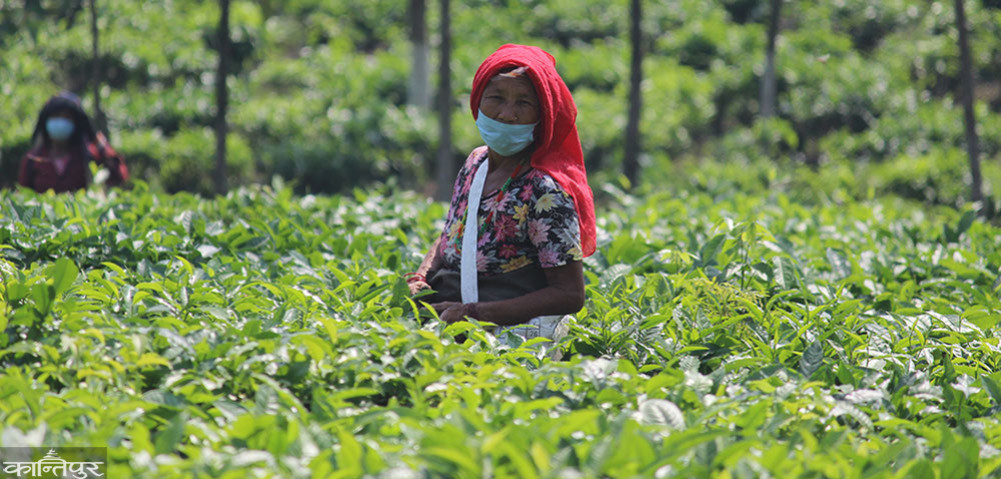
Argument of labor leaders that Nepali tea directly affected Darjeeling
We use Google Cloud Translation Services. Google requires we provide the following disclaimer relating to use of this service:
This service may contain translations powered by Google. Google disclaims all warranties related to the translations, expressed or implied, including any warranties of accuracy, reliability, and any implied warranties of merchantability, fitness for a particular purpose, and noninfringement.
A leader of tea workers organization of Darjeeling said that Nepali tea has affected the brand of Darjeeling tea. A week ago, during her visit to Darjeeling, West Bengal Chief Minister Mamata Banerjee promised to stop the import of Nepalese tea.
Earlier, Rajya Sabha MP Shant Chhetri demanded the state government to ban Nepali tea in the state assembly. Sunil Rai, General Secretary of Revolutionary Marxist Communist Party (Kramakpa) Darjeeling district, recently gave such a statement in Siliguri.
'There is no option to stop Nepalese tea being sold in India under the name of Darjeeling tea,' Rai said at a program related to the bonus increase demand of Darjeeling tea workers The focus was more on Nepalese tea than labor.
The government was also requested to be serious about checking the quality of Nepali tea. "We have been raising the issue of curbing Nepal's tea from the beginning," the Nepali language newspaper Himalaya Darpan quoted General Secretary Rai as saying, "but the government has not given serious attention. This may cause more complications in the future."
In 2016, when the then President Pranab Mukherjee visited Darjeeling, Indian tea entrepreneurs and labor organizations submitted a memorandum demanding a ban on Nepalese tea. Entrepreneurs have become angry saying that the Indian government has not taken this demand very seriously. Labor leaders argue that Nepali tea has directly affected Darjeeling.
"If the tea workers of Darjeeling and the tea industry are to be saved, the central government should immediately ban Nepali tea," said Rai. Nepalese tea is openly exported to India. It has been found that some business gangs make the same tea as 'Darjeeling brand' and send it to third countries.
In 2023, about 17 million kg of tea was exported to India. Tea workers' organizations claim that Darjeeling tea has been directly affected due to the increasing import of Nepali tea. "As soon as Nepalese tea is stopped, the tea market of Darjeeling will start to grow," said another labor leader, "otherwise we are sure that the Darjeeling brand will gradually decline."
Labor organizations are of the view that both the state and central governments should take initiatives to save the dignity of the Darjeeling brand in the global market. Ilam and Darjeeling's geography and climate are similar, says Uday Chapagain, owner of Gorkha Tea Estate in Ilam.
due to which the taste of tea produced in Nepal matches that of Darjeeling. Because of this, some Indian tea entrepreneurs have become frustrated with Nepali tea. "As it happens, it seems that the Indian strategy is to restrict Nepali tea under various pretexts," Chapagain said, "For this, it is necessary for the Nepalese government to draw attention to it."