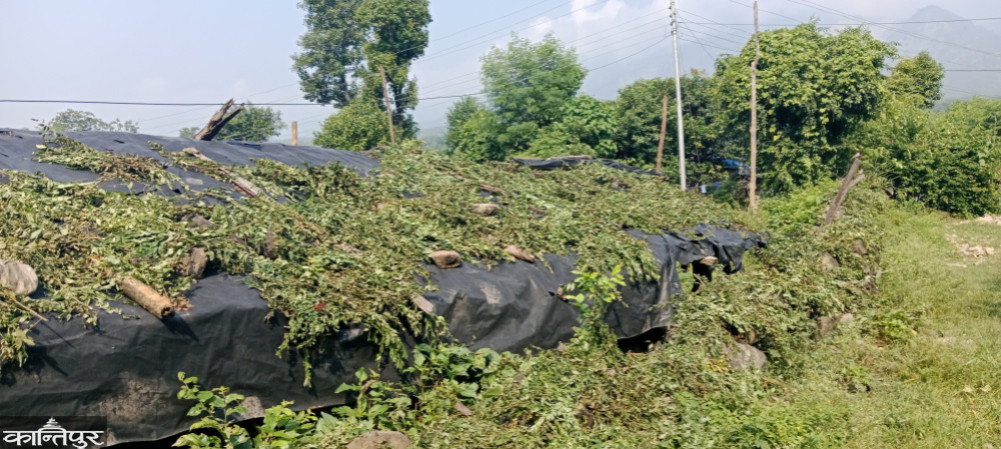
Kadipatta is in high demand in Tanakpur, where it is sold at 40 baht per kg
We use Google Cloud Translation Services. Google requires we provide the following disclaimer relating to use of this service:
This service may contain translations powered by Google. Google disclaims all warranties related to the translations, expressed or implied, including any warranties of accuracy, reliability, and any implied warranties of merchantability, fitness for a particular purpose, and noninfringement.
Sharda Rana of Bhimdatta Municipality-9 Matena goes to the nearby Indian forest with her friends in the morning. From there, she cuts the kadipatta and brings it. Then she dries them in the yard and in the fields when they are free.
After drying it for a day or two, she sweeps its leaves. After that, she fills the leaves in sacks and sells them to Bhartijar Tanakpur, the border. She runs her expenses from that. Rana goes to Tanakpur two days a week to sell kadipatta. Earn up to 6/7 hundred bharu at a time. Kadipatta collected and delivered to Tanakpur is sold at 40 baht per kg. In Tanakpur, the demand for kadipatta is high. Accordingly, the price is also increasing. In previous years, it was sold at 20/25 per kg, but now its price has almost doubled. "No matter how much you take there, it is sold, but it takes a lot of effort to bring it from the forest and dry it," said Rana.
She has been selling kadipatta regularly for four/five years. Others in his village have also made Kadipatta a source of income.
Kadipatta can be collected in two seasons, winter and dry season. Recently, locals have started earning from this, which is used as a sottar in rural areas. Nirmala Damai of Bhimdatta Municipality-9 Musetti said, 'We have been selling it from Kadipatta, it is difficult to collect it and deliver it to Tanakpur. Even if we can deliver it there, we will sell it.' was But now its price has doubled.
Nirmala takes one and a half hour walk from Musetti via Brahmadev to reach the border market Tanakpur. She sells kadipatta in Tanakpur and buys necessary things from salt and oil for the house. Locals say that although demand and prices are increasing in the border market, they are decreasing due to regular collection. They say that it is not found in the forest now compared to the past. Women collect grass and firewood from the forest in the morning. Then they dry it all over the yard.
At this time, most of Matena, Khalla and Musetti's backyards seem to be drying up. Some of them are seen drying on the road in front of the house. At this time, there is also a rush to bring in the paddy crop. In spite of this, the women are engaged in collecting and selling kadipattas in their spare time. From this, they have also raised the cost of salt and oil for the house.