We use Google Cloud Translation Services. Google requires we provide the following disclaimer relating to use of this service:
This service may contain translations powered by Google. Google disclaims all warranties related to the translations, expressed or implied, including any warranties of accuracy, reliability, and any implied warranties of merchantability, fitness for a particular purpose, and noninfringement.
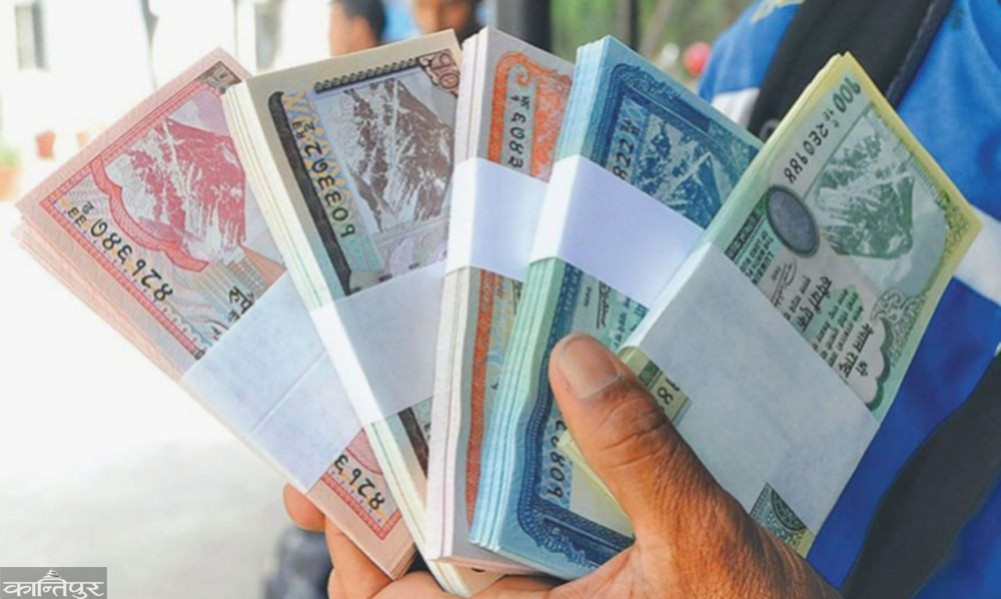
As Nepal Rastra Bank did not print new notes this year targeting Dasaintihar, the pressure on the note surface has decreased sharply. Last year, the National Bank issued 14 and a half billion new notes in Kathmandu Valley alone and 29 billion in the whole country. This year it is limited to about four billion. This is almost 25 billion less.
According to Basudev Bhattarai, Director of Rashtra Bank Currency Management Department, this year, it is estimated that around 2 billion notes have been issued by Rashtra Bank's subordinate offices and the same amount from other banks.
Since the cost of new notes is not printed, the bank does not have to deal with the hassle of managing additional manpower for the same. According to him, almost one and a half billion was spent on printing new notes last year. There are 6.6 million households across the country. Even though 50 percent, i.e. 33 lakh families do not have access to new notes, half of them will spend up to 6 billion to print notes of different rates,'' he said.
This year, without printing new notes, the bank has emphasized the use of clean and dry notes that are currently in vogue. In accordance with the policy of the bank, dry notes will be used as usual during this year's festivals including Dasaintihar.
New notes are in high demand only during festivals like Dasaintihar and then piled up in bank vaults, so the National Bank has encouraged the use of Sukila notes to make good use of such collected notes and to prevent the wastage of printing notes.
Director Bhattarai said that since every year new notes are printed during the festival and the circulation of these notes piles up in the bank's vaults, the bank has decided to utilize such notes to the extent possible this year.
He said that new notes were not printed this time so that old notes could be used to the extent that they could be used, as old notes are automatically destroyed by pressing and fading.
It is expected that after the National Bank insists on the use of traditional notes, the pressure on the currency will be reduced and the wasteful expenses that may be incurred in the name of new notes will also be stopped to some extent.
up to three times more than what was printed last year He argued that since the notes are currently available in the market and in bank vaults, there is no need to issue new notes. He said, 'New or old notes have the same value and importance. It should not add additional financial burden to the state because it is new.'
Insisting on the continued use of clean and dry notes, he expressed his belief that more dry notes will continue to be used in the coming year.