We use Google Cloud Translation Services. Google requires we provide the following disclaimer relating to use of this service:
This service may contain translations powered by Google. Google disclaims all warranties related to the translations, expressed or implied, including any warranties of accuracy, reliability, and any implied warranties of merchantability, fitness for a particular purpose, and noninfringement.
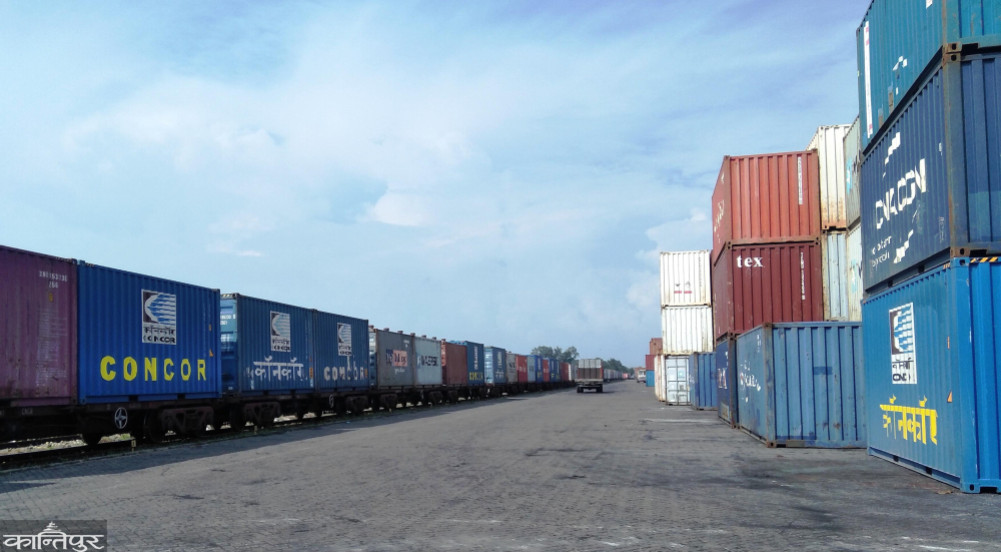
Along with the signs of improvement in the economy, the import of such goods is also increasing from Sirsia Dry Port, the country's main port for importing iron products. The import of MS billet, wire bundle, HR coil, etc., which are used as raw materials for rods used in building and other construction works, has increased.
According to the data of the port management company Pristine Valley, the number of railway racks carrying raw materials used in the production of sticks from India through this port has gradually increased in the last seven months.
In the months of January, February and March, 5/5 such raw materials were entered in the railway racks, in the months of Baisakh and May these raw materials were entered in 8 and 5 racks respectively. 9 in June, 10 in July and 9 in August have received raw materials. In the first week of October, only 3 racks have received raw materials.
Atul Sharma, head of administration of Prishtin Valley, says that in the last three months, the rod-making industry has enthusiastically started importing raw materials. "This is also a sign that the economy is slowly coming to a rhythm," he said.
Jagdamba Steel comes in the forefront in importing the most ferrous products through this channel. Then there are Jagdamba Enterprises, Hulas Steel, Gabial Steel etc. Sharma informed that these industries operating in the Parsa Bara Industrial Corridor mostly import raw materials from Jindal Steel located in Jharsugoda, Odisha State, India.
He said that because Jindal Steel transports raw materials from its own railway rack to Birgunj, it may be easy for importers to purchase raw materials from Jindal. Iron products are among the items that contribute the most revenue to the customs office at the port.
When the import of these goods decreases, there will be a negative impact on the revenue collection of the customs. Port Customs Chief Dhan Bahadur Baruwal also says that the gradual increase in the import of iron products is positive. "On the one hand, this indicates that the construction work in the country has started to pick up again," he said, "such items also have a significant contribution to the customs revenue."
Before the economic recession, 12 to 16 railway racks of iron products were imported through this port. Generally, a railway rack carries up to 4 thousand tons of iron goods.