After nearly 55 years, NASA is sending humans back to the Moon through the Artemis mission. The goal is to establish a long-term settlement on the Moon with an investment of about $20 billion and eventually establish a human settlement on Mars using the Moon as a base.
We use Google Cloud Translation Services. Google requires we provide the following disclaimer relating to use of this service:
This service may contain translations powered by Google. Google disclaims all warranties related to the translations, expressed or implied, including any warranties of accuracy, reliability, and any implied warranties of merchantability, fitness for a particular purpose, and noninfringement.
I don't really like the things called winter, cold, freezing, and minus. I don't have much energy to eat cold drinks/foods and go to cold places. Born in a Himalayan country, I have never been to the edge or bottom of any mountain, let alone climb it! When I went on a Mardi Himal trek, my friends were eager to reach the base camp, but I broke it and returned from the bottom. You slip and fall, no one rescues you, you may have to remain frozen for years, if a snow leopard finds you... they spread a lot of nonsense and fear! My friends were scared for me. But, the main reason was the cold. Since it was already winter in Badal Danda, I didn't want to reach the high camp and experience more minus.
Since winter is over and summer is about to arrive, I got the opportunity to visit the United States in the last week of Falgun. I fell straight down! ‘It’s cold, I don’t know America’ didn’t come to mind! When we got there, the weather in Washington DC was about to drop to minus degrees. Even after reaching America, I couldn’t help but complain about the cold, I tried very hard to keep quiet.
But, every now and then, a gasp would come out of my mouth – ‘How cold, how cold.’ After seeing me stutter a lot, Farooq, an American citizen of Afghan origin and our tour facilitator, teased me, ‘My friends from Malaysia, Indonesia or Bangladesh would say, ‘Come, come, come, you’re from a Himalayan country, you shouldn’t shiver like this.’

Even though he said that, the low temperature and cold wind couldn’t stop, my grumbling didn’t stop. It was snowing heavily outside, the city was covered in fog, and Annapurna Post News Coordinator Ramkala Khadka didi used to think it was strange to see Americans walking around with ice-cold Coca-Cola.
‘How can they not be so cold,’ she would say, ‘I wonder if drinking such a cold Coke won’t give them a sore throat?’ A very fair question! I was very happy to meet someone who ‘understands the cold’ like this. I never stopped wearing the thickest, black jacket I had wherever I went in America. Now that I look at the photos, everyone is wearing the same clothes! I would be embarrassed to post them on social media.
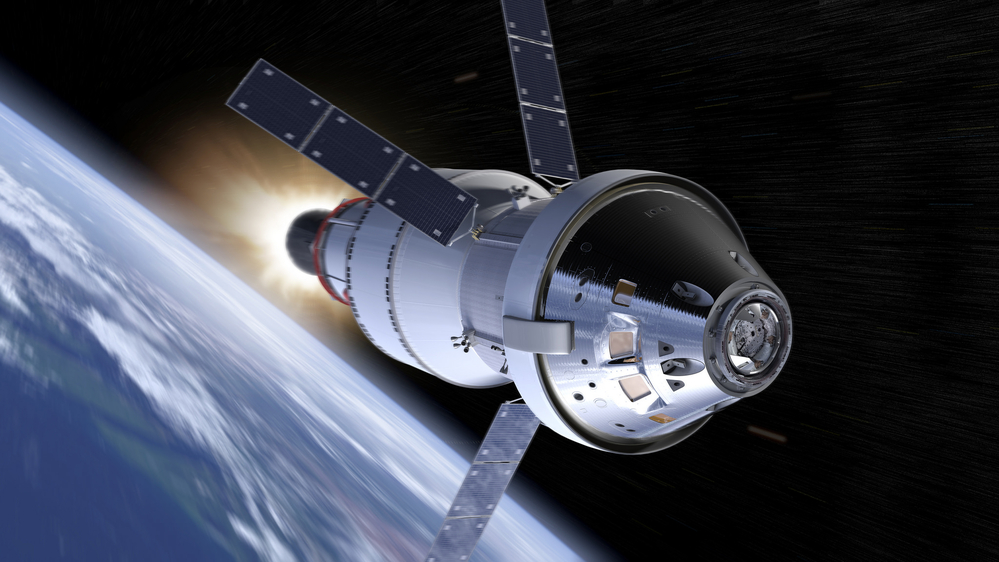
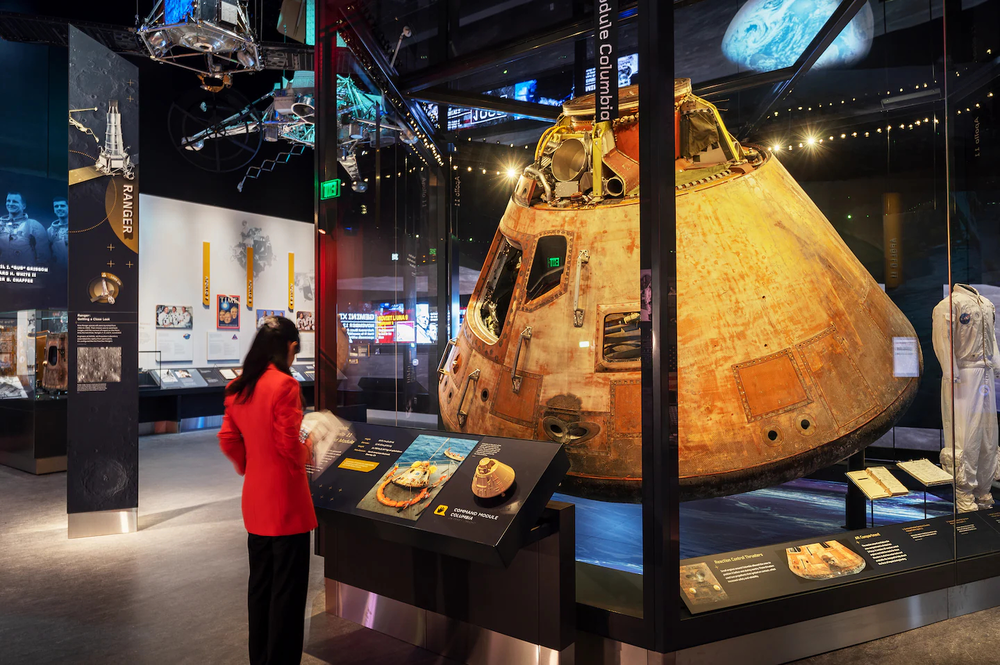
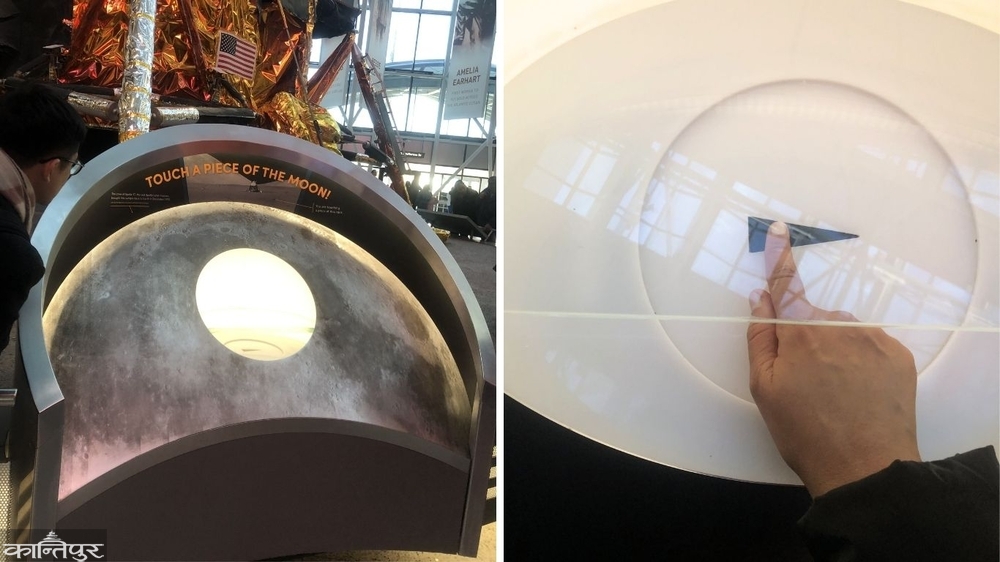
The cold in America was so severe that I was scared and reached the beach in Florida wearing thick socks, fleece trousers and a T-shirt under a shirt. Some locals were diving in one-piece and two-piece suits, while others were enjoying beach volleyball. I felt cold, and from time to time I would take out a scarf from my bag and wrap it around my head to protect my cold head. As I strolled in the warm Florida sun, a few miles away, inside the Kennedy Space Center, one of the greatest dreams of human life, ‘Artemis 2’, was undergoing repairs and final preparations. After nearly 55 years since humans last visited the moon, the Artemis mission is going there again. This time, the journey is to the moon’s south pole, which is endlessly dark and extremely cold. The Artemis 2 Orion spacecraft is set to take off on the morning of Chaitra 20, Nepali time. It will take astronauts around the moon and return them to Earth. Photo: NASA The moon’s south pole is covered in deep craters. Sunlight cannot reach it. This makes that part dark, the temperature drops to minus 235 degrees Celsius, and NASA has stated that it is one of the coldest places in the solar system. I had a great desire to go to the Kennedy Space Center, and I thought that I would go there as soon as I reached Florida. However, after reaching America, I realized that even places in the same state are very far away. Pensacola, where I live, is in the far west of Florida, while the Kennedy Space Center is on the east coast. It would take 8 hours to drive without stopping anywhere in between! My dream of seeing the Kennedy Space Center, which sent humans to the moon half a century ago and is now preparing for a journey to Mars again, even from afar, was not fulfilled. However, seeing my interest in space science and missions, one of the tour facilitators, Farooq, advised me to go to the Smithsonian National Air and Space Museum in Washington, DC. As soon as I entered the main entrance of the museum, I saw the ‘command module’ of the ‘Apollo 11’ spacecraft, which brought mankind to the moon for the first time, in the ‘Milestones of Flight’ gallery. Neil Armstrong, Buzz Aldrin, and Michael Collins set out on their journey to the moon in 1969. The lander called ‘Eagle’ used to land on the moon was left in space. The museum’s description mentions that this command module landed safely in the Pacific Ocean with all three passengers. Several aircraft were hung from the ceiling of that gallery. There was an airplane called the ‘Spirit of St. Louis’, in which a man named Charles Lindbergh had flown alone across the Atlantic Ocean in 1927. Another round satellite hanging from the ceiling was ‘Telstar One’. Oh! I remembered reading about it somewhere in my mass communication course. This satellite made it possible to exchange television signals and phone calls from space for the first time in the world. While observing the initiatives and successes of human and space history, I was looking for the most famous item in the museum, which Farooq had informed me about. It was a stone brought from the moon. In 1972, three astronauts who reached the surface of the moon in the Apollo 17 mission and returned to Earth brought an 8-kilogram stone from the moon to the people of Earth. A small piece of the same stone is in the Air and Space Museum. The stone, which is kept safe inside glass, can be touched by inserting a finger. According to the museum's data, more than 370 million people have touched the piece so far, and I finally touched it.
The then US President Richard Nixon gifted small pieces of rock brought from Apollo 17 to 135 countries of the world and 50 states of America. A small piece was also gifted to Nepal. It is currently kept safe in the National Museum in Chhauni, Kathmandu. You can't touch it. In the DC museum, this small piece, made smooth and shiny by the touch of millions of people's fingers, gives the experience of directly connecting humans to the moon, 384,000 kilometers away.
President Richard Nixon handed over the Nepalese flag and a moon rock sample carried to the moon by Apollo-11 to King Birendra as a gift from the American people.
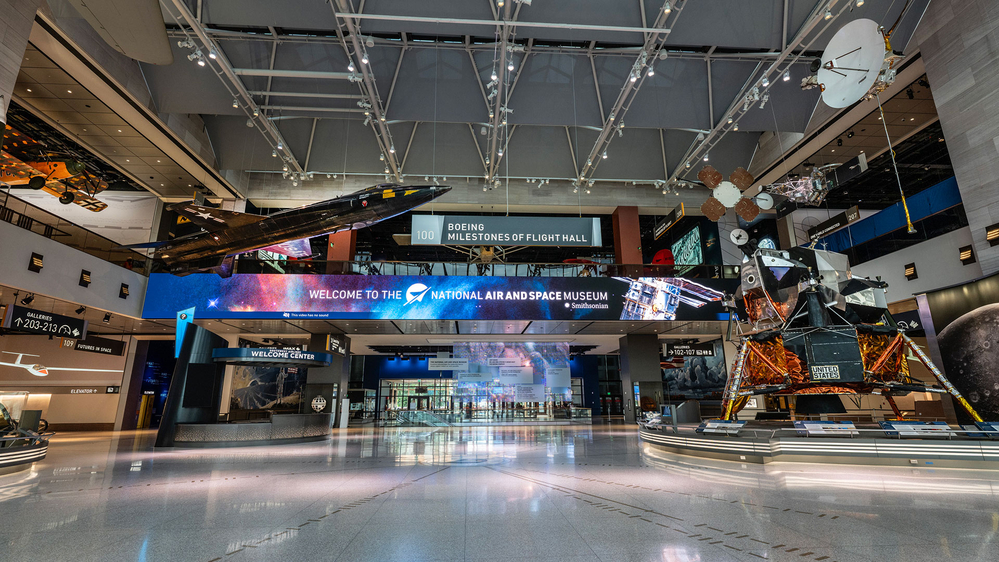
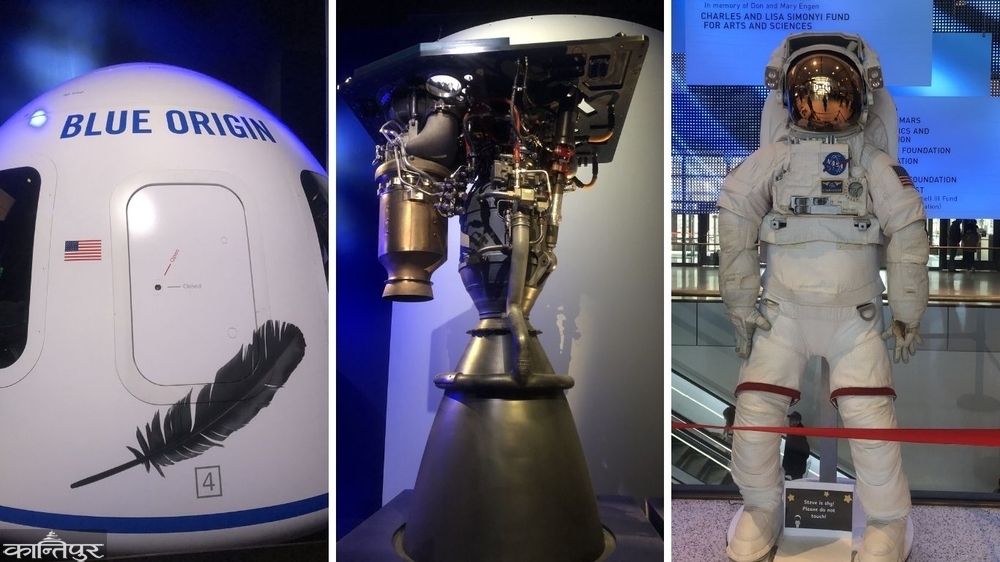
People interested in information technology and space find this museum and the materials and information there very interesting. Parts of some space missions, an exact model of the entire lander, space suits worn by astronauts, and modules of the International Space Station (ISS) window ‘Window on Earth’ are on display there. I also saw a capsule from Jeff Bezos’ space technology and aerospace company ‘Blue Origin’. Space-X’s Merlin One D engine, a Rutherford engine using 3D printed technology, and Rocket Motor Two used for commercial flights are on display.
The grid fin that helps the rocket land in the exact right place is also kept there. I was excited to see the replica of the Viking Lander that had landed on the surface of Mars. The lander had unlocked many mysteries about Mars and broadened people's understanding of it. In 1976, the Viking Lander became the first American spacecraft to successfully land on the surface of Mars. It helped scientists analyze what Mars is, how it might have formed, and what it suggests about the evolution of our solar system.
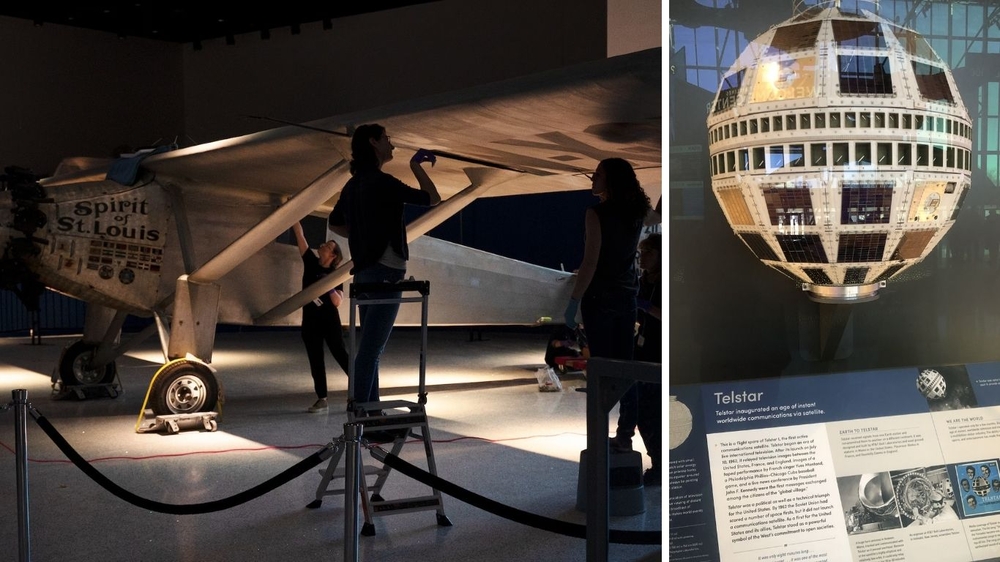
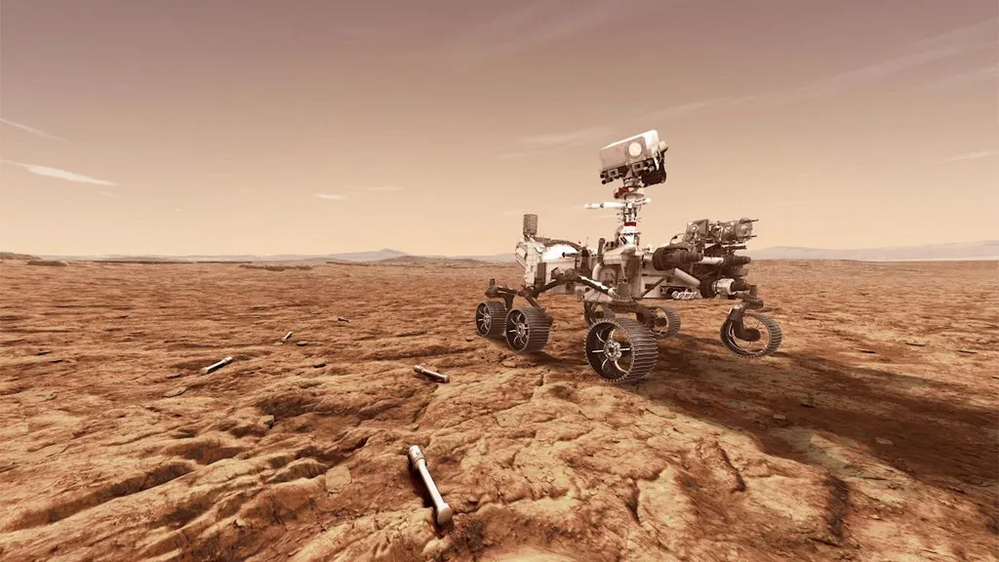
Highlights include the Telstar satellite that started the communications revolution in the world, and the modules for the future private 'Axiom Station'. Even more interesting, the museum's 'Kenneth C. Griffin Exploring the Planets' gallery houses cutting-edge video and digital materials about Mars. You can hear the real sounds recorded by the 'Perseverance Rover' here. The video titled ‘Seven Minutes of Terror’ shows the extremely complex and challenging process of landing a rover on Mars.
The ‘Searching for Life’ section was the most interesting to me, I went to that section twice after telling my friend to ‘wait a minute’ outside. There was a video with scientists’ statements about the history of water on Mars and whether there was life there at any time. In that video, former NASA chief scientist Dr. Jim Green said, ‘We are very close to the possibility of life on Mars.’ But is the world ready to hear this news? If we find microorganisms there, it will change the definition of biology.’ In the same video, Elon Musk called Mars ‘life insurance for humanity’. He argues that if a major crisis like a meteorite hits Earth or a nuclear war occurs, a city should be established on Mars to protect humanity.
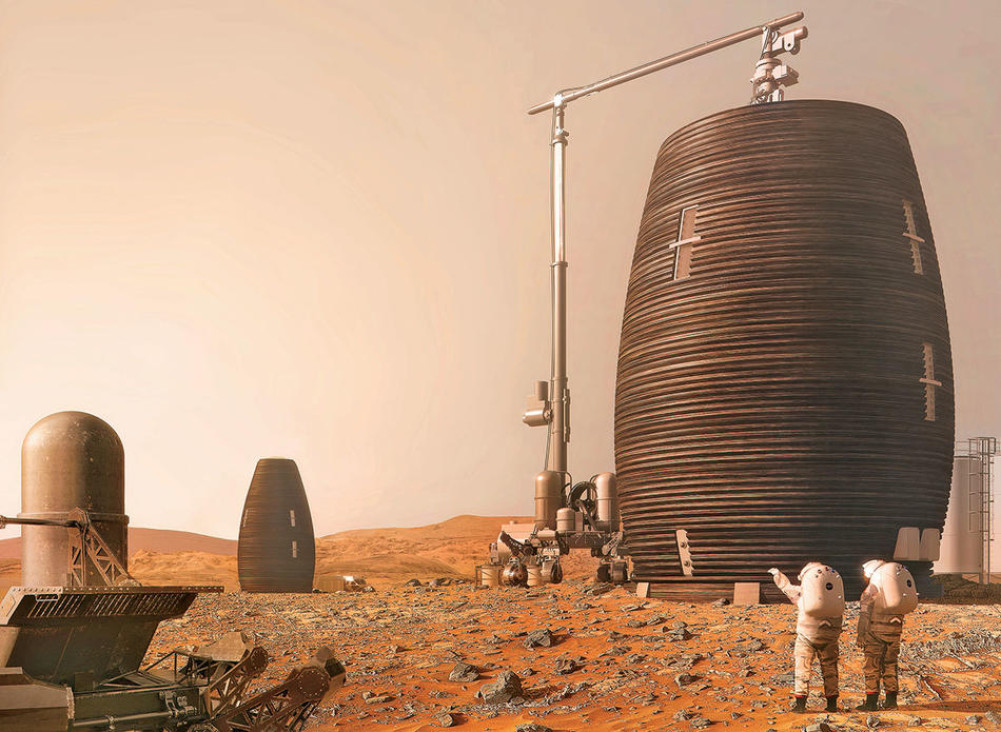
Since Mars is more similar to Earth than other planets in the solar system, Musk and others have pointed out that it could be a future alternative or a 'second home' for humanity. A day on Mars lasts 24 hours and 37 minutes. Like Earth, Mars also has four seasons. Snow or ice has been found in the polar regions of Mars. Scientists believe that where there is water, there is a possibility of life.

If, thanks to the miracle of science and technology, Mars travel becomes possible in my lifetime and people start moving to their second home, what will I do ? But, I am biased - just because the temperature is minus, it doesn't mean you shouldn't go to Mars!