This year, 4 talents from Nepal participated in Berlinale Talent. As a first-time reviewer from Nepal, I gained a lot of new experiences, knowledge, and learning while participating in Berlinale Talent.
We use Google Cloud Translation Services. Google requires we provide the following disclaimer relating to use of this service:
This service may contain translations powered by Google. Google disclaims all warranties related to the translations, expressed or implied, including any warranties of accuracy, reliability, and any implied warranties of merchantability, fitness for a particular purpose, and noninfringement.
The sound of applause. Looking at a crowd of people, it seems that they have been assigned to applaud. They are standing right behind the camera person in such a way that as soon as someone steps on the red carpet, this group starts moving, and jumps up and down, clapping like a triumphant celebration. Seeing this scene, Chi (a South African critic) who was walking along asked – 'Is this how they welcome everyone?'
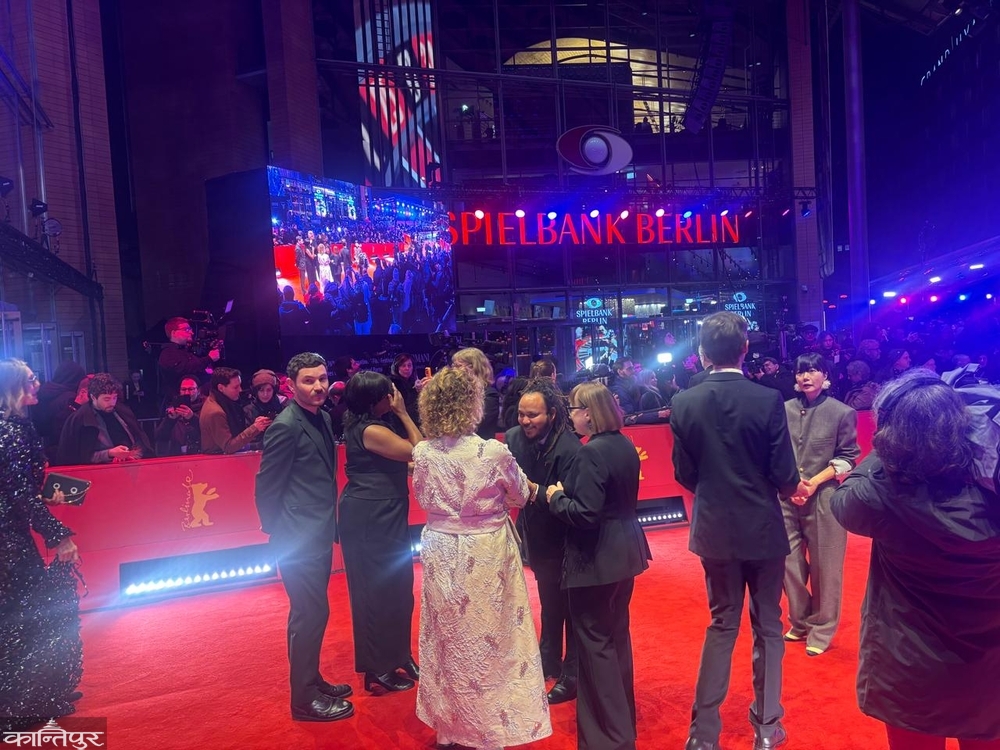
Finally, his eyes reached there, and he felt awkward. Without waiting for Chi's answer, the restless Chi ran up the red carpet and took a few poses. Following Chi, I reached the banner with Berlina Talent written on it, and applause erupted. It was as if the group was celebrating victory. I turned to the camera and smiled. Janaki (Kadayat), who was behind us, happily opened her jacket and took pictures in her beautiful dress. What better opportunity for a costume designer to show off her designs!
This reception at the special program of ‘Berlina Talent’, ‘Dine and Sign’, was grand. I felt ‘celebrated’ for the first time in my life, but not a celebrity! The way I was welcomed with joy in my presence, I felt – this is truly my place. I kept thinking to myself that they understood my journey to Berlinale, the time I spent in film journalism, and my interest and passion for reviews. They saw me working in some corner of Kathmandu, understood the importance of my work, and that’s why they celebrated my existence in this way. Sometimes, for a marginalized woman who is working in a field (film) that is underrepresented in journalism, this kind of recognition becomes a different energy.
Not only ‘Dine and Sign’, but also since I was selected as the ‘Talent Press’ under the world-renowned film festival Berlinale, I felt that my presence and interest in film journalism were ‘validated’ . When for the first time, mentor Leo (Goi) called me on WhatsApp and asked, ‘How busy is Reena this February?’ towards the end of November . At that time, I said with curiosity and fear – I am free . ‘Then I would like to invite you to participate as a Berlinale talent from here,’ Leo said as soon as I was selected as a talent, and I still get goosebumps when I remember the experience of being connected to the world film community .
While participating in Berlinale Talent for the first time as a critic from Nepal, I gained many new experiences, knowledge and learnings . Come on, let's start from the beginning.
Kathmandu to Berlin
We were very excited when Qatar Airlines took off from Kathmandu to Doha. Janaki Kadayat was with us. The first woman to represent Nepal in costume design. Ngima Gelu Sherpa, who was selected for the direction, had already left the day before. Producer Ramkrishna Pokharel was scheduled to arrive just a few days later. Out of 200 talents selected from around the world, we were 4 selected from Nepal, that too among 3400 applicants. After getting the information about the 'Talent Press' program in Berlin a day in advance, we reached Germany on February 11. We reached at 9/10 pm and stayed at a Nepali house.
The next morning, I took my SIM card and metro ticket and left with Janaki. Since we were living in separate places, there was no option but to part ways. On the first day, I had to reach Radialsystem to take classes. Radialsystem is the venue for the main talent show. It takes 20 minutes to walk from the hostel. I arrived before the scheduled time. I was eager to meet the 5 critics selected from the world among the 200 talents selected by Berlinale. I saw my mentor Leo in person and met other mentors. ‘And you, Reena?’ Someone extended his hand to shake hands as if he knew her. I smiled. After the
, I found out that he was FIPRESCI President Ahmed Swaki. FIPRESCI, the international organization of film critics – The International Federation of Film Critics (Later, there was a long discussion on how to connect the critic society from Nepal to this organization. Ahmed also said that he was excited to connect new countries to FIPRESCI and explained his card and the process of joining.)
The meeting with the critics became even more interesting. What a coincidence, it was as if we were neighbors and lived next door. Vedanta (Srinivas) is also a freelance critic and programmer from India. Chi is a young critic who is very talkative and talkative. Despite his young age, he has already established a strong hold on film reviews and festivals. He is always forward to learn and express himself. Another critic who was a match for him was Andy. The funny thing is that I had already met Andy on the ground floor of Radialsystem before the program started. He was a reviewer from Bulgaria. He was working independently. He was using a laptop on the ground floor, it was not difficult to recognize that he was Andy. Before coming to Talent, we had known each other through online classes.
Another reviewer was Tara, who had been writing for Vogue. Clara, who lives in America and writes, had a long conversation with her in the online class, so meeting her physically in the class was a different kind of 'connection' experience. The rush she goes through to get her review published in some media, to get it into a film festival, is truly exemplary. Even though she does other things to survive, she takes out time to write reviews, and then puts in another effort to get it published. Another was Ghanaian AJ-Alice Johnson (we visited the EFM market together, we also did video assignments together).
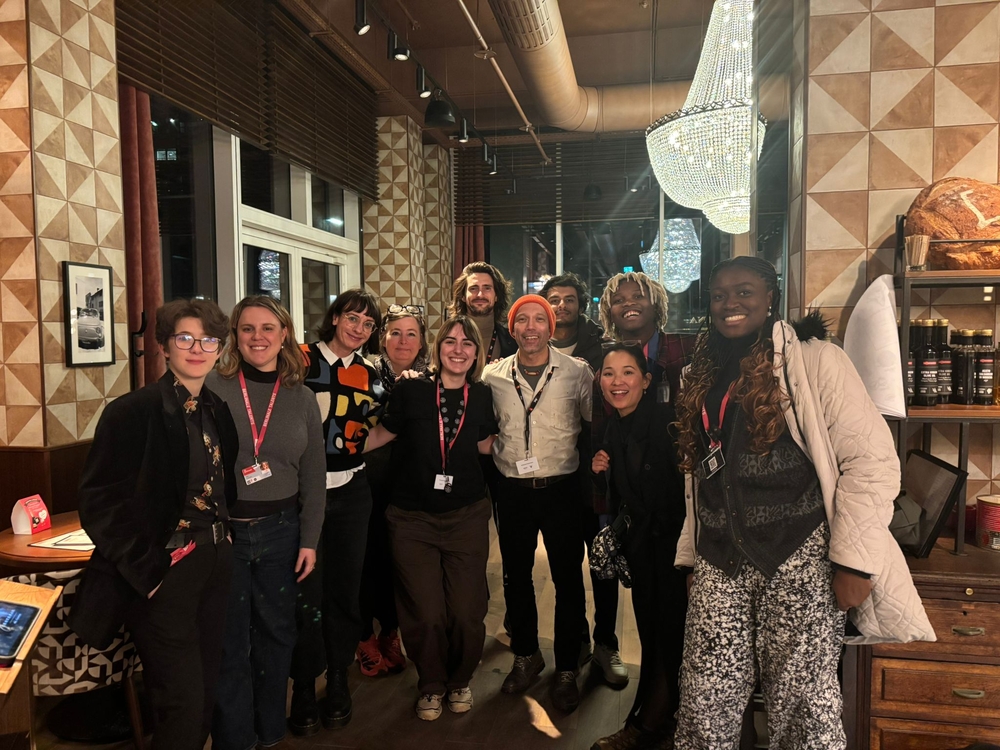
What will we learn in the next 6 days, how will we tell our stories? The first day's meeting added a lot of excitement to us. 'You are all filmmakers, we are eager to hear from you and learn together,' said Talent's project manager Nicola. Many critics could not contain themselves in the word 'filmmaker'. However, for me, the veteran filmmaker Jean-Luc Godard's reference to film reviews as part of filmmaking made it easier. The first day of class had already convinced us that the next 6 days would be spent in a rush and busy schedule.
Pisces on the red carpet
Radialssystem was a new building specially designed for talent. From there, it took about 20 minutes by metro to reach the main venue of the festival, Postdamer Platz. The first day was greeted by a cold of 9 degrees. For 6 days, Radialssystem was sometimes covered in snow, sometimes in rain. The warm sun sometimes came to greet us. After finishing the first day's program, we reached Postdamer Platz from Radialssystem. We had to watch the red carpet of the evening's festival. We had also planned to meet Janaki there. She had already reached there to get her talent card. How did she get there? There is an interesting story about the metro's hassle, ask Janaki when you meet her!
'Is anyone going to Postdamer Platz from here today?' Mentor Leo asked as soon as the first day's class ended. ‘I’ll go,’ I said. A few other friends also joined us. We took an Uber and reached the Potsdamer, perhaps such a long journey was necessary to get closer to each other and get to know each other better. Mentor Leo and the other friends headed to the Berlinale Palast in Potsdamer to watch the film. I reached the service center near the Potsdamer Platz. Janaki was there, and that’s where I met the editor Kisley, who had come from India. I took the Berlinale card. ‘Are you Rina from Nepal?’ Lira, standing near the card counter, asked. The experience of meeting the names that had been linked to the emails of various Berlinale projects for months in person was different. It was like meeting someone close. I took the card and reached the Tufan Palast. The sight of the red carpet visible from afar was enchanting. The light, the hustle and bustle of people and the loud noise. On top of that, the cold weather!
The photographers and videographers were standing next to the red carpet laid out on the plastic. Janaki stood in the audience, as other talents were not allowed in the press area. I went inside. What a coincidence - within 2 minutes of arriving, Michelle, the attraction of the festival, arrived in this white dress. The cameras were focused on her. Everyone shouted - Michelle-Michel! Festival director Trisha Tuttle was standing on the red carpet welcoming all the participating stars. I made eye contact with Trisha. And then I realized, her interview published in the Kathmandu Post, which I had brought from Nepal to give to her, was left in the hostel. I was vowing to give it to her at the next meeting, but another group walking on the red carpet caught my attention. Shaking his hips, a short man arrived with the international jury Wim Winder. A face that Nepalis recognize! He was walking towards the main gate of the Palace, giving autographs to fans, Min Bahadur Bham. Last year, I had seen director Bong Joon Ho, Robert Pattinson, and Timothy Spall walking on this carpet. On this carpet, where many famous celebrities including Kristen Stewart, Anne Hathaway, Tilda Swinton, Ethan Hawke, Dua Lipa, Kylie Jenner, and Rose Bryan walked, the Nepali filmmaker who was walking as a jury was not only attracting the world's cameras. He was also drawing the attention of the world's film industry, Min. Some in the crowd were shouting "Wim", others "What"? I also shouted - Min Dai! The presence of the selection committee as a jury member for the 76th edition of Berlinale in the international category is also the presence of the Nepali film sector in a festival that is longer than its history. It would take many words to describe the experience gained by Berlinale in talent and the relationships formed there. The conversation between each other's experiences and presence there would become a new learning experience. Living in America, I would empathize with the problems I endured in Nepal. How can we overcome those struggles now? The 'Talent Press' group would discuss. Thus, for 6 days, we spent hours in various rooms of the Radial System, sometimes writing reviews, sometimes making videos on video essays. Sometimes we interacted in sound design classes in films. Sometimes we participated in various 'networking' events designed for us. Anyway, we kept running according to the program list of the radial system at the speed of the Berlin metro. When we entered one room, we could participate in a camera class, while in the other, discussions were going on about how to tell a battlefield story. Who would we meet at a networking event? A director who was making a film in Vietnam turned left. An editor who was editing a film in a cold city in Canada turned right. Sometimes we would meet a friend from Brazil, and sometimes we would bump into someone who was making a film in Germany. Berlinale also gave us a special experience of finding people who shared our interests and work among the hundreds of people brought together by the film, establishing new relationships and connecting with them. Even in that same crowd, when someone asked, 'Where did Avinash's film go?', 'Is so-and-so a filmmaker from your country too?', it gave us an indication of how far the presence of Nepali filmmakers in the global market was reaching. A hundred people were gathered in one room and someone said, "Come on, you guys have a good time, we need food, it's right next door." What does the sound of that room sound like? The networking program 'Confusing' was heard. Like our theme this year - Creating Confusion! There were also emotional moments during the
. One day, I went to the counter to get another batch. A surprised teenager said, "Oh, aren't you the same Reena? When I was sending the application, your video disappeared after there was a problem with Kantipur's YouTube, right?" Saying that she had told the talent group about the problem at that time, she said, "It was my great desire that you be selected, and look, I got to meet you today." Meeting the teenager of the Gen-G age made me very emotional. Mentor Dana also made a class emotional, 'Meeting you like this is a truly emotional time. Because, we read thousands of applications for months and select you, we already know you from the applications. When we meet you in person, it's a treat!'
Talent Press assignments, some of which were mandatory, made the 6 days very busy. Sometimes, it was difficult to even see the faces of Nepalis in the same building. This time, being a talent, I missed out on many roles of a journalist. For example, I missed the opportunity to meet world-famous artists in person at the press conference held inside the hall, ask questions, and hear about their work firsthand. Even in the tight time, I had to watch a movie. 'Watch as many movies as I can,' Mentor Leo had said in the first class. I had to watch a movie. I watched 7 films in this rush - at Postdamer Plaza and Cinemax. I didn't have the time or energy to go to a new hall. I watched 2 press shows at Cinemax next to Postdamer. This time in the Palast hall, I watched the film from different levels of the audience. When I watched 'Kurtulus', I was at the top, even higher than the screen. When I watched the film, it was like bending down and watching the screen. 'When will a hall with such a design open in our country?' The question kept on running in my mind. I watched one film with artist Karma. Perhaps Meen had given Karma a ticket for the film 'Yat the Sea'. Accepting his invitation to watch the film together, I reached Palast. It was 11 pm when the film ended. Sometimes it was 12 am when the film ended at Postdamer. Even at 12 o'clock at night, when I saw the crowd of people watching another film in Cinemax and Palast, the question arose in my mind, 'When will the Nepali Film Festival attract the audience like this? What has stopped the Nepali film festivals from creating such a grand and organized festival? Financial resources?'
The same question kept coming up while visiting the EFM market (European Film Market). Another center of attraction in Berlin is the EFM. EFM is a place where people from all over the world come to buy and sell films. It is a market for films, where filmmakers from all corners of the world come to set up stalls. Films are bought and sold here. More than 10,000 producers, distributors, sales agents, and investors from all over the world gather here to buy and sell their films. This is where interaction, cooperation, and co-investment between the two countries begin. In particular, Nepali films should have a separate stall in this kind of market. Where discussions on Nepali films and cooperation with the world could be taken forward. This year, the neighboring country India was seen to have taken up a stall in a clever way. As soon as you enter the door of the EFM, the 'Indian Pavilion' was visible on the right. Indians were participating in this market by sitting in the right place. If Nepal had had a stall, it would have been easier for director Kalani Gakan and producer Sabin Gyawali, who came from Australia, to sell their films in the EFM market. But, when will the Nepali film sector reach this kind of market? Thankfully, this time the Film Development Board has understood the importance of this kind of market and booked a similar stall in Cannes - which is a positive aspect.
Paris to Politics!
Not everyone is invited to the closing gala of the Berlinale. During the festival, Berlinale organizes many programs that attract 20,000 filmmakers. Many prominent people who are involved in those programs are also invited there. Being a film journalist, I understood the importance of the closing gala. So this time, I wrote an email to the press office, explaining why 'our jury is also going up on stage', 'This time our jury is on stage, so we had to arrange tickets for the closing gala anyway.' As a journalist, watching the closing and gathering news became a matter of greed. There was a slight hope of getting tickets. I had emailed Berlinale after all the talent press programs, 'afterparty', were over. No news of getting tickets came. In the meantime, a plan was made to visit Paris with Janaki. We reached Paris by taking the Flix bus. This was the day before the closing gala. We had to change to another bus when we reached France. While waiting for the next bus with a croissant and coffee, I opened the email. 'We would like to welcome you to the closing gala. The dress is a cocktail dress,' I received the email with 2 hours to go to Paris. I was shocked. I bought a plane ticket for the next day right then and there. On the day I arrived in Paris, I visited the world-famous Louvre and the Eiffel Tower, which are must-sees. And the next day I returned to Germany. When I returned to Germany, I had caught the flu. I reached the closing gala shivering with fever.
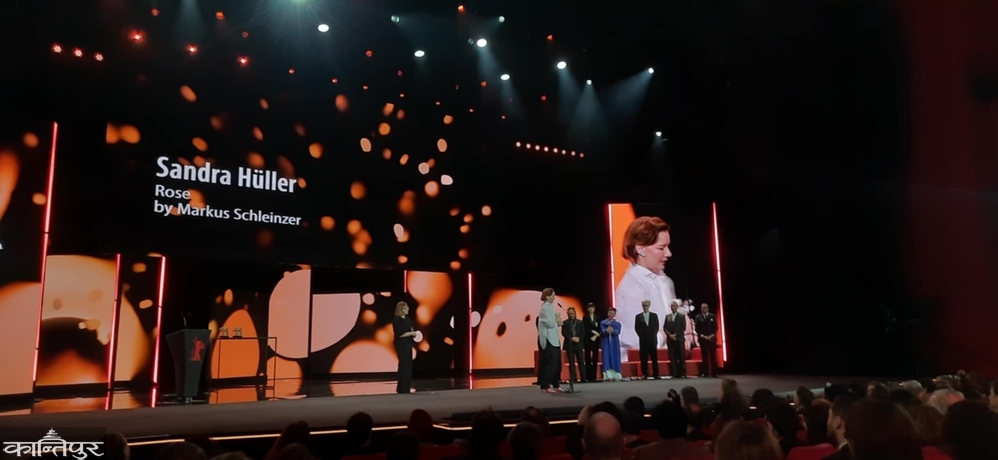
Film festivals are so political, I had never experienced it before. The statement made by the head of the international jury, Wim Winders, caused controversy at Berlinale this year. How many filmmakers objected to this statement? How many filmmakers who had planned to come did not arrive at Berlinale. This time, the controversy received more space in the international media than Berlinale. However, the closing ceremony also became the 'closing' of this controversy. Most of the award winners gave statements refuting Wim's statement, chanting slogans of Free Palestine. Several filmmakers turned their backs on the jury after winning the award. Even the host of the program kept sarcastically mocking Wim for his statement. Festival director Trisha respected those who spoke out about the controversy, saying that raising their voices and criticizing is part of democracy. 'This year, we are facing challenges in public, which is a good thing. It may not always feel good, but it is good, because it shows that Berlinale matters to people,' Trisha said. 'We live in polarized times and I think we all need to accept this reality. We need to embrace the community we have built together.' Because criticizing and raising one's voice is part of democracy. Disagreement is also the same. Sometimes it takes great courage to speak up.'
This controversy over Berlinale sparked a discussion on why this kind of festival is political? Why is such a platform necessary for debate and discussion? As I returned to Nepal from Berlinale with a wonderful and joyful feeling in my heart, I kept thinking - Nepali critics have been following this path. I wonder if its reflection was also visible in Nepali films!

