We use Google Cloud Translation Services. Google requires we provide the following disclaimer relating to use of this service:
This service may contain translations powered by Google. Google disclaims all warranties related to the translations, expressed or implied, including any warranties of accuracy, reliability, and any implied warranties of merchantability, fitness for a particular purpose, and noninfringement.
A flower specimen was sent to the famous scientist Charles Darbin around 1863. Darbin speculates after seeing the long and narrow nectar tube of this star-shaped flower, which is white like elephant's beard.
There must be an insect with a long tube/tongue (proboscis) that can suck the juice from the flower . When the same insect tries to suck the juice deep inside the flower, it touches the slippery pollen and the pollen is transferred from one flower to another flower . A search was made for that insect in Madagascar or where flowers are found, but it was not found . Many scientists criticized Darbin's hypothesis as wrong. Darbin was firm in his assertion that sunakhari evolved their long nectar tubes to ensure pollen transmission.
The pollen of orchids (Sunakhari) are not separate like other flowers, but in a single pile, so they cannot spread without the help of specific insects or wasps. His prediction is proven true after about four decades . As Darbin said, an insect with a long tongue was discovered, which was named the Hawk Moth. The scientific name is Xanthopan morganii praedicta. It means, 'forecast doll' . Although this moth is called Hawk Moth, many people know it as Darbin Moth .
Senior botanist and Prof. Dr. Vijaya Pant recently published a book 'I Orchid', there is some discussion about Darbin Moth . Useful for anyone interested in goldfish, this book is aimed at those interested in botany. In this book by Prof. Dr. Pant, who has been active for more than 3 decades, the author has introduced herself as a Sunakhari species. According to the book, 97 percent of Sunakhari seeds fall to the ground and are destroyed. 3 percent of the extinct species barely grow, covering many areas of the world .
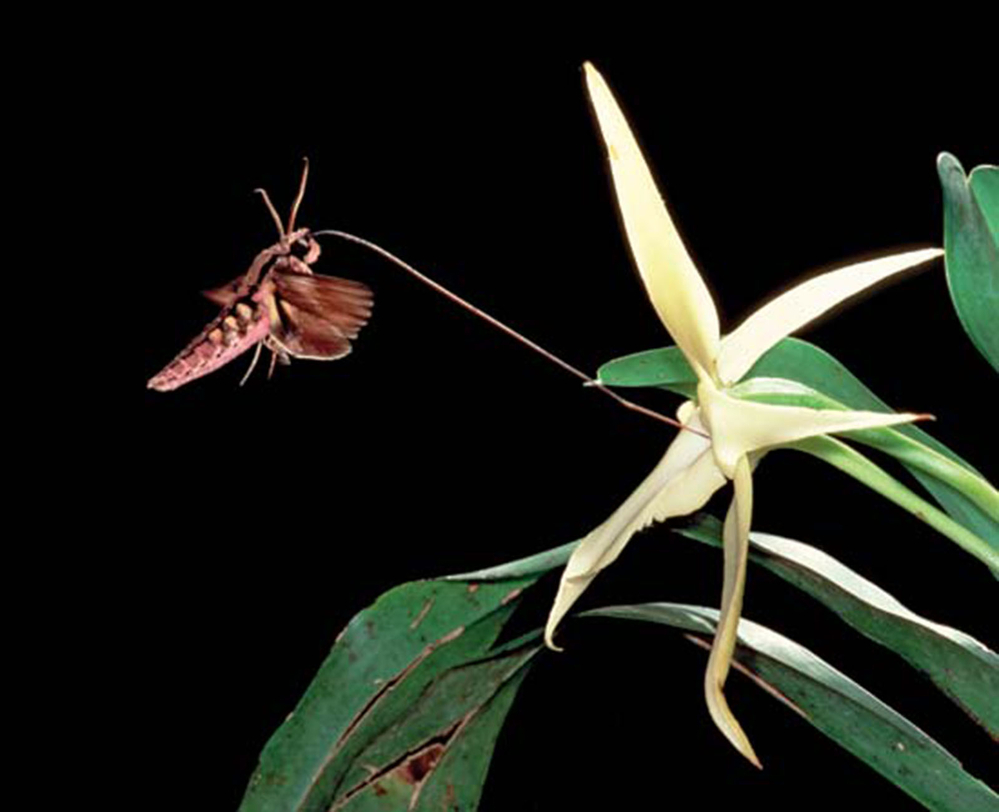 Darbin Moth
The male reproductive organ of the Sunakhari species is the stamens which are not separate like in other plants. A characteristic of Sunakhari species is that it does not have an 'endosperm' like other plants. Endoserm acts as a feed (nutrient) to the embryo before the seed germinates in the ground. Due to the lack of endosperm, the seeds (embryos) of sunakhari die without food. Another feature of this is that if the seed receives a special type of seed, it gets a chance to grow. It is the seed that provides food to the seed, due to which the seed gets a chance to germinate . In the first lessons of the
book, author Pant has mentioned the names known in Nepal, starting with the introduction of Sunakhari. Sunakhari is also known as Sunagabha and Chandigava in Nepal. The species with yellow flowers is called Sunagabha or Sunakhari . She has shown through the book that the species with white flowers is called Chandigava. It is mentioned in the book that some people know Sunakhari by different names according to their habitat and species. Fifthly, plants like Shaktigumba, Gamdol belong to Sunakhari species . In the
book, she has discussed about the shape of Sunakhari, monkeys, shoes, butterflies, birds and flowers that look like people. The goal of the article may be to help the reader get absorbed in the book by drawing such topics and discussions. Mentioning the subject of blooming commercially, being used in decoration, blooming from the ground, in difficult places, she has also mentioned about the challenge of this species conservation in the book.
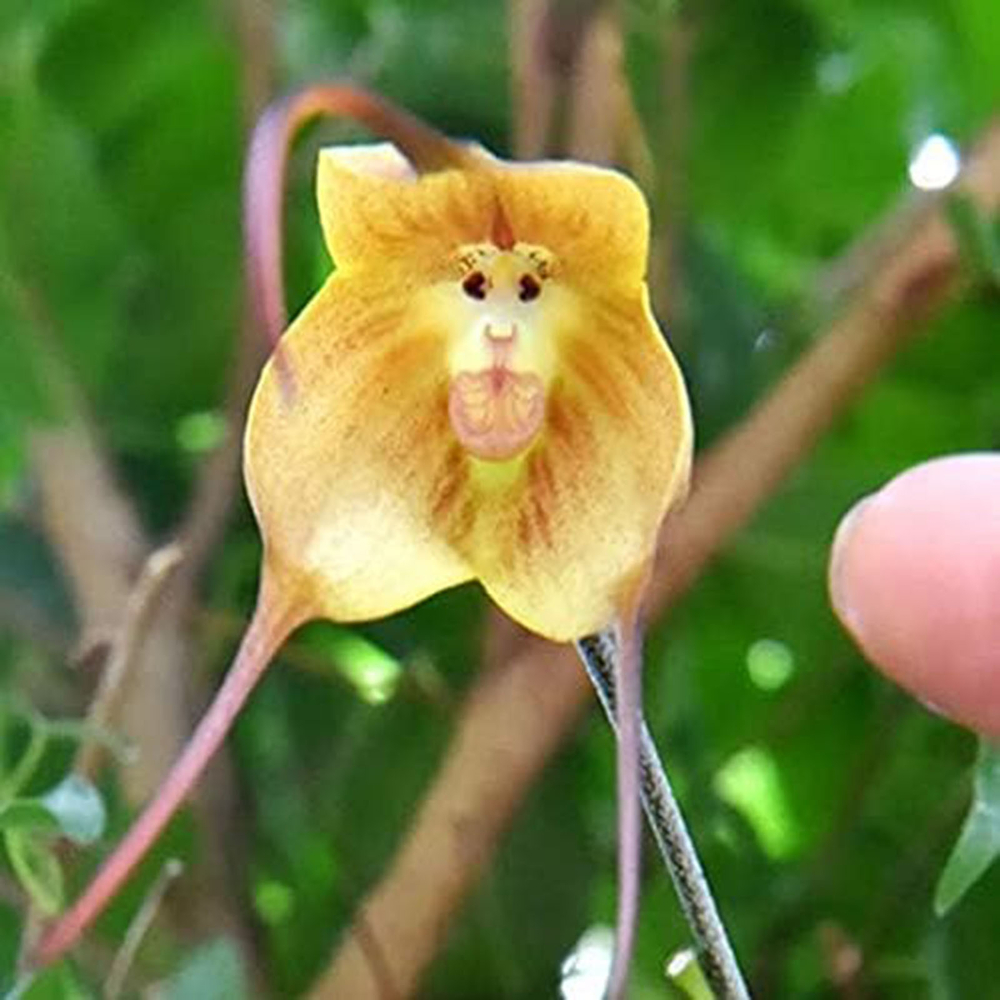 Monkey Orchid
The author is serious about the fact that conservation is also becoming a challenge due to the increasing consumption of sunakhari. People debate about this issue in assembly meetings, but she is worried that encroachment on habitations has increased. Mentioning this issue on page 51, Professor Pant has doubted whether the destruction of Sunakhari has started to increase due to more publicity. She writes, 'Where do I live only with assembly meetings and noise? The encroachment on my habitat has increased more and more - the more the publicity, the more destruction it has become.''
After learning about this species through a lot of publicity, she mentioned that orchid lovers began to search and collect good species of sunakhari. People are constantly searching and showing interest, but the danger of extinction of this species has also increased. In some cases, due to the lack of knowledge among people about goldfish species, exploitation has also taken place. It is also mentioned in the book that there is a practice of uprooting grass and firewood as weeds, cutting them and throwing them away. It is also mentioned in the book that some species of cattle are roped.
In recent times, tissue culture technology has helped preserve the goldfish species. Also, it is mentioned in the book that it is useful for producing winter varieties. Species produced by tissue culture techniques have not only been commercially successful, but have also helped fulfill people's hobbies. Its artificial seeds are also produced.
The
book provides basic information about orchids. However useful for anyone who wants to know about it . Explaining the many pictures printed in the book makes it easier for the reader . As with a brief description of monkey-like orchids and where they are found, readers may be more interested. Another updated book has a place to put fewer pictures discussing the general topics covered in it . For example, there are places in the book to put small information about species with insects that help in pollination .
senior botanist and science writer Dr. As Tirtha Bahadur Shrestha mentioned in his role, the flowers of the orchid plant are famous in the category of world beauty . This plant species is discussed everywhere in the garden, garden, forest and garden. Overall, as botanist Shrestha said, this book is very useful for children, students and common people. This book has 38 lessons and each lesson has a special story. It seems that the author himself is an orchid and tries to include every part of it by taking its science, knowledge and technology. In the book, the conservation and exploitation of the species is also highlighted and the conservation efforts are tried to be shown. Despite decades of dedication to teaching, this book by Prof. Dr. Pant is useful for anyone interested in Sunakhari as it is easy to understand.
Professor Mary E. Gartisen, president and chief executive officer of Sunakhari Conservation Group, while congratulating Pant, said that the book includes the special nature of orchids and tries to discuss the challenges faced by this species in connection with life, and emphasized on the conservation and concluded the awareness message given by the book .
Prof. Dr. Pant has said through the book, 'Orchid has given the message of world brotherhood that people of the earth are only divided by geography, even though they have traveled a thousand miles'. The book definitely plays an important role in conveying the message of this brotherhood not only in studies and research but also in the public mind. It is believed that this species will definitely bring an emotional message to people .
In the world of flora, there are more species of plants than the flowering plants found in Nepal. Among the flowering plants in the botanical world, Sunakhari is considered to be one of the most developed and sophisticated species. There are 707 species in the Sunakhari family of plants. There are 28 thousand species under that caste. There are about 100 castes and more than 500 species of this family in Nepal. 44.5 percent of the goldfish species recorded in the Annapurna Conservation Area are mentioned in the Annapurna Conservation Fund book published by the National Nature Conservation Fund.
In the International Trade Control of Endangered Wildlife and Plants Act, 2073, 2 goldfish found in Nepal are included in Schedule 1 and 466 are included as protected plants in Schedule 2. Nepal is a party to the Convention on International Trade in Endangered Species of Wild Fauna and Flora (CITES). In the research publication issued by the Department of National Parks and Wildlife Conservation in 2071, it is mentioned that 468 species of warblers have been listed in the site in Nepal. On the other hand, Sunakhari has the largest number of plant species listed in the Schedule of Sites. As a detailed study is yet to be done, it is not yet possible to confirm that the number of this species is exactly this in Nepal .

