We use Google Cloud Translation Services. Google requires we provide the following disclaimer relating to use of this service:
This service may contain translations powered by Google. Google disclaims all warranties related to the translations, expressed or implied, including any warranties of accuracy, reliability, and any implied warranties of merchantability, fitness for a particular purpose, and noninfringement.
Wetlands Day is celebrated on February 2 every year. In 1971, in the city of Ramsar, Iran, the Convention on the Protection, Importance, Management and Use of Wetlands was celebrated as Wetlands Day.
After the Kosi Tappu area was listed in Ramsar in 1987, Nepal became the 46th party to ratify Ramsar. After that, 9 other wetlands of Nepal are listed in the Ramsar zone, which covers an area of 60 thousand 561 hectares.
8 lakh 19 thousand 277 hectares of the total area of Nepal is occupied by wetlands. This is about 5 percent of the total land area of the country. Aquaculture Protection Act, Water Resources Act, Forest Act, National Parks and Wildlife Protection Act, Land and Watershed Protection Act, Environment Protection Act, National Wetlands Policy, Biodiversity Strategy of Nepal have played a legal role in protecting Nepal's wetlands and wetlands.
The government has issued a wetland policy in the year 2069 . This includes the identification of wetlands, ownership, policy and legal systems, coordination between stakeholders, collaboration and partnership to effectively carry forward the activities. The policy defines wetlands as a dynamic, diverse and fertile ecosystem. It is said to be a valuable part of the natural system from every point of view. Wetlands help maintain water resources, flow and quality .
Wetlands provide us with 4 main types of services: promotional, regulatory, cultural and supportive. Food, water, fuel (wood/firewood) obtained from wetlands are included in promotional services. Climate regulation, water and flood regulation and control are among its regulatory services. Tourism, spirituality, entertainment, education and beauty are part of the cultural services of wetlands, while the regularity of nutrients and water cycles are part of supporting services.
According to the Ramsar Secretariat, 40 percent of the flora and fauna identified in the world are dependent on wetlands. Wetlands play an important role in mitigating climate risks by sequestering carbon. Similarly, the Dhab area known as peatland has stored 30 percent of the earth.
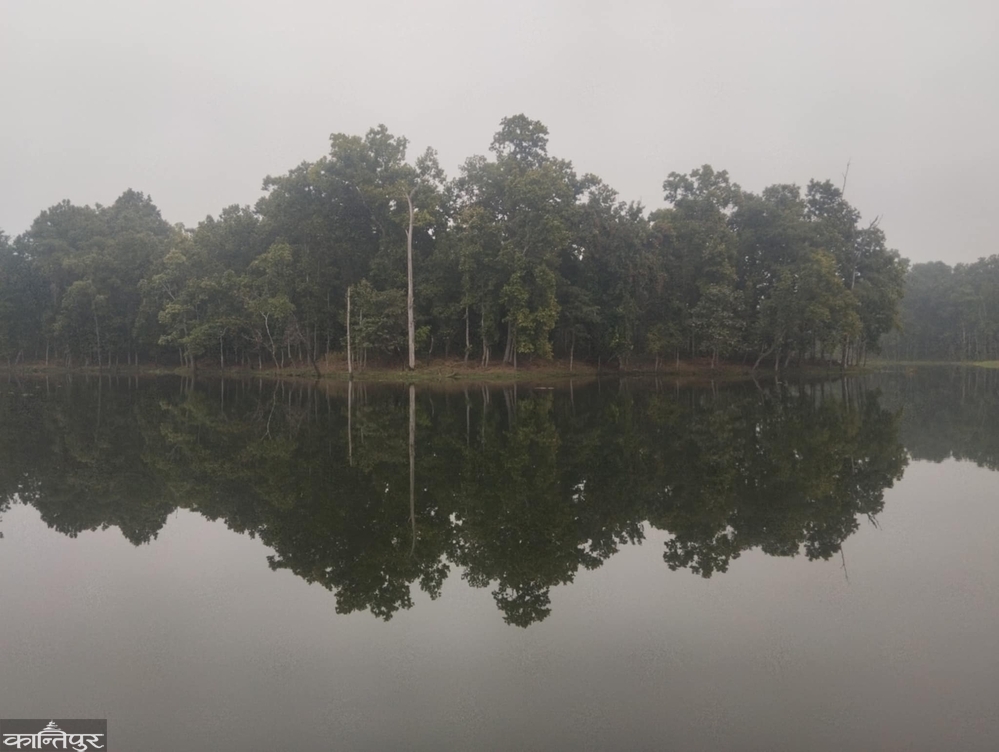
Ramsar has Nepal's Ghodaghodi Lake, Jagdishpur Reservoir Area, Bisahjari Lake Group, Rara Lake, Phoksundo Lake, Gosaikund Lake, Gokyo Lake Group, Maipokhari and Pokhara Lakes . Among the lakes of Pokhara are Begnas, Rupa, Maidi, Dipang, Khaste, Kamalpokhri, Newrini and Guden lakes along with Phewatal. Out of the 10 wetlands of Nepal listed in Ramsar, 4/4 are in Terai and Himalayan regions and two are in mountainous regions. 3 lakes in 2003, 4 lakes in 2007, 1 lake in 2008 and 2016 were listed in the Ramsar Zone. After that, other wetlands of Nepal have not been listed in Ramsar.
The Ramsar Convention lists wetlands that provide shelter to highly sensitive, endangered and threatened species or ecological communities of international importance . Nepal's Biodiversity Strategy (2014-2020) mentions that 5 wetlands of Nepal are of international importance and will be listed in Ramsar by 2020. It was said but success was not achieved.
We are proud of being listed in the Ramsar area, but it is time to evaluate how much we have done after listing in the Ramsar area . After being listed in the Ramsar area, there is a provision to make management action plans for those areas . Some have been made but we have not been able to submit the management action plan for most of the listed wetlands to the Ramsar Secretariat. Looking at the Ramsar Zone website, our presence is thin . The fact that we still have a lot of work to do can be seen from the details of the Ramsar Secretariat .
Ramsar says there are 41 different types of wetlands. Nepal includes wetlands such as lakes, ponds, ponds, and reservoirs. But there is not enough research and details about the latest condition of the three .
After federalism, interest and interest in wetlands has started to increase in the context of Nepal. Provincial governments and municipalities are increasing investment for wetland restoration and lake/pond construction. According to the study conducted by the farmer in Morang district, the area of wetlands has increased by 171 percent in a period of 20 years .
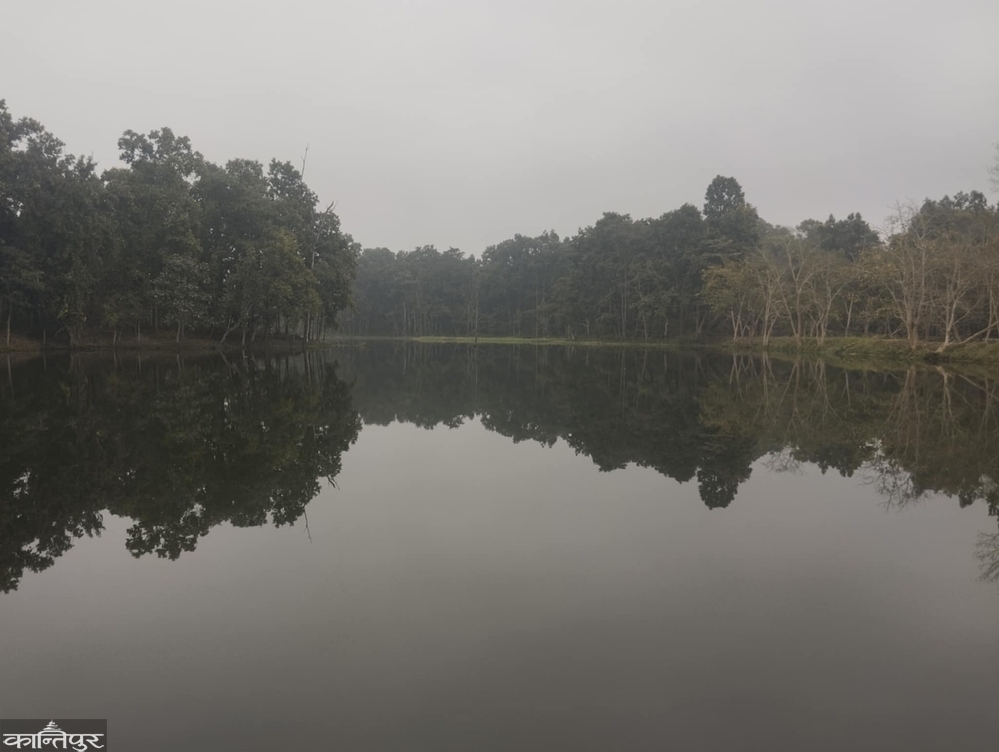
The conclusion of the study is that especially after the federalization, the expenses incurred by the municipalities in wetland management increased and the restoration works increased . The study states that in the year 2000, there were 10 wetlands in the district, and by 2020, the number of wetlands has increased to 24.
There are 10 points in the wetlands policy, which includes issues such as identifying and respecting the traditional knowledge and skills of the local community, sustainable use, and conducting development projects in such a way that the quality and area of the existing wetlands are not reduced. Tactics on how to implement these policies are also included. Even though there are important and good topics in the policy, there is now a need to revise it after federalism and new constitution in the country.
There is a provision to update the Ramsar Information Seat (RIS) when the Ramsar area is declared and every 6/6 years thereafter. In that, the entire details of the Ramsar area must be submitted to the Ramsar Secretariat through the Ramsar focal organization of the respective country. In which the map with information is made mandatory . In the Ramsar Information Seat, it is said that the current legal situation including physical, biological and ecological systems, changes in the watershed area, hydrology and other services should also be mentioned in the wetland. In this regard, it is necessary to pay attention to the stakeholders.
It is also easy to compare what positive/negative effects, what changes have occurred in the Ramsar area 6 years ago and after. Its main goal is to further refine the Ramsar area and make it easier to manage.
As we are celebrating World Wetlands Day as 'Protection of wetlands for our common future', it is necessary to discuss how we are treating wetlands today. The current situation is that the parks department looks after the wetlands within the conservation area and the areas outside it are looked after by the forest office .
Recently, in some community forests, activities such as random digging and walling with concrete have started to increase in the name of wetlands . We have to think about this. Wetlands are getting encroached upon. Urban wetlands and marshy areas have now become waste disposal sites . Dumping sites of most municipalities are rivers, banks, paddy fields and swamps.
The trend of dumping industrial waste into rivers is increasing . Similarly, the number of birds dependent on wetlands is decreasing. The wildlife that depends on it has started to decline . Water sources have started drying up due to excessive exploitation of river products in Terai region. This has a direct effect on the reptiles including the birds that come there.
Our wetlands don't just get listed in the Ramsar Zone . The conservation activities to be done after that are important . Management of wildlife habitats in Ramsar areas, regular monitoring, management of endangered species, management of natural resources, educational and research centers should also be conducted in wetlands.
On the other hand, we also need a separate structure or legal system for the monitoring and regulation of the Ramsar area, the management plan of Nepal's wetlands, and classifying the wetlands. Wetlands belong to everyone, but there is a risk of causing problems if we don't do the things that need to be done. Wetland management action plan was created but the things mentioned there were very little implemented.
Among the tasks that can be done immediately, it is necessary to effectively implement the Ramsar area strategy and action plan and bring wetland policy and wetland law to be compatible with federalism.

